
SLIDE 1
- 120432 Bibliotheca Alexandrina Updated by Ghada Nassar
Biodiversity & Ecosystems
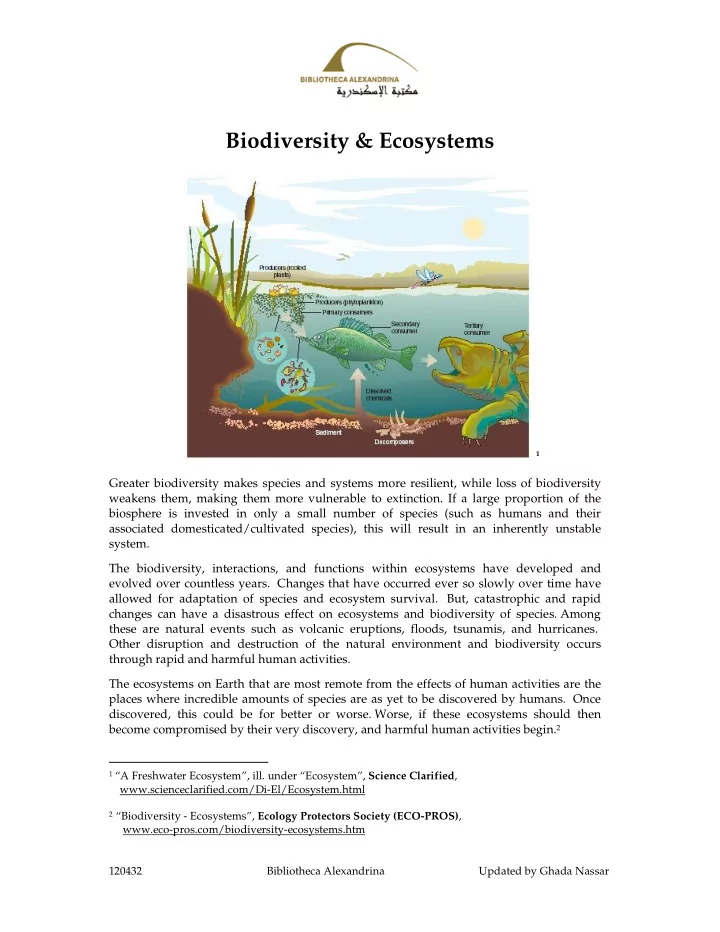
Greater biodiversity makes species and systems more resilient, while loss of biodiversity weakens them, making them more vulnerable to extinction. If a large proportion of the biosphere is invested in only a small number of species (such as humans and their associated domesticated/cultivated species), this will result in an inherently unstable system. The biodiversity, interactions, and functions within ecosystems have developed and evolved over countless years. Changes that have occurred ever so slowly over time have allowed for adaptation of species and ecosystem survival. But, catastrophic and rapid changes can have a disastrous effect on ecosystems and biodiversity of species. Among these are natural events such as volcanic eruptions, floods, tsunamis, and hurricanes. Other disruption and destruction of the natural environment and biodiversity occurs through rapid and harmful human activities. The ecosystems on Earth that are most remote from the effects of human activities are the places where incredible amounts of species are as yet to be discovered by humans. Once discovered, this could be for better or worse. Worse, if these ecosystems should then become compromised by their very discovery, and harmful human activities begin.2
- 1 “A Freshwater Ecosystem”, ill. under “Ecosystem”, Science Clarified,
www.scienceclarified.com/Di-El/Ecosystem.html
2“Biodiversity - Ecosystems”, Ecology Protectors Society (ECO-PROS),
www.eco-pros.com/biodiversity-ecosystems.htm