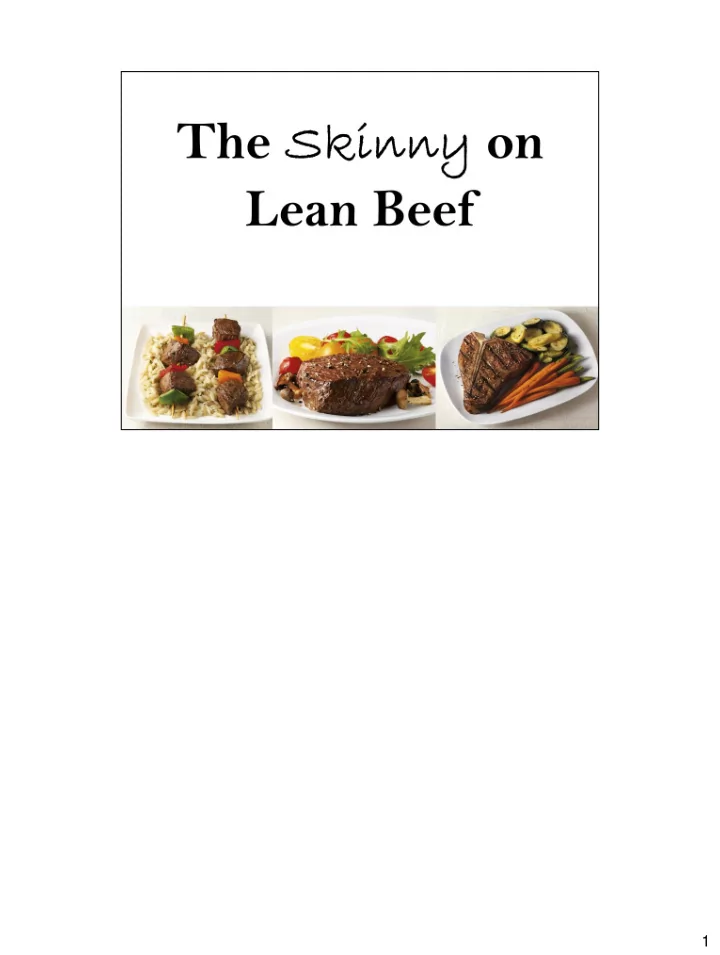
SLIDE 1
1
SLIDE 2
2
We know that a healthy lifestyle means participating in physical activity. PA is important not only used for weight management, but also in the promotion of overall wellness. Physical activity plays an important role in muscle development and metabolism, but also in the prevention of many health complications. PA can help us with : Reducing our stress levels Improving our self esteem (endorphins and physical outcomes) Managing our weight
SLIDE 3
Improving our bone health and muscle composition lowering our blood pressure (and thus risk for heart disease or other disease complications) But unfortunately physical Activity alone cannot change our lives … nutrition is another key in creating this optimal lifestyle.
2
SLIDE 4 3
- Another important factor to discuss when talking in terms
- f health and wellness is the importance of balanced
nutrition.
- The My Plate icon is one of the best examples to use
because it really emphasizes balance and moderation which we know is important in leading a healthy lifestyle and a plan we can follow long-term. MyPlate was derived from the Dietary Guidelines.
- Every 5 years the USDA and the Department of Health
and Human Services releases a new nutrition set of
- guidelines. 12-15 researchers bring out the latest
research and help the public in applying this research into how to be well by giving these recommendations.
SLIDE 5 Building a plate with all these components in balance and moderation is key to building a healthy lifestyle.
- The Dietary Guidelines is the graphic depiction of the
”road to wellness”- which includes eating food from all of the various food groups. Such as (1/4) whole grains, fruits, vegetables, low-fat and non-fat dairy and lean
- meats. Even the Dietary Guidelines stress the
importance of physical activity’s role in combination with nutrition for reaching good health.
- One of my favorite sayings that we use a lot is “GOOD
NUTRITION BOOSTS THE BENEFITS OF EXERCISE”.
3
SLIDE 6 4
- So most people aren't familiar with today’s beef, many of you may
have this outdated version of beef in your mind. I want you to know that today’s beef is lean and its not your fathers steak.
- About 15 years ago you might have walked into a retail store such as a
Kroger or Walmart and you would see most steaks with a avg 1 inch trim of fat.
- Well that’s a thing of the past because the cattle community got wind
that consumers wanted a leaner product and that’s exactly what they
- did. So over the past years they worked very hard for us to have not
- nly one choice of a leaner product but over 30 cuts that are
considered lean. So any cut of beef will have on average a zero inch to a quarter inch trim of fat and usually closer to a zero inch.
SLIDE 7
5 So there are over 30 lean cuts of beef and on the next slide I will show you some of those lean cuts but before I get to that I want to metnion that I have many people come up to me and say “well what are these lean cuts you talk about and where can I find these for my family??” But what most people are surprised to find is that 66% beef in the retail case are lean and 15 of the 20 most popular cuts sold are lean. So many people are already choosing lean cuts and not realizing that their feelings of “indulging” in a steak is actually a healthy choice when consumed in the right portion size and especially when paired with the right foods such as vegetables and whole grains.
SLIDE 8 6
- Here is a list of the lean cuts so you can know exactly what those are and if
you need a better view this graphic is on our website txbeef.org.
- The lean cuts are very comparable to a skinless baked or broiled chicken
- breast. All of these cuts on average have only 1 more gram of saturated fat
than a skinless chicken breast and they all have less saturated fat, calories and cholesterol than dark meat chicken.
- We also have to take into consideration that research shows that most people
add a cream sauce or eat their chicken fried. So not many people are even consuming their chicken skinless, they are preparing it in a way that adds fat and calories.
- The great thing about beef that I love to taut is that it is flavorful on its own-
without needing to add any calories for flavor or taste!
- So what qualifies as a “lean” cut?
- Lean is defined by the USDA as:
- For a 3ounce serving:
- A lean cut has less than 10 grams total fat, 4.5 grams of
saturated fat or less, and less than 95 mg cholesterol
SLIDE 9
- Many of America’s favorite cuts such as the Tenderloin, Strip Steak and 93%
lean ground beef 6
SLIDE 10 7 7
- Important to note because beef is often misunderstood in terms of
- nutrition. Not only is lean beef, just as lean as skinless chicken, it is
more nutrient dense. On average, providing you more of the vitamins and minerals you need for good health.
- I encourage you to print out the list of lean cuts so you will know how
to identify them.
- Personal examples/favorites:
- many people are surprised that they can choose that lean
ground beef enchilada they really want instead of opting for chicken enchiladas. The flank steak is also great and one of my
- favorites. Not until I came to the beef council was I introduced to
steak salads and now I look forward to making steak salads at home with flank steak and I just feel like I'm getting such a nutritious and satisfying meal. T-bone so many people are so surprised how tender and easy it is to throw on the grill and you have something flavorful and healthy at the same time.
SLIDE 11 8
- Beef also has a very misunderstood fat profile. Not only are people are very
shocked to find that there are over 29 lean cuts and how they are comparable to skinless chicken but I myself also was very shocked to when I was looking at the research and nutritional breakdown of the fat profile to find that any of the lean cuts of beef that 50% of the fat in a 3 ounce serving are actually monounsaturated fats
- Monounsaturated fats are the fats that doctors and American Heart
Association are encouraging you to consume more, the same ones that are found in olive oil and known for their heart health benefits.
- But now you are saying okay well what's the other 50% of that fat profile?
Well again you’d be surprised to know that 20% of those saturated fatty acids are coming from a unique saturated fatty acid called stearic acid. Basically stearic acid has been shown by research that it has a neutral effect on cholesterol levels. So it doesn’t raise or lower blood cholesterol levels. And the other percentage is made up of polyunsaturated fat about 4% in a 3 ounce
- serving. When you combine all the components of this fatty acid profile we
actually have a 70% positive lipid profile
SLIDE 12 9
- On top of all the nutritional misinformation out there and which protein choices are best for you, some
things that can get even more confusing is all the different varieties of beef and what are the differences and do the provide the same nutritional benefits or which one is better for you?
- About 15 to 20 years ago when they started the nutritional profile leaner they also wanted to make
provide a variety of choices natural, grain-fed, grass finished., cattle farmers and ranchers wanted to make a product that fit each individual lifestyle for their consumers.
- While an animal’s diet can impact beef’s fatty acid profile, it remains primarily monounsaturated and
saturated acids regardless of feeding practice.
- For example, extended grain feeding can actually increase the amount of monounsaturated
fatty acids, which has cholesterol-lowering effects.
- And feeding grass longer can influence the amount of omega3 fatty acid in beef. Either beef
choice offers the same health benefit in healthy balanced diet. Another important thing to note here, is that the 2010 dietary guidelines that beef is actually the number
- ne source of monounsaturated fats to the diet. So when we step back and look how effective and
beneficial these monounsaturated fatty acids are on cardiovascular disease we should remember how lean beef is such a great source of that.
SLIDE 13 10
- One of the things I tell people when they are looking to get those omega 3s in
their diet, its really important to compare the source and put it into
- perspective. You can consume salmon or other fatty fishes twice a week, like
recommended from the American Heart Association and get the proper weekly recommended amount since salmon has THIRTY FIVE times more
- mega-3’s than grass-finished beef.
- Registered Dietitians maintain the belief that fish is the best source of Omega-
3 fatty acids and that consuming ~2 servings of fish a week is the most efficient way to assure you meet the AHA recs for omega-3.
SLIDE 14 11
- When we talk about lean beef and how it fits into a healthy lifestyle, I've realized that beef
really gets a bad rap once I started working here. People are questioning how beef can be a component of a an optimal lean diet. Because unfortunately when we think about beef here in Texas, we think about the typical chicken fried steak meal, with the white gravy and a heaping side of mashed potatoes, maybe a salad but one with ranch dressing that actually has more dressing on it than the actual salad.
- But when you really step back and look at that meal, the majority of total fat, saturated fat and
calories aren't coming from the beef in that meal, they are coming from the company that the beef is keeping.
- We also know from research that a lot of the “beef lovers” we tend to think of aren't whole
grain lovers, and probably don’t get their daily recommendation of fruits and veggies. A lot of them have high BMIs, they smoke and frequent consumption of alcohol and a low amount of physical activity. We know that all the factors have an effect on chronic diseases
- That’s why its really important that when we do talk about lean beef that its in the context of
an optimal lean diet. And that’s why I think our BEEF running and cycling teams are so great because we have beef advocates talking about lean beef and how it’s a great source of protein and helps fuel your exercising. So this is showing people that we are promoting
- ptimal health the way beef should beef.
- We are kicking the stereotypical image of beef in that chicken fried steak meal to the curb, not
saying I don’t like my chicken fried steak and really enjoy it every once in awhile but its not an everyday meal because its all about balance.
SLIDE 15 12 12
- Americans are becoming what we call over-fed and under-nourished, consuming about an average of 300-500
calories more than recommended and those calories are “empty calories”, ones that aren’t nutrient rich.
- Dietary Guidelines for Americans and U.S. Department of Agriculture’s (USDA) encourage people to “get more
nutrition from their calories” by choosing nutrient-rich foods first, within and among all food groups, including colorful fruits and vegetables, whole grains, low- and nonfat dairy, and lean meats
- Calorie-for-calorie, beef is one of the most naturally nutrient-rich foods. On average a lean beef cut provides
about 160-180 calories.
- A 3-ounce serving of lean beef is an excellent source of:
- protein (51% of the DV) in addition
- zinc (38% of the DV) and iron really important transporting o2 to blood and tissue, zinc-
cognition and memory
- vitamin B12 (37% of the DV) energy reactions that go on in our bodies
- selenium (26% of the DV)
- phosphorus (20% of the DV)
- A 3-ounce serving of lean beef is a good source of:
- niacin (17% of the DV)
- vitamin B6 (15% of the DV)
- iron (14% of the DV)
- riboflavin (12% of the DV)
- choline (18% of the DV)
12
SLIDE 16
- The BOLD (Beef in an Optimal Lean Diet) is one of the newer studies
published showing the positive benefits of beef within the context of a heart healthy diet. It was published in the American Journal of Clinical Nutrition in January 2012
- This study shows that beef can play a beneficial role in a cholesterol-lowering
diet, despite commonly held beliefs! 13
SLIDE 17
The Beef in an Optimal Lean Diet (BOLD) study, conducted by researchers at The Pennsylvania State University, found consuming lean beef daily as part of a heart-healthy diet lowered LDL “bad” cholesterol by 10 percent, which was just as effective as the DASH diet.1 This research provides convincing support that nutrient-rich lean beef can be an everyday part of a heart-healthy diet. 14
SLIDE 18
15 15
SLIDE 19 16 16 16
- One of the myths we hear is also this protein consumption myth. Despite
popular perceptions, most Americans are not over consuming protein.
- In fact, research indicates people should increase high-quality protein intake
to the higher end of the Acceptable Macronutrient Distribution Range (AMDR) to optimize health benefits
- According to NHANES (National Health and Nutrition Examination Survey)
data, Americans consume approximately 15 percent of their daily calories as protein
- As you’ll see from the chart here, the red line indicates protein
recommendations for the lower recommendation of the AMDR, the pink line indicates protein recommendations for the Dietary Guidelines and the green line indicates recommendations for the upper AMDR. You’ll notice that Americans of ALL age groups aren’t even meeting the Dietary Guidelines recommendations for protein, let alone the upper AMDR.
SLIDE 20 17 17
- Research has shown on average we are only consuming 2.3 ounces
Americans’ red meat consumption falls within the recommendations set by the 2005 Dietary Guidelines (5-7 oz of lean protein per day)
- Overfed but undernourished. We are consuming more calories but not
getting the nutrients we need from those calories. At risk for nutritional deficiencies.
- Under consuming protein and also not getting All these micronutrients play
an important role in optimal health.
SLIDE 21 18
- So now lets talk about what the power of protein really means and all the benefits it can
provide in your everyday life.
- Research has shown that protein increases satiety, satiety just means level of
fullness so including a moderate amount of protein throughout the day and by including it in each meal, it helps us feel full longer, even more so than fiber or fat.
- Protein also promotes muscle growth. High-quality protein provides the right amounts
- f essential amino acids, or “building blocks,” the body needs to grow, build and
maintain muscle and function properly. Our bodies are constantly in a state of synthesizing and breaking down muscle so its really important to have those building blocks there to replenish muscle growth
- Aids in weight management- does this because from the research helps protein feels
full longer, less likely to snack in between meals, or indulge at the next meal and
- vereat.
- iron, zinc, protein and b vitamins all play a role in fueling our activity, providing
strength and boosting our metabolism.
SLIDE 22 19
- Scientific research continues to indicate that protein plays a significant role in creating
- ptimal health, particularly with the functions mentioned above.
- B vitamins are great cofactors of all the reactions that go on in our body that help to
stimulate our metabolism
- Iron helps deliver oxygen to muscle tissue
- Zinc helps boost immune power and brain power –especially in the research we
have seen in young children how important zinc and iron with cognition and brain development.
- Furthermore, research indicates:
- Protein intake higher than the RDA may help adults prevent or manage
cardiovascular disease and type 2 diabetes.
- Elevated protein intake, in combination with controlled energy intake was found to
be an effective and practical weight-loss strategy. Animal protein had a greater positive effect than plant proteins.
- Sarcopenia is the progressive loss of muscle mass with age. The most practical
means of increasing skeletal muscle protein for the majority of older adults is to include a moderate serving of high-quality protein with each meal. (40-80 years) natural loss of muscle. Research has shown we can prevent this through dietary interventions with moderate amounts of protein at each meal throughout all stages
- f life.
- Protein and calcium intake interact positively to affect bone health, and intakes of
both must be adequate to fully realize the benefit of each nutrient on the bone.
- Positive lipid profiles- higher HDL levels and lower LDL which is the bad cholesterol
levels.
19
SLIDE 23 20 So this slide helps us realize why Americans might think we are over consuming
- protein. Because when we look at the amount of protein we are typically getting
at each meal, more often than not its not evenly distributed. So at breakfast we might get an egg or some milk with cereal. I don’t think a lot
- f people realize how much protein is in each food. And this slide is great to
show those values and how we can include foods with protein throughout each
- meal. Because most Americans are getting a little bit of protein at breakfast, a
little at lunch, and then overloading on protein at dinner. 30 grams arent efficiently used. This is why I say moderate amounts of protein throughout the day If you were to include 25-30 grams 3 x throughout your day grams you would actually be more optimally synthesizing muscle throughout your day. And building muscle instead of breaking it down
SLIDE 24
21 We see here from research is that most Americans are getting a little bit of protein at breakfast, a little at lunch, and then overloading on protein at dinner. And we know that over 30 grams aren't efficiently used. So when people think that we are over consuming protein its actually just not being distributed in the way it should be. This is why it’s important to have moderate amounts of protein throughout the day
SLIDE 25 22
- By including 25-30 grams 3 x throughout your day you would actually be more
- ptimally synthesizing muscle throughout the entire day and building muscle
instead of breaking it down.
- You will see on this chart that anytime the line graph goes below the
horizontal black like, our bodies go into a state of catabolism- which means we are breaking down muscle mass. But anytime it is over that line we are in a state of anabolism and building muscle.
- So if we distribute those amounts of protein throughout the day we can better
synthesize muscle in the ratio to which our body is breaking it down.
SLIDE 26 23
- When it comes to choosing protein, it’s important to realize that proteins are
not created equal. Animal proteins, like lean beef and pork, skinless poultry, low fat dairy products and eggs, are complete high-quality proteins that contain all the essential amino acids the body needs to build and maintain muscle mass. So these essential amino acids are the ones we have to get from dietary sources and our bodies cannot make themselves.
- Furthermore, lean beef provides an excellent source of protein in a caloric-
package where vegetable sources of protein just can’t compare. Especially when we are watching our calories yet we still want to get all the nutrients are bodies need.
- A 3-ounce serving of lean beef offers the most amount of protein in the
fewest amount of calories when compared to plant proteins such as peanut butter, black beans and tofu. So this chart shows that you would have to consume up to 2, 3, even 4 times the amount of calories from other foods to get the same amount of protein you can get from a 3 ounce serving of lean beef. 23
SLIDE 27 24 24
- I hope you’ve learned a lot about beef and understand the quality of
lean beef and the great nutrition it provides in your diet.
- And most importantly the main thing I’ve realized through my career is
that people are more likely to stick to good nutrition better when they enjoy the foods they are eating that are both tasteful and nutritious and that is one of the great things about lean beef!