
05/11/2018 1 ADHD and Common Issues Across the Life-Span
Sophie Godbout-Beaulieu, R.Psych Leslie MacIntyre, R.Psych Harpreet Aulakh, R.Psych
What is ADHD? (DSM-V)
- A. Persistent pattern of inattention and/or
hyperactivity-impulsivity that interferes with functioning or development, as characterized by symptoms of Inattention (1) and/or (2) Hyperactivity/Impulsivity.
- B. Several inattentive or hyperactive-impulsive symptoms were
present prior to age 12 years.
- C. Several inattentive or hyperactive-impulsive symptoms are
present in two or more settings (e.g., at home, school, or work; with friends or relatives; in other activities).
- D. There is clear evidence that the symptoms interfere with, or
reduce the quality of, social, academic, or occupational functioning.
(1) Inattention
Often fails to give close attention to details or makes careless mistakes Often has difficulty sustaining attention in tasks or play activities Often does not seem to listen when spoken to directly Often does not follow through on instructions and fails to finish tasks Often has difficulty organizing tasks and activities Often avoids, dislikes, or is reluctant to engage in tasks that require sustained mental effort Often loses things necessary for tasks or activities Is often easily distracted by extraneous stimuli Is often forgetful in daily activities
(2) Hyperactivity/Impulsivity
Often fidgets with or taps hands or feet or squirms in seat Often leaves seat in situations when remaining seated is expected Often runs about or climbs in situations where it is inappropriate (teens/adults = restless feeling) Often unable to play or engage in leisure activities quietly Is often “on the go,” acting as if “driven by a motor” Often talks excessively. Often blurts out an answer before a question has been completed Often has difficulty waiting his or her turn Often interrupts or intrudes on others
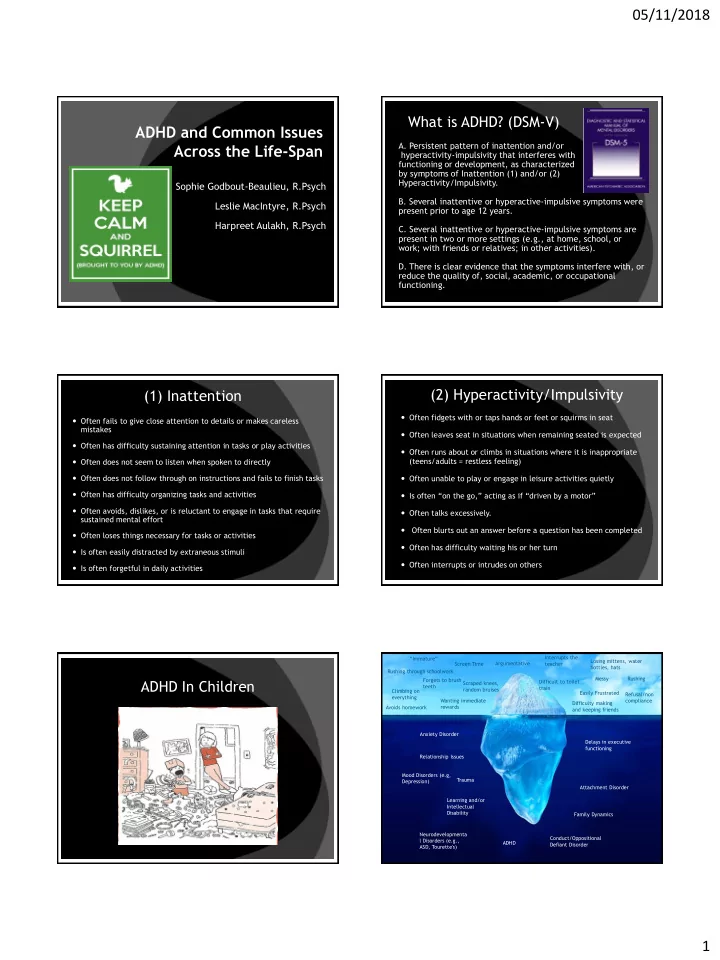
ADHD In Children
Screen Time Messy Rushing through schoolwork Losing mittens, water bottles, hats Refusal/non compliance Avoids homework Rushing Wanting immediate rewards Anxiety Disorder Mood Disorders (e.g, Depression) ADHD Interrupts the teacher Learning and/or Intellectual Disability Family Dynamics Relationship Issues Easily Frustrated Difficult to toilet train Scraped knees, random bruises Difficulty making and keeping friends Conduct/Oppositional Defiant Disorder Climbing on everything “Immature” Neurodevelopmenta l Disorders (e.g., ASD, Tourette's) Attachment Disorder Trauma Argumentative Delays in executive functioning Forgets to brush teeth