Welcome to the webinar Universal Health Coverage (UHC) and the - - PowerPoint PPT Presentation

welcome to the webinar
SMART_READER_LITE
LIVE PREVIEW

Welcome to the webinar Universal Health Coverage (UHC) and the - - PowerPoint PPT Presentation

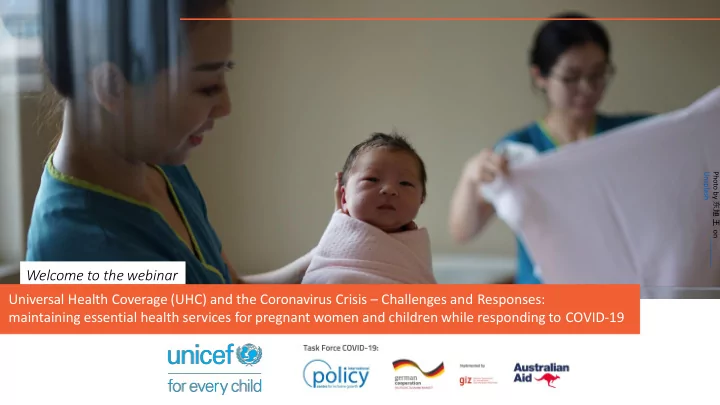
Unsplash Photo by on Welcome to the webinar Universal Health Coverage (UHC) and the Coronavirus Crisis Challenges and Responses: maintaining essential health services for pregnant women and children while responding to COVID-19


slide-1
SLIDE 1

Universal Health Coverage (UHC) and the Coronavirus Crisis – Challenges and Responses: maintaining essential health services for pregnant women and children while responding to COVID-19

Welcome to the webinar

Photo by 东旭 王 on Unsplash

slide-2
SLIDE 2

This joint effort is inspired by colleagues and

  • rganisations working to disseminate and discuss the

most recent content on social protection responsesto COVID-19. The initiative has three majorcomponents:

1. A weekly special edition of a dedicated newsletter, featuring a compilation of relevant information from all over the world on social protection initiatives dealing with COVID-19; 2. Weekly webinars to foster discussions and exchanges; 3. An online community to systematise the information gathered

  • n the topic and foster discussion.

Social protection responses to #COVID19

Photo by Gelani Banks on Unsplash

#SPcovid19 #COVID19 #SPresponses

slide-3
SLIDE 3

Adaptación de programas de transferencias deefectivo en América Latina y el Caribe para responder a la pandemia COVID-19

Tuesday, 7 July - 10 AM EDT/GMT-4

Next webinar

Photo by Lesly Derksen onUnsplash

slide-4
SLIDE 4
slide-5
SLIDE 5

Time is set at EDT, please adjust according to your time zone ( 9 AM Brasilia – 8 AM New York – 8 PM Beijing ) Introduction

08:00 – 08:05 (5min)

Presentation 1 : Fighting against COVID-19 caring for pregnant women & newborns-How does China's MCH system provide services during the covid19 epidemic —— Prof. Wang Ailing Presentation 2 : Experiences in maternal and child health services delivery during COVID-19 epidemic—— Dr. Xia Huimin Presentation 3 : Risk communication mechanism and experiences during COVID-19 —— Dr. Cui Ying Presentation 4 : Treatment experience of pregnant women with COVID-19 —— Academician Qiao Jie Q&A Closing remarks

08:05 – 08:20 (15 min) 08:20– 08:35 (15 min) 08:35 – 08:50 (15 min) 08:50 – 09:05 (15min) 09:05 – 09:25 (20 min) 09:25 – 09:30 (5 min) Moderator

  • Ms. Wang Jian

Moderator

  • Dr. Douglas Noble

Agenda 08:00 – 09:30 am (EDT)

  • Dr. Douglas Noble
  • Ms. Wang Jian
slide-6
SLIDE 6

Share your questions to the speakers!

type them in the chatbar

Universal Health Coverage (UHC) and the Coronavirus Crisis – Challenges and Responses: maintaining essential health services for pregnant women and children while responding to COVID-19

Also, interact with us on Twitter (@SP_Gateway)

#SPorgWebinar #SPcovid19 #COVID19 #SPresponses

slide-7
SLIDE 7
  • Ms. Wang Jian

◼ Deputy Director General of the International Health Exchange and Cooperation Centre, National Health Commission of the People's Republic of China

Commencing her career initially with Physician at the Cancer Hospital of Chinese Academy of Medical Sciences, she joined IHECC in 1997 where she worked as Project Manager in Medical Rescue Department (International Emergency Assistance Office of Ministry of health). From 2001, she was assigned the Deputy Director of Project Development Department, the Director of External Relations and Project Management Department II. Since 2014, she was assigned as Deputy Director General of IHECC, in charge of non-profit international health exchange and cooperation programs and Health Industry promotion.

slide-8
SLIDE 8
  • Dr. Douglas Noble

◼ Deputy Representative UNICEF China

  • Dr. Douglas Noble studied science at the University of St. Andrews and medicine at Oxford University. He has a

master’s degree and research doctorate in public health from Johns Hopkins and Queen Mary University of London, respectively. He has worked with the British Government in the Department of Health and Cabinet Office, the World Health Organization, and the Commonwealth Fund. He has honorary academic affiliations with the University of Oxford and Queen Mary University of London and has published 40 papers in academic and health service journals.

  • Dr. Douglas first joined UNICEF in 2013 as the Regional Health Adviser for South Asia in the Regional Office in

Kathmandu, Nepal. Dr. Douglas joined UNICEF China as the Deputy Representative in January 2017.

slide-9
SLIDE 9
  • Prof. Wang Ailing

◼ Director of the Maternal Health Department of the National Center for Women and Children’s Health, China CDC.

Mainly engaged in maternal health care, prevention of mother-to-child transmission of HIV, syphilis and hepatitis B. As the team leader, she and her team are responsible for national maternal health management, HIV prevention, syphilis and hepatitis B mother-to-child transmission planning, technical guidance, training, supervision and evaluation, daily Management and other technical support work, participated in a number of research and international cooperation projects related to the prevention of HIV, syphilis and hepatitis B mother-to-child transmission.

slide-10
SLIDE 10

Song Li Deputy Director General (DDG) Department of Women & Children health National Health Commission of China

Fighting against COVID-19 Caring for Pregnant Women & Newborns

  • --How does China’s MCH System provide services during the

Covid-19 epidemic

Song Li & Wang Ai-Ling

Wang Ai-Ling Director of Maternal Health Care Department, National Center for Women and Children's Health, China CDC

slide-11
SLIDE 11

Outline

◆ Situation analysis on maternal and children’s health of Covid-19 ◆ Optimizing the operation of MCH service system to adapt the changing situation during the outbreak ➢ Policies ➢ Services

slide-12
SLIDE 12

Situation analysis on maternal and children’s health of Covid-19

Changes from Health Providers 1.More prevention and control requirements ➢ Changes in procedures ➢ Requirements for protective equipment for medical personnel 2.There are fewer outpatient visits than before, but the need for deliveries and critical illness remained 3.Medical personnel to support the frontline of prevention and control 4.The protection of medical personnel themselves

slide-13
SLIDE 13

Outline

◆ Situation analysis on maternal and children’s health of Covid-19 ◆ Optimizing the operation of MCH service system to adapt the changing situation during the outbreak ➢ Policies ➢ Services

slide-14
SLIDE 14

Policy responses---Timely release national policies and technical guidelines on COVID-19 prevention and management among pregnant women and children

➢ “Notice on how to prevent and manage infected pregnant women and children during the

  • utbreak of COVID-19”

➢ “Notice on strengthening management of pregnant women and ensuring safety of motherhood during the outbreak of COVID-19”.

slide-15
SLIDE 15

◼ Changes in procedures

In response to the physical and psychological characteristics of pregnant women during the outbreak

  • f COVID-19, health facilities were required to providing more support on antenatal care and mental

health, which were done through various channels, such as online consultation, WeChat and other social media APPs, hotline, and video.

Services responses--- providing services through different channels and platforms

slide-16
SLIDE 16

More targeted services were provided to pregnant women and newborns.

16

Screening and assessment of risk of pregnancy

Systematic management of high-risk pregnant women Management of near-miss pregnancies Accountability of maternal and infant safety Case reporting of individual maternal death

◼Health facilities were requested to set up separate route for antenatal care clinics and

  • bstetric wards so as to minimize the risk of infection of pregnant women.
slide-17
SLIDE 17
slide-18
SLIDE 18

◼ For low-risk pregnant women, they were advised to adjust their schedule for antenatal care

visits, and consult with their doctors on how to protect themselves and conduct health monitoring at home.

◼ For pregnant women with complications, suggestions were provided on how to conduct

antenatal care visits as scheduled, and under what situation they should go to hospitals.

slide-19
SLIDE 19

◼ In order to ensure timely detection and treatment of infected pregnant women, a service provision

system for screening, diagnosis and treatment of pregnant women with COVID-19 was established based on the existing MCH system.

19

slide-20
SLIDE 20

Infected pregnant women and children

◼ All should follow the protocol of management: treatment and follow-up ◼ Expert groups composed of obstetricians, pediatricians, physicians specialized in respiratory,

infectious diseases and ICU were established in all areas across the country, and they participated the management of near-miss pregnancies with COVID-19 infection.

◼ For newborns of women with confirmed infection, isolation and specific newborn care were

required, and newborns under severe condition were requested to be referred to designated hospitals for further treatment.

slide-21
SLIDE 21

Three key points

  • 1. Timely releasing national policies and technical guidelines on COVID-19 prevention

and management among pregnant women and children

  • 2. Optimizing the operation of MCH service system to adapt the changing situation

during the outbreak

  • 3. Strengthening provision of maternal and child health services through different

channels and platforms

slide-22
SLIDE 22
slide-23
SLIDE 23

◼ Chairman, Guangzhou Women and Children’s Medical Center ◼ Director, Provincial Clinical Research Center for Children’s Health and Diseases of Guangdong ◼ Director, Provincial Key Laboratory of Birth Defects of Guangdong

Published more than 50 papers in SCI journals with a research direction focusing on the field of pediatric surgery

  • Dr. Xia Huimin, MD
slide-24
SLIDE 24

2nd July, 2020

Experiences in Maternal and Child Health Services Delivery during COVID-19 Epidemic

  • Prof. Huimin Xia

Guangzhou Women and Children’s Medical Center

slide-25
SLIDE 25

Licensed Beds

1700

Outpatient Visits

4.89 million

Inpatient Admission

145,000

Campuses cover approximately 100 million people, 16% (about 12 million) are children from Guangdong province. A pointed treatment center for COVID-19 infection in pediatrics

Overview of GWCMC

slide-26
SLIDE 26

From 19th January to 16th June, 2020 COVID-19 laboratory tests (RT-PCR): 85,797 (800 tests per day) Fever clinic:914 Medical observations: 193 Suspected pediatric cases:65 Confirmed pediatric cases:24

  • Asymptomatic pediatric cases:10

COVID-19 related services

slide-27
SLIDE 27

Key epidemiological & clinical characteristics of pediatric patients 1. Viral excretion from gastrointestinal tract lasts longer than respiratory tract 2. CT scan presents more definite signs of pneumonia compared to chest X-ray, especially in asymptomatic or mild cases 3. Most from familial clusters, presented with mild symptoms or even asymptomatic

What we have learnt from 24 pediatric cases?

GWCMC published a manuscript in Nature Medicine entitled “Characteristics of pediatric SARS-CoV-2 infection and potential evidence for persistent fecal viral shedding”

slide-28
SLIDE 28
  • Leadership and steering group
  • Medical administration
  • Nurse
  • Logistics
  • Communication & IT support
  • Hospital infection control
  • Expert panel
  • Guidelines for COVID-19

prevention and control

  • IPC training

Comprehensive Strategy

Closed-loop management of diagnosis and treatment developed and optimized for COVID-19 epidemic

slide-29
SLIDE 29

Outpatient services

Update standard-based triage process Improve procedure directing patients to fever clinic Maintain a distance of at least 1 m

Facilities for COVID-19 services

Quarantined areas (a separated building)

  • 2-3F for suspected cases
  • 4F for confirmed cases
  • Provide a maximum of 400 beds at Children's Hospital campus

RT-PCR tests; Rapid testing results (6-8hrs) Inpatient services Laboratory

slide-30
SLIDE 30

Infection prevention and control (IPC) strategy

IPC team

  • On-site supervision
  • PDCA
  • Hand hygiene compliance: 92.17% vs.

81.34% in 2019

  • Nosocomial infection: 0

Ensuring PPE supply Systematic training

  • Four courses, 17,000 attendees.
  • Four categories of staffs, medical staff, technicians,

cleaners and support staff.

slide-31
SLIDE 31

Change in GWCMC outpatient & inpatient service volumes

From Jan to May 2020, GWCMC’s outpatient and inpatient service volume has dropped 50.95% and 29.12%, compared to the same period of 2019.

slide-32
SLIDE 32

Pediatric outpatient volume Pediatric discharge volume

Change in Pediatric Services Volume

COVID-19 pandemic poses huge impact on pediatric services in Guangzhou.

slide-33
SLIDE 33

Vaccination Volume

100000 200000 300000 400000 500000 600000 700000 2019年第一季度 2020年第一季度

  • 38.97%

Q1,2019 Q1,2020 388,782

Catch-up immunization schedule:

  • Vaccines with high priority: Hepatitis B,

BCG, polio, measles, pertussis diphtheria tetanus, Japanese encephalitis, meningococcal, hepatitis A.

  • Catch up with the delayed dose
  • Those unvaccinated shall be vaccinated

according to vaccination intervals. Current monitoring data (coverage rate)

  • neonatal: ~100%
  • other target population: restored to 90%
slide-34
SLIDE 34

Change in deliveries services

16.75% decrease in Guangzhou (2020 vs. 2019)

  • Non-local expectant mothers did not return to Guangzhou
  • Fertility demand falls
slide-35
SLIDE 35

Hospital-community priority strategy

1. name-list at community-level 2. telephone follow-up by hospitals 3. transport/transfer services

Isolation at home or in a repurposed facilities Pregnancy with severe complications (code red): 2% Women ≥36 weeks of gestations

  • Cases of isolation at home were 467, including 5

confirmed cases in Guangzhou.

  • No cross infection, no death, and no mother-to-child

transmission

Management of High-risk Pregnancy

slide-36
SLIDE 36

Internet hospital- online maternity and pediatric services

Intelligent inquiry

  • n Patient Side

Screen and evaluate diseases Homepage

Enhance service capability of online consultation and treatment

slide-37
SLIDE 37

远程胎监

Internet hospital- online maternity and pediatric services

Blood glucose monitoring Dietary guidance Pregnancy Exercise Guidelines Psychological guidance Remote fetal heart rate (FHR) monitoring

slide-38
SLIDE 38

Statistics of internet hospital services

Launched: 29th Jan, 2020 Operation data

  • Online visits: 32,055
  • Health professionals: 313
  • Specialties: 46

27% 26% 18% 14% 15%

Top 5 departments and their proportion

OB outpatient Fever clinics Child health service GYN outpatien Pediatrics (Respiratory and Gastroenterology)

t

slide-39
SLIDE 39

Resumption of work and production

Ongoing Prevention and Control Separated building (3rd-4th Floor) with 70 beds for the COVID-19 cases at Children’s Hospital Campus. Reopening outpatient and inpatient services

  • n 28th Feb.

Service volume (May, 2020)

  • Outpatient/ER visits: 210,418
  • Inpatient admissions: 7,836
  • Service recover about 60-70%
slide-40
SLIDE 40

1. Nation-wide support and mobilization by the Chinese government for COVID-19 treatment. 2. Ongoing hospital capacity building for COVID-19 prevention and control. 3. Offering healthcare trainings specific to the demands of the epidemic and related tasks. 4. Enhancement of maternal and child health services based on well-organized monitoring, health education, and telemedicine. 5. A bench-to-bedside collaborative mechanism to provide strong scientific and technological support. 6. Society-wide efforts against the COVID-19 epidemic.

Summary

slide-41
SLIDE 41

Thank You!

Guangzhou Women and Children’s Medical Center

slide-42
SLIDE 42
  • Dr. Cui Ying

◼ Director of Health Communication Center, China Center for Disease Control and Prevention

With the goal of "spreading knowledge about healthy living, advocating healthy lifestyle, and sharing healthy life concept", she has played an important role in promoting the in-depth development of health communication, health promotion and mobile health. She is responsible for the top-level design of disease control science popularization and guide the development direction of health science popularization. Build a national health expert team of health sciences with technical experts in various fields as the core. Build the core competitiveness of health sciences in the disease control center, and cultivate health science talents at all levels who can face the society, media, and the public, and actively promote the team building. Take the "Internet +" as an opportunity and use new media as a means to continuously innovate the concept of health communication; in the emergency response to health incidents, provide authoritative science to the public to prevent rumors and correctly guide public opinion. She has carried out more than 40 international and domestic cooperation projects .She has published more than 70 articles in core magazines.

slide-43
SLIDE 43

Risk communication mechanism and experiences during COVID-19

Cui Ying PHD,Director The Center for Health Communication of China CDC Chinese Center for Disease Control and Prevention

slide-44
SLIDE 44

CONTENTS 1

Needs assessment and monitoring

2

Risk communication strategy

3

Risk communication impact

4

Conclusion

slide-45
SLIDE 45

Feb.26 28617 June 8. 12554

Needs assessment and monitoring

  • 170 daily reports
  • 2,925,686 COVID-19-related enquries received
  • Around 17,311 cases per day
  • National health hotline 12320:daily monitoring data analysis
  • Social media platform (Weibo & Weichat account): collect the common questions from public
  • Big data: analyze the key words searched by people online to understand public concerns and hot

topics

slide-46
SLIDE 46

Top public concerns reflected by hot-topic key words, analyzed through Big Data——From “Big data Analysis Daily Report”, Feb. 7

Symptoms and manifestation Personal protection Hubei Red Cross Society Epidemic development Epidemic impact on economy Shuanghuanglian Incident (a TCM claimed with curative effect but hyped up as a preventative drug) COVID-19 hospitals Antiviral drugs Modes of transmission Avian flu Public donation for Wuhan Extension of the Chinese New Year Holiday Viable duration for COVID-19 virus

Hubei Hunan Henan Jiangsu Zhejiang Guangdong Beijing

  • In early phase of outbreak, there was no significant difference on hot topics that people

concerned among the high-, middle- and low-risk areas

  • Top topic: Symptoms of COVID-19

Needs assessment and monitoring

slide-47
SLIDE 47

Early phase What are the clinical symptoms of COVID-19? Is it under control?

What preventive measures are there? How to wear a mask properly?

Re-open phase

Cautions to take for those back to work and resuming production, and information about relevant policies? Mid-phase How to prevent it? How to deal with the suspected cases?

Changing public demands for information over different phases

Needs assessment and monitoring

slide-48
SLIDE 48

Established mechanism and experts team Evaluation → generation → adaptation → communication → re- development Experts mobilization

Risk communication strategy——Demand-oriented

Coordinating with experts Interfacing with the public

Accurately and timely respond to public needs Actively push information according to the needs of prevention and control

slide-49
SLIDE 49

Risk communication strategy——Accuracy

Public(publication) Children (video) Different occupations and groups(poster) Special population (graphic text)

Needs oriented, provide various types of public health communication products Segment the audience and deliver the content accurately

slide-50
SLIDE 50

Joined forces with UNICEF 41 Q&As related to pregnant women and children 20 Q&As, 4 videos, 12 posters on Back-to-school Page views: 130 million +

Risk communication strategy ——Pregnant women and children

slide-51
SLIDE 51

Risk communication strategy ——Strengthen engagement with partners

National Health Commission. Ministry of Foreign Affairs and the Ministry of Education. Platform: Baidu, Ali and Tencent, etc. South-South Cooperation. A number of public health communication products have been translated and released in Cambodia, Indonesia, North Korea, Laos, Malaysia, Mongolia, Myanmar, Papua New Guinea, the Philippines, Thailand, Timor-Leste, Vietnam, Iran and other countries.

slide-52
SLIDE 52

Risk communication strategy——Feedback mechanism

Experts interviewed on television

Experts in the People's Network webcast

Public——understand the needs and communication effects through various channels Experts——timely interpretation of COVID 19 prevention and control measures Media——disseminate information on multiple platforms to magnify the communication effects

slide-53
SLIDE 53

Risk communication impact

248 public health communication products were published over 100 days, which clocked in almost 200 million views in Weibo and WeChat .

Popular science products formats contents Special groups(pregnant women, children and the elderly), special places (offices, nursing homes, kindergartens, factories and mining enterprises, etc.) and protective measures(disinfection, the use of disinfectants, air conditioning system etc.) are included The number of popular science products published by CDC (by June 15, 2020)

Video

Graphic text

Poster Publications Webcast

38 248 22 2 1

slide-54
SLIDE 54

Risk communication impact

  • Over 90% of the respondents wore

mask all the time when they stayed

  • utdoors.

March 18. Survey on mask wearing

  • The number of people who washed

hands for more than 20s is 132.8% more than before the epidemic. March 21. Survey on hand cleaning

  • The compliance of respiratory etiquettes

increased for 37.9% compared with before the outbreak of the epidemic. April 22. Survey on respiratory etiquettes

Online surveys were launched through the official WeChat platform to learn about changes in public perception and behavior.

slide-55
SLIDE 55

Changes of the health behaviors of children’s caregivers before and after the outbreak of COVID 19 Among the 1,325 caregivers of children under 5 years in the survey. 95.8% of the caregivers responded that the health information was helpful, and the recognition rate was high The rate of child caregivers' use of disposable hand sanitizer or disinfectant wipes during treatment, wearing masks when going out, washing hands, and changing their coats at home all increased

Risk communication impact ——Changes of awareness and behaviors among the children’s

caregivers

slide-56
SLIDE 56

Change of the guardians’ health behavior towards their children before and after the outbreak of COVID 19

Percentage of children’s caregivers regularly disinfecting toys and tableware increases; The percentage of those sharing tableware with children, cooling the food with breaths, and chewing food to feed children decreased.

Continue to obtain feedbacks of the public needs through the platform and create public health communication products.

Risk communication impact ——Changes of awareness and behaviors among the children’s caregivers

slide-57
SLIDE 57

Conclusion

Establish monitoring system to accurately gauge the needs of the public; Multi-format products, multi-channel communication, and multi-platform interaction, to maximize the influence and reach of public health core messages; The communication of public health information for pregnant women and children has improved the public's awareness of protective measures and promoted changes in public behaviors; Leverage the big brand of the CDC through the small lever of health communication and an enabling environment for public health communication created through the series of health communication initiatives around the COVID-19 period.

slide-58
SLIDE 58

Thank you all for listening! Dr.Cuiying cuiying@chinacdc.cn

slide-59
SLIDE 59

Academician Qiao Jie

◼ Academician of Chinese Academy of Engineering ◼ President of the Third Hospital to Peking University

Her reproductive research focus on the molecular mechanism of human gametogenesis and embryo development, infertility causes and clinical treatments, the protection and preservation of female fertility as well as developing new pre-implantation diagnosis methods. Qiao Jie and her team made many landmark contributions to the development of reproductive medicine. During this pandemic, Qiao Jie, as the leader of the National medical aid team for Hubei of Peking University. She led the team to establish critical care wards and ensure the efficient and high-quality operation of the ward. Improved the mechanism of emergency support to make zero infection among medical staff in her team came true. Her team also investigated the risk of mother to child vertical transmission at the first time, and timely published comments and clinical research results in international top journals. Moreover, the suggestions she provided on diagnosis and treatment of pregnant women have added in the Guidelines on the Novel Coronavirus-Infected Pneumonia Diagnosis and Treatment (Provisional 7th Edition) in China, which had great significance to guide perinatal health care and formulate corresponding prevention and treatment measures.

slide-60
SLIDE 60

Treatment experience of pregnant women with COVID-19

Peking Uiversity Third Hospital Jie Qiao July 2nd Beijing,P .R.CHINA

slide-61
SLIDE 61

团结/奉献/求实/创新

61

Pandemic Situation of COVID-19 World Wide

More than 100 thousands new confirmed cases every day around the world

New cases 178,328 Confirmed cases 10021,401 Deaths cases 499,913

Nearly 5 thousands new deaths cases every day around the world Data last updated: 2020/6/29 3:15pm CEST

slide-62
SLIDE 62

团结/奉献/求实/创新

Pregnant Women ——

A special group of people under the COVID-19 epidemic

62

slide-63
SLIDE 63

团结/奉献/求实/创新

Clinical characteristics of pregnant women with COVID-19

63

Published Online: 18th April, 2020 Chen L … Qiao J, et al. NEJM, 2020

slide-64
SLIDE 64

团结/奉献/求实/创新

Clinical characteristics of pregnant women with COVID-19

64

Methods

Union Hospital; 30 Hubei General Hospital; 19 Zhongnan Hospital ; 21 Tongji Hospital; 15 The Central Hospital

  • f Wuhan; 13

Hospitals of all COIVD-19 confirmed cases Chinese Clinical Guidance for Covid-19 Pneumonia Diagnosis and Treatment Laboratory- diagnosed (N=84, 71.2%) Clinically- diagnosed (N=34, 28.8%)

(Manifestations with pneumonia image features on CT)

Chen L … Qiao J, et al. NEJM, 2020

118

slide-65
SLIDE 65

团结/奉献/求实/创新

Clinical characteristics of pregnant women with COVID-19

65

Results

118 pregnant women with Covid-19 in Wuhan

Wuhan

Hubei Province

✓ 0.24% of all 50,005 confirmed patients with Covid-19 ✓ Median age: 31 years (IQR:28-34) ✓ 52% were nulliparous ✓ 64% had been infected in the third trimester ✓ Most common symptoms: Fever (75%), Cough (73%) ; Diarrhea: 7% ✓ 44% presented lymphopenia ✓ 79% had infiltrates in both lungs Chen L … Qiao J, et al. NEJM, 2020

slide-66
SLIDE 66

团结/奉献/求实/创新

Clinical characteristics of pregnant women with COVID-19

66

Results

8%

Severe disease (hypoxemia)

➢ Severe disease developed in 6 of the 9 after delivery ➢ 1 of 9 received noninvasive mechanical ventilation (critical disease) Chen L … Qiao J, et al. NEJM, 2020

slide-67
SLIDE 67

团结/奉献/求实/创新

Clinical characteristics of pregnant women with COVID-19

67

Results

➢3 spontaneous abortions, 2 ectopic pregnancies, and 4 induced abortions (all owing to patients’ concerns about Covid-19) ➢68 (58%) patients delivered, accounting for 0.56% of all 12,195 deliveries in Wuhan ➢63 patients (93%) underwent a cesarean section (61% concerned about the effects of Covid-19) ➢21% deliveries were premature; 7 were induced due to concern about Covid-19 ➢No babies had neonatal asphyxia or death

58%

Delivery

Chen L … Qiao J, et al. NEJM, 2020

slide-68
SLIDE 68

团结/奉献/求实/创新

68

◆Risk of severe disease in pregnant population (8%) compared favorably with general population (15.7%) ◆The present data do not suggest an increased risk of severe disease among pregnant women ◆Exacerbations of disease during the postpartum are relate to pathophysiological changes ◆Up to March 20th, 94% (109) had been discharged and there we no deaths

Clinical characteristics of pregnant women with COVID-19

Chen L … Qiao J, et al. NEJM, 2020

Results

slide-69
SLIDE 69

69

What's the management and treatment experience for suspected/confirmed pregnant women?

slide-70
SLIDE 70

团结/奉献/求实/创新

Different Isolation Categories and designated hospitals provide medical services for uninfected or suspected/infected pregnancy women

Normal

Suspected cases/ Confirmed mild cases Confirmed severe cases

Home isolation Designated hospitals for regular prenatal examination Fangcang shelter hospitals Designated Ob & Gy Hospitals Designated Ob & Gy Hospitals

70

slide-71
SLIDE 71

团结/奉献/求实/创新

Exclude suspected

Also need much attention

Flow chart of diagnosis and treatment for suspected cases

71

slide-72
SLIDE 72

团结/奉献/求实/创新

  • Isolated
  • bstetrical ward
  • Isolated bed
  • Isolated
  • bstetric table
  • Isolated

Consultation Room

Management strategy for suspected cases and those confirmed cases who cannot be transfered to designated hospitals timely

In outpatient area In inpatient area

Infected

72

slide-73
SLIDE 73

团结/奉献/求实/创新

73

◆ Every staff should monitor their temperature and report their symptoms every day ◆ Warnings for staff to keep distance when working, eating, or having a rest ◆ Provide training and guidance for the all medical staff

Protection of medical staff

slide-74
SLIDE 74

团结/奉献/求实/创新

① Screening for suspected patient

Management if infected during first/second/third trimester

  • The clinical course of COVID-19 is similar between pregnant women and

adults around the same age

  • Pregnant women with chronic diseases / maternal complications should be

paid more attention

  • Gestational weeks and adverse effects of drugs on pregnant women and

fetuses should be seriously evaluated during the treatment

  • No evidence to support the termination of pregnancy without medical

indicators

  • Pregnant women with severe or critical COVID-19 prefer to the

termination of pregnancy, and the best choice is caesarean section

74

slide-75
SLIDE 75

团结/奉献/求实/创新

Gestational weeks and adverse effects of drugs on pregnant women and fetuses should be seriously evaluated during the treatment

Alpha-interferon inhalation

  • The use of this drug in early

pregnancy has the risk of hindering fetal growth and development

5 million U or equivalent for adult, add 2 ml of sterile water, 2 times daily inhalation

It is relatively safe to use in the second/third trimester

75

① Screening for suspected patient

Management if infected during first/second/third trimester

Lopinavir/ritonavir (C)

(200 mg / 50 mg, per capsule) 2 capsules each time for adults, twice a day The course of treatment should not exceed 10days

  • It was used in the treatment of pregnancy with HIV

and the data show no significant teratogenicity

  • The concentration in breast milk is very low, and no

lopinavir/ritonavir is detected in breastfed infants
slide-76
SLIDE 76

团结/奉献/求实/创新

Choice of delivery mode: Vaginal delivery or CS Regardless of Delivery Mode

Infection Control is Crucial!

  • Ne

Need ed Emer ergen gency cy CS CS

  • In

In Labor CO COVI VID-19 19 with th pregn egnancy ancy at at unde designate signated hos

  • spital

ital: if if en enco countered ntered

  • Act

ctivate vate CS CS proc

  • cess?

ess?

  • Act

ctivate vate labor proce cess ss

DRILL!

76

slide-77
SLIDE 77

Whether there is vertical transmission from mothers to babies?

77

slide-78
SLIDE 78

团结/奉献/求实/创新

➢Nine confirmed pregnant women, all in the third trimester ➢Six newborns : Amniotic fluid, cord blood, breast milk and throat swab samples (All samples tested SARS-CoV-2 negative)

Is there vertical transmission from mothers to babies?

Not Sure Not Sure

78

Qiao J. Lancet, 2020

Comment Comment

slide-79
SLIDE 79

团结/奉献/求实/创新

Published Online February 10, 2020

➢ Nine pregnant women (10 newborns) All neonatal throat swab samples tested SARS-CoV-2 negative

Not Sure Not Sure

79

➢ 3 cases of placenta nucleic acid test positive ➢ Neonatal nucleic acid test negative ➢ positive in placenta, negative in amniotic fluid and vaginal secretion ➢ Negative in blood, feces, liver, lung, armpit and thymus

Is there vertical transmission from mothers to babies?

slide-80
SLIDE 80

团结/奉献/求实/创新

➢ Newborn SARS-CoV-2 IgM antibody increased 2 hours after birth ➢ 5 newborns with elevated SARS-CoV-2 IgG levels ➢ 2 newborns with SARS-CoV-2 IgM antibody

80

Is there vertical transmission from mothers to babies?

Have possi Have possibi bility lity

slide-81
SLIDE 81

团结/奉献/求实/创新

  • IgM assays can be prone to false-

positive and false-negative results

  • The rapid decline reported in this

patient could represent artifact

➢ 2h after birth IgM 45.83 AU/ml ➢ 14d after birth IgM 11.75 AU/ml

  • Neonatal COVID-19 nucleic acid

test negative

81

Comment Comment

More Definitive Evidence is needed

  • IgG can protect fetus through

placenta

Is there vertical transmission from mothers to babies?

slide-82
SLIDE 82

团结/奉献/求实/创新

Further clinical and basic studies are needed

Yes No

Time

82

Is there vertical transmission from mothers to babies?

slide-83
SLIDE 83

团结/奉献/求实/创新

4E 4P

这里输入简单的文字概述 这里输入简单的文字概述 这里输入简单的文字概述 这里输入简单的文字概述 这里输入简单的文字概述 这里输入简单的文字概述 这里输入简单的文字概述 这里输入简单的文字概述 这里输入简单的文字概述 这里输入简单的文字概述

✓ Ea Early identif ntificat cation ion ✓ Ea Early repor

  • rti

ting ng ✓ Ea Early isolati tion

  • n

✓ Ea Early treatm tmen ent ✓ Prot

  • tecti

ection

  • n of pregnan

nancy cy wome men ✓ Prot

  • tect

ection ion of fam family ily memb mber ers ✓ Prot

  • tecti

ection

  • n of health

th workers ✓ Prot

  • tecti

ection

  • n of hospi

pita tal

Critical issues for protecting pregnancy women

83

slide-84
SLIDE 84

Salute to all efforts

slide-85
SLIDE 85

Q&A and closing remarks

slide-86
SLIDE 86

WWW.BRHTH.COM

slide-87
SLIDE 87
slide-88
SLIDE 88

Adaptación de programas de transferencias deefectivo en América Latina y el Caribe para responder a la pandemia COVID-19

Tuesday, 7 July - 10 AM EDT/GMT-4

Next webinar

Photo by Lesly Derksen onUnsplash

slide-89
SLIDE 89

Thank you

+ Become a member of

Make sure to answer our webinar survey, available after the session!