TRANSITION IMPROV On the - - PDF document

transition improv
SMART_READER_LITE
LIVE PREVIEW

TRANSITION IMPROV On the - - PDF document

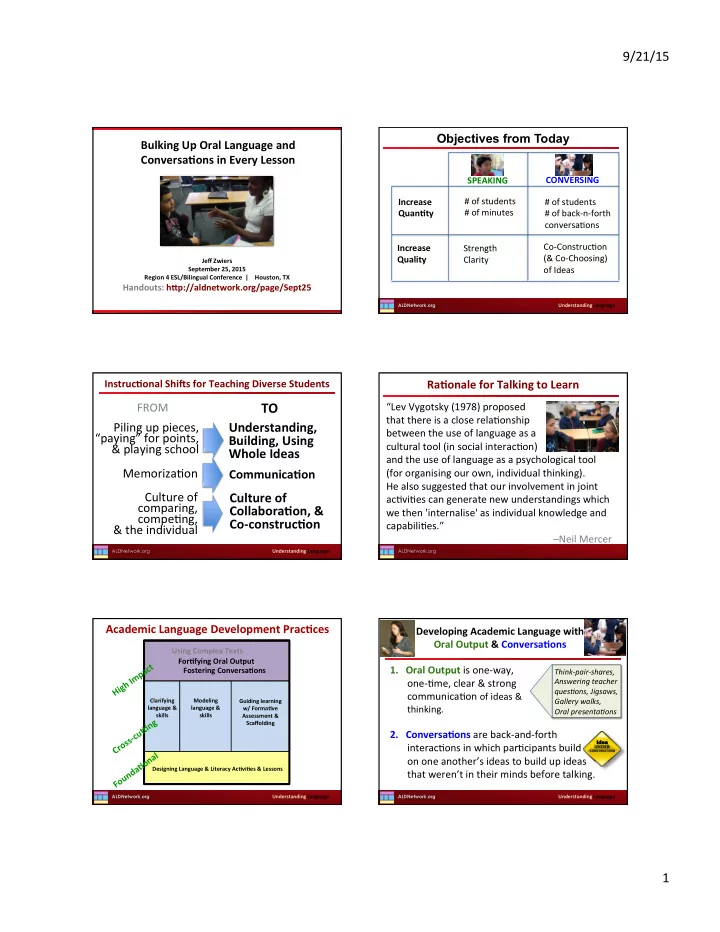
9/21/15 Objectives from Today Bulking Up Oral Language and ConversaPons in Every Lesson CONVERSING SPEAKING # of students Increase # of students # of


slide-1
SLIDE 1

9/21/15 ¡ 1 ¡

Jeff ¡Zwiers September ¡25, ¡2015 ¡ Region ¡4 ¡ESL/Bilingual ¡Conference ¡ ¡| ¡ ¡ ¡ ¡Houston, ¡TX ¡

Handouts: ¡hJp://aldnetwork.org/page/Sept25 ¡

Bulking ¡Up ¡Oral ¡Language ¡and ¡ ConversaPons ¡in ¡Every ¡Lesson ¡ Objectives from Today

ALDNetwork.org ALDNetwork.org

Understanding ¡Language ¡

Increase ¡ QuanPty ¡ Increase ¡ Quality ¡ SPEAKING ¡ # ¡of ¡students ¡ # ¡of ¡minutes ¡ Strength ¡ Clarity ¡ # ¡of ¡students ¡ # ¡of ¡back-­‑n-­‑forth ¡ conversa?ons ¡ Co-­‑Construc?on ¡ (& ¡Co-­‑Choosing) ¡

  • f ¡Ideas ¡

CONVERSING ¡

InstrucPonal ¡ShiZs ¡for ¡Teaching ¡Diverse ¡Students ¡

Culture ¡of ¡ comparing, ¡ ¡ compe?ng, ¡ ¡ & ¡the ¡individual ¡

Understanding, ¡ Building, ¡Using ¡ Whole ¡Ideas ¡

¡ ¡ ¡ ¡FROM ¡ ¡ ¡ ¡ ¡ ¡ ¡ ¡ ¡ ¡ ¡TO ¡ ¡ ¡

Culture ¡of ¡ CollaboraPon, ¡& ¡ Co-­‑construcPon ¡

Piling ¡up ¡pieces, ¡ “paying” ¡for ¡points, ¡ & ¡playing ¡school ¡

ALDNetwork.org

Understanding ¡Language ¡

Memoriza?on ¡ CommunicaPon ¡

ALDNetwork.org

RaPonale ¡for ¡Talking ¡to ¡Learn ¡

“Lev ¡Vygotsky ¡(1978) ¡proposed ¡ ¡ that ¡there ¡is ¡a ¡close ¡rela?onship ¡ ¡ between ¡the ¡use ¡of ¡language ¡as ¡a ¡ ¡ cultural ¡tool ¡(in ¡social ¡interac?on) ¡ ¡ and ¡the ¡use ¡of ¡language ¡as ¡a ¡psychological ¡tool ¡ (for ¡organising ¡our ¡own, ¡individual ¡thinking). ¡ ¡ He ¡also ¡suggested ¡that ¡our ¡involvement ¡in ¡joint ¡ ac?vi?es ¡can ¡generate ¡new ¡understandings ¡which ¡ we ¡then ¡'internalise' ¡as ¡individual ¡knowledge ¡and ¡ ¡ capabili?es.” ¡ ¡ ¡ ¡ ¡ ¡ ¡ ¡ ¡ ¡ ¡–Neil ¡Mercer ¡

¡

¡

Academic ¡Language ¡Development ¡PracPces ¡

Cross-­‑cu_ng ¡ FoundaPonal ¡ High ¡Impact ¡

Guiding ¡learning ¡ w/ ¡FormaPve ¡ Assessment ¡& ¡ Scaffolding ¡ ¡Designing ¡Language ¡& ¡Literacy ¡AcPviPes ¡& ¡Lessons ¡ Modeling ¡ language ¡& ¡ skills ¡ Clarifying ¡ language ¡& ¡ skills ¡ ¡ ¡

ALDNetwork.org

Understanding ¡Language ¡

Using ¡Complex ¡Texts ¡ ForPfying ¡Oral ¡Output ¡ Fostering ¡ConversaPons ¡

  • 1. Oral ¡Output ¡is ¡one-­‑way, ¡ ¡
  • ne-­‑?me, ¡clear ¡& ¡strong ¡ ¡

communica?on ¡of ¡ideas ¡& ¡ ¡

  • thinking. ¡ ¡ ¡

¡

  • 2. ConversaPons ¡are ¡back-­‑and-­‑forth ¡

interac?ons ¡in ¡which ¡par?cipants ¡build ¡ ¡

  • n ¡one ¡another’s ¡ideas ¡to ¡build ¡up ¡ideas ¡

that ¡weren’t ¡in ¡their ¡minds ¡before ¡talking. ¡ ¡

  • 3. ¡

ALDNetwork.org

Understanding ¡Language ¡

Idea dea

Think-­‑pair-­‑shares, ¡ ¡ Answering ¡teacher ¡ ques5ons, ¡Jigsaws, ¡ Gallery ¡walks, ¡ ¡ Oral ¡presenta5ons ¡

Developing ¡Academic ¡Language ¡with ¡ ¡ Oral ¡Output ¡& ¡ConversaPons ¡

¡

slide-2
SLIDE 2

9/21/15 ¡ 2 ¡

¡ ¡ Developing ¡Oral ¡Output ¡ ¡ with ¡

TRANSITION ¡IMPROV ¡ ¡ Activities ¡ ¡

TransiPon ¡Improv ¡AcPvity: ¡Pro-­‑Con ¡

Topics: ¡ ¡ ¡ ¡ ¡ ¡Camping, ¡Shopping, ¡Traveling, ¡TV, ¡Uniforms, ¡ Computers, ¡Superheroes, ¡Cars, ¡Conferences, ¡ Tes?ng, ¡Internet, ¡Cell ¡phones, ¡Video ¡games ¡ ¡

Transi5ons: ¡ ¡However, ¡

¡ ¡ ¡ ¡ ¡ ¡ ¡ ¡ ¡ ¡On ¡the ¡other ¡hand, ¡ ¡ ¡ ¡ ¡ ¡ ¡ ¡ ¡ ¡ ¡Then ¡again, ¡ ¡ ¡ ¡ ¡ ¡ ¡ ¡ ¡ ¡ ¡ ¡ ¡ ¡ ¡ ¡ ¡ ¡ ¡ ¡ ¡ ¡but ¡ ¡

PC ¡Frames: ¡ ¡One ¡advantage ¡is ¡… ¡For ¡example, ¡… ¡ ¡ ¡ ¡ ¡ ¡ ¡Another ¡posiPve ¡of ¡… ¡is… ¡because… ¡ ¡ ¡ ¡ ¡A ¡negaPve ¡aspect ¡of ¡___ ¡is ¡… ¡ ¡ ¡ ¡ ¡In ¡spite ¡of ¡the ¡posiPves ¡of ¡_____, ¡ ¡

ALDNetwork.org

Understanding ¡Language ¡

A ¡& ¡B, ¡Lean? ¡

TransiPon ¡Improv ¡Features ¡& ¡Advantages ¡

¡ ¡

What ¡does ¡this ¡type ¡of ¡acPvity ¡do ¡for ¡ ¡ students? ¡

d ¡

  • Face-­‑to-­‑face ¡communica?on ¡with ¡an ¡

informa?on ¡gap ¡

  • Real ¡?me ¡thinking ¡to ¡speaking ¡
  • Structure ¡so ¡both ¡need ¡to ¡listen ¡and ¡speak ¡
  • Academic ¡language ¡supports ¡
  • Use ¡evidence ¡
  • See ¡mul?ple ¡perspec?ves ¡

ALDNetwork.org

Understanding ¡Language ¡

TransiPon ¡Improv ¡(Similar-­‑Different) ¡ ¡

Topic: ¡ ¡ ¡ ¡ ¡ ¡Plant ¡cells ¡& ¡ ¡ ¡ ¡ ¡animal ¡cells ¡ ¡ Transi5ons: ¡ ¡However, ¡

¡ ¡ ¡ ¡ ¡ ¡ ¡ ¡ ¡ ¡On ¡the ¡other ¡hand, ¡ ¡ ¡ ¡ ¡ ¡ ¡ ¡ ¡ ¡ ¡Then ¡again, ¡ ¡ ¡ ¡ ¡ ¡ ¡ ¡ ¡ ¡ ¡ ¡ ¡ ¡ ¡ ¡ ¡ ¡ ¡ ¡ ¡ ¡but ¡ ¡

SD ¡Frames: ¡ ¡Unlike ¡animal ¡cells, ¡plant ¡cells ¡have ¡____, ¡which ¡… ¡ ¡ ¡ ¡ ¡Plant ¡& ¡animal ¡cells ¡both ¡have ¡____, ¡which ¡serve ¡to… ¡ ¡ ¡ ¡ ¡… ¡are ¡similar ¡to ¡____ ¡in ¡that ¡they ¡both ¡_____ ¡ ¡ ¡ ¡ ¡ ¡ ¡Animal ¡cells ¡differ ¡from ¡plant ¡cells ¡in ¡that ¡_____ ¡ ¡ ¡ ¡ ¡ ¡

ALDNetwork.org

Understanding ¡Language ¡

Animal cells Plant Cells

¡ ¡ ¡ ¡ ¡ ¡ ¡ ¡ ¡ ¡ ¡ One ¡turn ¡with; ¡next ¡turn ¡without ¡

No cell wall Round shape Centrioles

(pull chromosomes from nucleus during mitosis)

Cell wall Rectangular shape Chloroplasts

(produce carbohydrates using photosynthesis)

Ribosomes

(make protein)

Mitochondria

(turns nutrients into energy)

OUTPUT ¡ACTIVITY: ¡TransiPon ¡Improv: ¡(Two ¡Views) ¡

Views: ¡ ¡ ¡ ¡ ¡ ¡Patriots ¡ ¡ ¡ ¡ ¡Loyalists ¡ Transi5ons: ¡ ¡However, ¡

¡ ¡ ¡ ¡ ¡ ¡ ¡ ¡ ¡ ¡On ¡the ¡other ¡hand, ¡ ¡ ¡ ¡ ¡ ¡ ¡ ¡ ¡ ¡ ¡Then ¡again, ¡ ¡ ¡ ¡ ¡ ¡ ¡ ¡ ¡ ¡ ¡ ¡ ¡ ¡ ¡ ¡ ¡ ¡ ¡ ¡ ¡ ¡but ¡ ¡

Frames: ¡The ¡___ ¡thought ¡that ¡… ¡ ¡ ¡ ¡ ¡ ¡Many ¡___ ¡believed ¡that… ¡ ¡ ¡ ¡ ¡ ¡ ¡ ¡ ¡A ¡different ¡perspecPve ¡held ¡by ¡___ ¡was ¡that… ¡ ¡ ¡ ¡In ¡the ¡eyes ¡of ¡___... ¡

ALDNetwork.org

Understanding ¡Language ¡

¡ Developing ¡Oral ¡Output ¡ ¡ with ¡

“STRONGER ¡Y ¡CLEARER ¡ ¡ EACH ¡TIME” ¡Activities: ¡

  • Opinion ¡Continuum ¡
  • Stronger-­‑Clearer ¡Grid ¡

¡

slide-3
SLIDE 3

9/21/15 ¡ 3 ¡

  • 1. Prompt ¡for ¡an ¡original ¡response ¡ ¡

(e.g., ¡explana?on, ¡long ¡answer, ¡opinion, ¡idea, ¡etc.). ¡

  • 2. Each ¡student ¡says ¡idea ¡to ¡successive ¡partners, ¡

listens, ¡and ¡then ¡borrows ¡and ¡uses ¡the ¡language, ¡ ideas, ¡and ¡evidence ¡of ¡others ¡each ¡?me ¡they ¡talk. ¡

  • 3. Responses ¡become ¡stronger ¡(oben ¡longer) ¡with ¡

becer ¡suppor?ng ¡evidence ¡and ¡examples. ¡

  • 4. Responses ¡become ¡clearer ¡with ¡more ¡precise ¡

terms ¡and ¡linked, ¡organized, ¡complete ¡sentences. ¡

  • 5. Scaffolds ¡are ¡reduced ¡during ¡the ¡ac?vity. ¡

ForPfying ¡Oral ¡Output ¡with ¡ “Stronger ¡& ¡Clearer ¡Each ¡Turn” ¡AcPviPes? ¡ ¡

¡

I’m ¡on ¡the ¡not ¡ban ¡side. ¡ ¡ In ¡my ¡opinion, ¡video ¡games ¡ are ¡kinda ¡good. ¡I ¡know ¡some ¡ games ¡you ¡shoot ¡people, ¡but ¡ some ¡teach ¡you. ¡ ¡ I’m ¡on ¡the ¡ban ¡side, ¡but ¡not ¡all ¡ the ¡way. ¡In ¡my ¡opinion, ¡games ¡ should ¡be ¡banned ¡because ¡war ¡ video ¡games ¡show ¡kids ¡how ¡ shoot ¡others. ¡But ¡some ¡teach ¡ you ¡about ¡life. ¡ I ¡am ¡on ¡the ¡far ¡right ¡side. ¡Even ¡ though ¡some ¡video ¡games ¡are ¡ violent, ¡a ¡lot ¡are ¡educa?onal. ¡ We ¡have ¡a ¡a ¡right ¡choose ¡ what ¡we ¡play, ¡too. ¡

3rd ¡ Partner ¡ Silvia ¡

I ¡think ¡video ¡games ¡are ¡bad ¡ cuz ¡they ¡show ¡violence. ¡

Student ¡Model ¡of ¡“Stronger ¡& ¡Clearer ¡Each ¡Time” ¡

¡ BAN ¡ ¡ ¡ ¡ ¡| ¡ ¡ ¡ ¡ ¡ ¡ ¡ ¡ ¡ ¡ ¡ ¡ ¡ ¡ ¡| ¡ ¡ ¡ ¡ ¡ ¡ ¡ ¡ ¡ ¡ ¡ ¡ ¡ ¡ ¡ ¡ ¡ ¡ ¡ ¡ ¡ ¡ ¡ ¡| ¡ ¡ ¡ ¡ ¡ ¡ ¡ ¡ ¡ ¡ ¡ ¡ ¡ ¡ ¡ ¡ ¡ ¡ ¡ ¡ ¡ ¡ ¡ ¡ ¡ ¡| ¡ ¡ ¡ ¡ ¡ ¡ ¡ ¡ ¡ ¡ ¡ ¡ ¡ ¡ ¡ ¡ ¡ ¡ ¡ ¡ ¡ ¡ ¡ ¡ ¡ ¡ ¡ ¡ ¡ ¡ ¡ ¡ ¡NOT ¡BAN ¡ ¡

Video ¡Games ¡Banned ¡or ¡Not? ¡

Me

I ¡am ¡just ¡leb ¡of ¡the ¡middle. ¡Even ¡ though ¡some ¡video ¡games ¡ ¡ are ¡good, ¡violent ¡ones ¡should ¡get ¡

  • banned. ¡Kids’ ¡minds ¡get ¡violent. ¡Some ¡

games ¡can ¡teach ¡to ¡solve ¡problems ¡ and ¡learn, ¡which ¡made ¡me ¡move ¡over ¡ toward ¡NOT ¡BAN. ¡

Stronger ¡and ¡Clearer ¡AcPvity: ¡ Opinion ¡ConPnuum ¡

J.Zwiers ¡

YES ¡ ¡ ¡ ¡ ¡ ¡Should ¡we ¡use ¡DNA ¡to ¡bring ¡back ¡ex?nct ¡species? ¡ ¡ ¡ ¡ ¡ ¡ ¡ ¡ ¡NO ¡

¡ ¡

Notes: ¡

¡

Me X Theo X Lea X

You ¡can ¡use ¡frames ¡such ¡as ¡ ¡

  • ­‑ ¡In ¡my ¡opinion, ¡____ ¡because ¡_____. ¡ ¡
  • ­‑ ¡Despite ¡the ¡reason/advantages ¡of ¡… ¡
  • ­‑ ¡Given ¡the ¡points ¡that ¡I ¡have ¡heard ¡so ¡far, ¡such ¡as ¡… ¡ ¡
  • ­‑ ¡AZer ¡talking ¡with ¡(name), ¡I ¡now ¡lean ¡more ¡to ¡the ¡side ¡of ¡____ ¡because ¡… ¡

¡ ¡ ¡ ¡ ¡(Teacher ¡might ¡want ¡listeners ¡to ¡ask ¡clarifying ¡and ¡suppor?ng ¡ques?ons) ¡

GREED ¡ ¡ ¡ ¡ ¡ ¡ ¡ ¡ ¡ ¡ ¡ ¡Character ¡Mo?va?on ¡

¡ ¡ ¡ ¡ ¡ ¡ ¡LOVE ¡

¡ ¡

Notes: ¡

¡

Me X Theo X

YES ¡ ¡ ¡ ¡ ¡ ¡ ¡ ¡ ¡ ¡ ¡ ¡ ¡ ¡ ¡ ¡ ¡ ¡WWI ¡Jus?fied? ¡

¡ ¡ ¡ ¡ ¡ ¡ ¡ ¡ ¡ ¡ ¡ ¡ ¡ ¡ ¡ ¡ ¡ ¡ ¡ ¡NO ¡

¡ ¡

Notes: ¡

¡

Me X Carla X

POSITIVE ¡ ¡ ¡ ¡ ¡ ¡ ¡The ¡impact ¡of ¡social ¡media ¡on ¡people ¡ ¡ ¡ ¡ ¡NEGATIVE ¡

¡ ¡

Notes: ¡

¡

Me X Luka X

ALDNetwork.org

Understanding ¡Language ¡

ALDNetwork.org

¡ ¡ Name ¡

What ¡do ¡you ¡think ¡is ¡the ¡most ¡important ¡theme ¡

  • f ¡this ¡short ¡story? ¡

¡

Me ¡ ¡

(just ¡two ¡or ¡three ¡key ¡words, ¡if ¡any) ¡

  • 1. ¡ ¡
  • 2. ¡
  • 3. ¡

Me ¡ A strong reason for ….. The development of oral language is vital because… Even though there are many areas to focus on in..

“Stronger ¡& ¡Clearer ¡Each ¡Turn” ¡Grid ¡ How ¡did ¡geography ¡influence ¡NaPve ¡American ¡ culture ¡in ¡this ¡region? ¡ What ¡is ¡the ¡purpose ¡of ¡the ¡circulatory ¡system ¡ and ¡how ¡does ¡it ¡work? ¡

¡

What ¡were ¡the ¡main ¡causes ¡of ¡the ¡American ¡ RevoluPon? ¡Explain ¡the ¡causes ¡and ¡how ¡they ¡ caused ¡it. ¡

Laura ¡can ¡plant ¡trees ¡on ¡an ¡acre ¡of ¡land ¡in ¡10 ¡hours ¡and ¡Liz ¡ can ¡plant ¡an ¡acre ¡in ¡15 ¡hours. ¡How ¡long ¡would ¡it ¡take ¡if ¡they ¡ work ¡together? ¡Explain ¡your ¡soluPon ¡idea ¡& ¡jusPfy ¡it. ¡

¡

How ¡do ¡students ¡best ¡acquire ¡academic ¡English? ¡ ¡

¡

Interview ¡Grid ¡Interaction ¡Circle ¡

ALDNetwork.org

Understanding ¡Language ¡

ALDNetwork.org

Oral ¡Output ¡Analysis ¡Tool ¡(OOAT) ¡ Analyzing ¡Oral ¡Language ¡Evidence ¡

¡ ¡ ¡ ¡ ¡ ¡ ¡CLEAR ¡ ¡ q Uses ¡a ¡clear ¡topic ¡sentence ¡ q Uses ¡suppor?ng ¡or ¡clarifying ¡ sentences ¡(don’t ¡need ¡to ¡be ¡perfect) ¡ q Uses ¡transi?ons ¡that ¡link ¡sentences ¡ q Uses ¡appropriate ¡words ¡and ¡terms ¡ q Includes ¡details ¡and ¡explana?on ¡ expected ¡by ¡listeners ¡ ¡ ¡ How ¡the ¡student ¡might ¡clarify ¡his/her ¡ response: ¡ ¡ ¡ ¡ ¡ ¡ ¡ ¡STRONG ¡ q Uses ¡solid ¡evidence ¡or ¡ examples ¡from ¡the ¡text ¡ q Explains ¡how ¡the ¡ evidence ¡supported ¡ the ¡main ¡idea ¡ q Shows ¡accurate ¡ understanding ¡& ¡recall ¡ ¡ ¡ How ¡the ¡student ¡might ¡ strengthen ¡his/her ¡ response: ¡

¡

slide-4
SLIDE 4

9/21/15 ¡ 4 ¡

¡

¡

Academic ¡Language ¡Development ¡PracPces ¡

Cross-­‑cu_ng ¡ FoundaPonal ¡ High ¡Impact ¡

Guiding ¡learning ¡ w/ ¡FormaPve ¡ Assessment ¡& ¡ Scaffolding ¡ ¡Designing ¡Language ¡& ¡Literacy ¡AcPviPes ¡& ¡Lessons ¡ Modeling ¡ language ¡& ¡ skills ¡ Clarifying ¡ language ¡& ¡ skills ¡ ¡ ¡

ALDNetwork.org

Understanding ¡Language ¡

Fostering ¡ConversaPons ¡ and ¡their ¡Skills ¡

More ¡than ¡a ¡Shift: ¡Constructive ¡Conversations ¡

“Why ¡do ¡I ¡have ¡to ¡ ¡ talk ¡with ¡a ¡partner? ¡ ¡ ¡ ¡I ¡already ¡know ¡the ¡ ¡ answer!” ¡ ¡ “Just ¡wait. ¡She’ll ¡tell ¡us ¡the ¡answer ¡at ¡the ¡ end.” ¡

ALDNetwork.org

Understanding ¡Language ¡

Conversa?on ¡is ¡a ¡mee?ng ¡of ¡minds ¡with ¡different ¡ memories ¡and ¡habits. ¡When ¡minds ¡meet, ¡they ¡don't ¡just ¡ exchange ¡facts: ¡they ¡transform ¡them, ¡reshape ¡them, ¡draw ¡ different ¡implica?ons ¡from ¡them, ¡engage ¡in ¡new ¡trains ¡of ¡

  • thought. ¡Conversa?on ¡doesn't ¡just ¡reshuffle ¡the ¡cards; ¡ ¡

it ¡creates ¡new ¡ones. ¡ ¡ ¡ ¡ ¡ ¡ ¡ ¡ ¡ ¡ ¡ ¡ ¡ ¡ ¡ ¡ ¡ ¡ ¡ ¡ ¡ ¡ ¡ ¡ ¡ ¡ ¡ ¡ ¡ ¡ ¡ ¡ ¡ ¡ ¡ ¡ ¡ ¡-­‑-­‑Theodore ¡Zeldin ¡ ¡

¡

¡

Academic ¡ConversaPons ¡

ALDNetwork.org

¡ ¡ Fostering ¡Conversations ¡ with ¡

Constructive ¡Conversation ¡ Skills, ¡Icons, ¡& ¡Motions ¡ ¡

ConstrucPve ¡ConversaPon ¡Skills ¡for ¡“Build ¡1” ¡Mode ¡

Goal: Students collaboratively (but w/o teacher) build an idea (e.g., claim, answer, solution, interpretation), using the following skills:

ALDNetwork.org

Understanding ¡Language ¡

Create Idea

Listening-­‑Speaking ¡

Clarify Idea

Listening-­‑Speaking ¡

Support Idea

Listening-­‑Speaking ¡

Build Idea

ConversaPon ¡Theory ¡(Argue ¡Mode) ¡

slide-5
SLIDE 5

9/21/15 ¡ 5 ¡

ConversaPon ¡Skills ¡for ¡“Build ¡>1 ¡& ¡Choose ¡(Argue)” ¡Mode ¡

Goal: Students collaboratively (but w/o teacher) build claims & ideas and then choose one of them, using the following skills:

Hand ¡mo5ons ¡

ALDNetwork.org

Understanding ¡Language ¡

Evaluate & Compare (Argue)

Listening-­‑Speaking ¡

Create Ideas

Listening-­‑Speaking ¡

Support Ideas

Listening-­‑Speaking ¡

Clarify Ideas

Listening-­‑Speaking ¡

Build Ideas & Choose Best

ALDNetwork.org

Understanding ¡Language ¡

ALDNetwork.org

ConversaPon ¡Analysis ¡Tool ¡

Turns ¡build ¡on ¡previous ¡turns ¡to ¡build ¡up ¡a ¡relevant ¡idea(s) ¡ ¡ ¡ ¡ _______ ¡ ¡Students ¡create ¡or ¡choose ¡a ¡relevant ¡ini?al ¡idea(s) ¡that ¡is ¡focused ¡on ¡learning ¡

  • bjec?ve(s) ¡

¡ _______ ¡ ¡Students ¡clarify ¡idea(s) ¡(by ¡paraphrasing, ¡defining, ¡elabora?ng) ¡ ¡ _______ ¡ ¡Students ¡support ¡ideas ¡(using ¡evidence, ¡examples, ¡explana?ons) ¡ ¡ ¡ ¡If ¡there ¡are ¡two ¡or ¡more ¡compePng ¡ideas ¡(i.e., ¡an ¡argument), ¡ ¡ ¡ _______ ¡ ¡Students ¡evaluate ¡the ¡strength/weight ¡of ¡the ¡evidence ¡of ¡each ¡idea ¡ ¡ ¡ _______ ¡ ¡Students ¡compare ¡the ¡strengths/weights ¡and ¡choose ¡the ¡“strongest/heaviest” ¡idea ¡ ¡ _______ ¡Students ¡explain ¡(and/or ¡nego?ate) ¡final ¡decisions ¡ ¡ ¡

Laura: ¡ ¡ ¡ ¡ ¡I ¡think ¡air ¡has ¡weight. ¡Remember ¡ ¡ ¡ ¡ ¡the ¡balloon? ¡ Eli: ¡ ¡ ¡ ¡ ¡ ¡ ¡ ¡ ¡I ¡disagree ¡because ¡I ¡can’t ¡feel ¡it. ¡ ¡ Laura: ¡ ¡ ¡ ¡ ¡I ¡respectully ¡disagree ¡with ¡you. ¡ Eli: ¡ ¡ ¡ ¡ ¡Then ¡we ¡just ¡agree ¡to ¡disagree, ¡right? ¡

Type and Feedback

Lisa: ¡ ¡ ¡ ¡ ¡ ¡ ¡ ¡I ¡think ¡the ¡dog ¡was ¡his ¡best ¡friend ¡in ¡the ¡story. ¡ Edgar: ¡ ¡ ¡ ¡I ¡would ¡like ¡to ¡add ¡to ¡your ¡idea. ¡My ¡dog ¡ran ¡ away ¡last ¡year ¡and ¡we ¡found ¡him ¡in ¡the ¡park. ¡ Lisa: ¡ ¡ ¡ ¡ ¡ ¡ ¡Which ¡park? ¡ Edgar: ¡ ¡ ¡The ¡one ¡by ¡the ¡train ¡sta?on. ¡ Lisa: ¡ ¡ ¡ ¡ ¡ ¡ ¡I ¡took ¡a ¡train ¡to ¡San ¡Jose ¡last ¡week. ¡

ALDNetwork.org

Understanding ¡Language ¡

A: ¡ ¡ ¡What ¡do ¡firefighters ¡need ¡most? ¡ B: ¡ ¡ ¡Air. ¡ A: ¡ ¡ ¡Can ¡you ¡give ¡an ¡example? ¡ B: ¡Like ¡a ¡tank ¡of ¡air ¡like ¡the ¡picture. ¡ A: ¡ ¡ ¡Why ¡do ¡they ¡need ¡it ¡most? ¡ B: ¡So ¡they ¡won’t ¡die. ¡ A: ¡Why? ¡ B: ¡When ¡they ¡go ¡in ¡burned ¡buildings. ¡Smoke ¡kills ¡so ¡they ¡need ¡

  • air. ¡Air ¡is ¡most ¡important. ¡

A: ¡ ¡ ¡I ¡think ¡they ¡need ¡water ¡most. ¡ B: ¡Why? ¡ A: ¡ ¡ ¡They ¡need ¡it ¡to ¡put ¡out ¡the ¡fire. ¡That’s ¡what ¡they ¡do. ¡ B: ¡ ¡But ¡they ¡can’t ¡use ¡the ¡water ¡if ¡they ¡die ¡from ¡smoke. ¡ A: ¡OK, ¡yeah. ¡Air ¡is ¡most ¡important. ¡

Assess ¡a ¡ConversaPon ¡– ¡2nd ¡gr. ¡SS ¡

1 ¡

1 ¡Idea ¡

Observing ¡ConversaPons ¡– ¡IdenPfying ¡Needs ¡

ALDNetwork.org

Understanding ¡Language ¡

A: ¡ ¡If ¡we ¡bring ¡the ¡animals ¡back, ¡then ¡ they ¡might ¡win. ¡ ¡ B: ¡ ¡What ¡do ¡you ¡mean ¡by ¡win? ¡ A: ¡ ¡Beat ¡other ¡animals ¡so ¡they ¡die. ¡ B: ¡ ¡I ¡think ¡we ¡should ¡bring ¡them ¡back. ¡ A: ¡ ¡Why? ¡ B: ¡ ¡Because ¡it’s ¡like ¡the ¡movies. ¡ A: ¡ ¡How’s ¡it ¡like ¡the ¡movies? ¡ B: ¡ ¡Using ¡science, ¡you ¡know, ¡to ¡do ¡new ¡

  • things. ¡

A: ¡ ¡But ¡it’s ¡not ¡natural. ¡ B: ¡ ¡A ¡lot ¡of ¡things ¡aren’t ¡natural. ¡ ¡

Conversa?ons ¡ today ¡about… ¡ Whether ¡or ¡not ¡ to ¡bring ¡back ¡ ex?nct ¡animals ¡ I ¡want ¡you ¡to ¡use ¡ evidence ¡from ¡the ¡ visual ¡you ¡filled ¡in ¡

Conversa?on ¡starts ¡

ALDNetwork.org

Understanding ¡Language ¡

Bulking ¡up ¡ConversaPon ¡Skills ¡in ¡Your ¡AcPviPes ¡

Features ¡of ¡Ac?vi?es ¡that ¡Develop ¡ ¡ Construc?ve ¡Conversa?on ¡Skills ¡ ¡

¡

  • 1. Students ¡take ¡turns ¡to ¡build ¡on ¡one ¡another’s ¡comments ¡

¡

  • 2. Students ¡build ¡up ¡one ¡idea ¡as ¡much ¡as ¡possible, ¡ ¡

then ¡build ¡up ¡others, ¡if ¡they ¡exist, ¡to ¡compare ¡& ¡choose, ¡ ¡ ¡

  • 3. Teacher ¡models ¡and ¡scaffolds ¡conversaPon ¡skills ¡(creaPng, ¡

clarifying, ¡supporPng, ¡evaluaPng-­‑comparing) ¡ ¡ ¡

  • 4. Students ¡pracPce ¡the ¡skills ¡and ¡get ¡feedback; ¡and ¡they ¡

reflect ¡on ¡their ¡conversaPon ¡skills ¡growth ¡

slide-6
SLIDE 6

9/21/15 ¡ 6 ¡

REVIEW: ¡InstrucPonal ¡ShiZs ¡

Culture ¡of ¡ comparing, ¡ ¡ compe?ng, ¡ ¡ & ¡the ¡individual ¡

Understanding, ¡ Building, ¡Using ¡ Whole ¡Ideas ¡

¡ ¡ ¡ ¡FROM ¡ ¡ ¡ ¡ ¡ ¡ ¡ ¡ ¡ ¡ ¡TO ¡ ¡ ¡

Culture ¡of ¡ CollaboraPon, ¡& ¡ Co-­‑construcPon ¡

Piling ¡up ¡pieces, ¡ “paying” ¡for ¡points, ¡ & ¡playing ¡school ¡

ALDNetwork.org

Understanding ¡Language ¡

Memoriza?on ¡ CommunicaPon ¡

Objectives from Today

ALDNetwork.org ALDNetwork.org

Understanding ¡Language ¡

Increase ¡ QuanPty ¡ Increase ¡ Quality ¡ SPEAKING ¡ CONVERSING ¡ # ¡of ¡students ¡ # ¡of ¡minutes ¡ Strength ¡ Clarity ¡ # ¡of ¡students ¡ # ¡of ¡back-­‑n-­‑forth ¡ conversa?ons ¡ Co-­‑Construc?on ¡ (& ¡Co-­‑Choosing) ¡

  • f ¡Ideas ¡

CONTACT ¡INFORMATION ¡

¡ Email: ¡ ¡ ¡ ¡jzwiers@stanford.edu ¡ ¡ ¡ ¡ Website: ¡ ¡ ¡ALDNetwork.org ¡ Handouts: ¡ ¡ ¡ ¡ ¡hJp://aldnetwork.org/page/Sept25 ¡ ¡ MOOCs: ¡ ¡ ¡ ¡ ¡ ¡ ¡www.NovoEd.com ¡ ¡ References ¡

Mercer, ¡N. ¡(2000). ¡The ¡Guided ¡Construc5on ¡of ¡Knowledge: ¡Talk ¡ amongst ¡teachers ¡and ¡learners. ¡Clevedon, ¡UK: ¡Mul?lingual ¡

  • Macers. ¡ ¡

Zwiers, ¡O’Hara, ¡& ¡Pritchard ¡(2014) ¡Common ¡Core ¡Standards ¡in ¡diverse ¡ classrooms: ¡Essen5al ¡prac5ces ¡for ¡developing ¡academic ¡ language ¡& ¡disciplinary ¡literacy. ¡Stenhouse. ¡ ¡ ¡ ¡