
SLIDE 1
Traffic and Pedestrian Strategy for The Esplanade and Bell Street - - PowerPoint PPT Presentation
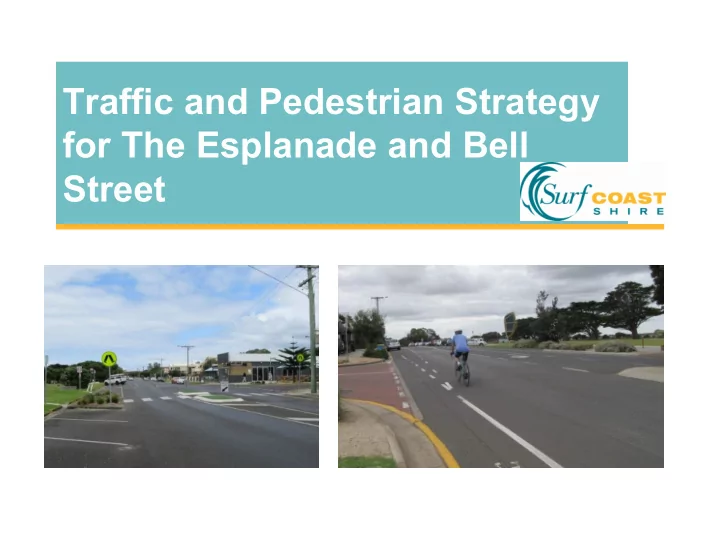
Traffic and Pedestrian Strategy for The Esplanade and Bell Street Strategy Context With strong growth in population and visitation, the type and volume of traffic in central Torquay is changing. Population increase of more than 67 per
– Population increase of more than 67 per cent between 2001 and 2013; growth in the surrounding regions such as Armstrong creek and growth in visitation. – 9,000 VPD at peak
In January a group of key internal Stakeholders met to agree the project scope including representatives from Engineering Services, Strategic Planning and Economic Development and it was planned to achieve the following: Develop an independent strategy and costed action plan to facilitate improved pedestrian connectivity, traffic flow and road safety in the precinct over the next ten years. Consider options to support international cycling events and growing events in precinct.
Study Area 1 : The Esplanade From Zeally Bay Rd to Bell Street
Brief as circulated to Stakeholders: Strategic Planning, Economic Development and Tourism, Engineering Services.
Pedestrian counts, traffic counts and crash statistics Additional relevant strategies reviewed Including Pathway Strategy and Town Centre Parking and Access Strategy
Discussions held with Cameron Group currently undertaking review of the Town Centre Access and Parking Strategy Discussions with representatives relating to Cadel Evans Great Ocean Road Race
Summary of key issues identified Recommendations regarding the strategic improvement of the Esplanade and Bell Street Draft costed action plan developed
Incorporation of community feedback collated during review of Torquay Towncentre Parking and Access Strategy
roundabout with zebra crossings and bicycle sharrows future kerb
zebra crossings zebra crossings zebra crossings kerb outstands kerb outstands zebra crossings and bicycle sharrows kerb outstands, kerb ramps zebra crossings and bicycle sharrows construct path
31
recommendations would be $1,076,000.
would have a total cost to Council of $220,000.
could be pursued include ‘Transport Investing in Regions Initiative’ and TAC Community and Local Government grants’.
up to $100,000 funding if Council provides matched funding – total $200,000.
allocation under the ‘Local Area Traffic Management, Parking and Pedestrian Improvements’ budget. Priority 1: Recurrent Budgets Priority 2: Funding Bids/ External Sources External Grant Funding
If Council wishes to provide an infrastructure free corridor to support the Cadel Evans Great Ocean Road and future potential events in the precinct it will be necessary to install removable infrastructure north of Price Street. The annual cost implication of removal and replacement of such infrastructure each year is as follows:
an annual cost of $17,500 for removal and replacement each year to support event.
replacement each year. An alternative option would be a flat top roundabout.
replacement approximately every 10 years. The cost of replacement of a removable island pair at current market value is $5,000. (i.e. $15,000). Concrete infrastructure has an expected lifespan of 30 years with a replacement cost of $10,000 every 30 years.