
SLIDE 1
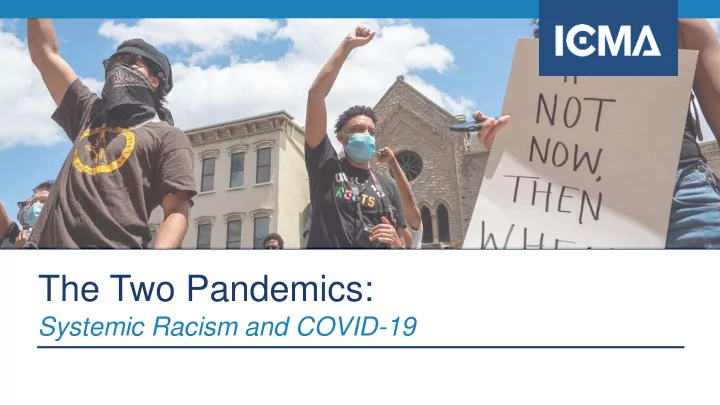
The Two Pandemics:
Systemic Racism and COVID-19
The Two Pandemics: Systemic Racism and COVID-19 Moderator Leon - - PowerPoint PPT Presentation
The Two Pandemics: Systemic Racism and COVID-19 Moderator Leon Andrews Director, Race, Equity, And Leadership Program (REAL) National League of Cities Collaborating Organizations Speakers Dr. Marie Peoples Lovely Warren Serena Cruz Brion
The Two Pandemics:
Systemic Racism and COVID-19
Moderator
Leon Andrews Director, Race, Equity, And Leadership Program (REAL) National League of Cities
Collaborating Organizations
Speakers
Lovely Warren Mayor Rochester, NY Serena Cruz Executive Director Virginia Garcia Memorial Foundation Brion Oaks Chief Equity Officer Austin, TX
Deputy County Manager Coconino County, AZ
REAL Mission
To strengthen local leaders’ knowledge and capacity to eliminate racial disparities, heal racial divisions and build more equitable communities.
REAL Today
Training and Capacity Building Technical Assistance Network Building Building Special Populations Work NLC Race, Equity And Leadership - http://NLC.org/REAL
Theory of Change Change happens when people recognize:
1)
Why the change is needed
2)
Potential of proposed solutions
3)
Shared urgency
Racial Disparities
From infant mortality to life expectancy, race predicts how well
Racial Disparities
6 in 10
are Black/Latino
(yet only comprise 30% of the U.S. population)
65%
Black or Latino men graduate from High School
(80% of White males will)Black and Native American unemployment is
that of Whites
spend more than 30%
housing costs
What is the Process for Racial Equity?
Community Engagement Desired Results Analysis of Data Strategies for Racial Equity Implemental Plan Communications and Accountability conversations within your organization?
Rochester has faced in the wake of COVID-19?
have followed the continued incidents of police killings of black residents?
Mayor Lovely A. Warren
What is Virginia Garcia Memorial Health Center?
injustice
services in borrowed 3-car garage
Our Mission
The Mission of the Virginia Garcia Memorial Health Center is to provide high quality, comprehensive, and culturally appropriate primary health care to the communities of Washington and Yamhill counties with a special emphasis on migrant and seasonal farmworkers and others with barriers to receiving health care.
Largest nonprofit Community Health Center in the State of Oregon
health care in 5 primary care clinics, 6 dental clinics, 5 school-based health centers, a women’s clinic and in a mobile clinic that takes care directly to our patients where they live and work.
Virginia Garcia Today
Oregon Health Disparities: COVID-19
https://public.tableau.com/profile/oregon.health.authority.covid.19#!/vizhome/OregonCOVID- 19CaseDemographicsandDiseaseSeverityStatewide/DemographicData?:display_count=y&:toolbar=n&:origin=viz_ share_link&:showShareOptions=false Virginia Garcia Latinx Health Disparities: COVID-19
Why?
workers
are exacerbated by the virus
leave or the ability to collect unemployment or participate in the federal CARES act.
What are we doing about it?
What are we doing about it?
www.workerrelief.org
(developed in partnership with community). Multiple languages. Multiple platforms.
instability, quarantine support.
response, complete with research and proposed solutions.
What else should be done?
conversations within your organization?
to ensure that an equity lens is being applied?
Brion Oaks
indigenous community?
established or encountered during the pandemic?
guiding your work; what’s working?