SLIDE 1
SLIDE 2
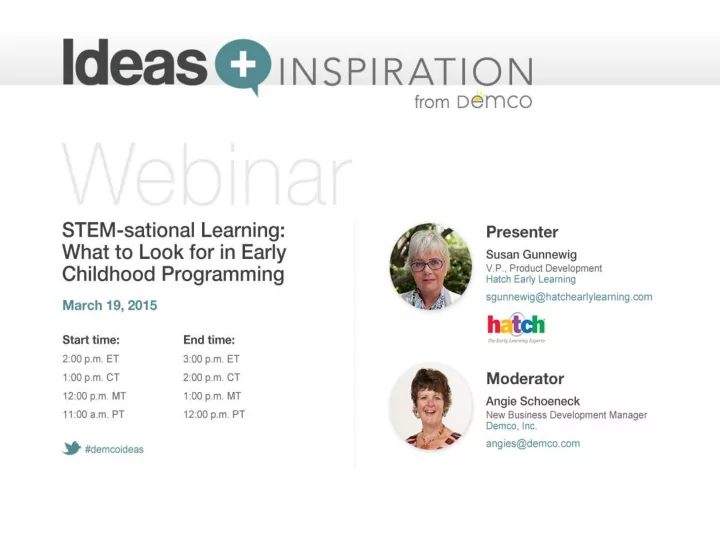
STEM-‑sensa*onal ¡Learning: ¡What ¡ to ¡Look ¡for ¡in ¡Early ¡Childhood ¡
Presented ¡by: ¡ Susan ¡B. ¡Gunnewig ¡ ¡
SLIDE 3 Webinar ¡Goals ¡
- Classroom ¡Science ¡& ¡Math ¡Instruc4on ¡Studies ¡
- STEM ¡Na4onal ¡Interest ¡and ¡Focus ¡
¡
- What ¡is ¡STEM? ¡
- What ¡does ¡STEM ¡look ¡like ¡in ¡the ¡classroom? ¡
SLIDE 4 The ¡Lay ¡of ¡Land ¡ ¡
What ¡does ¡research ¡tells ¡us ¡about ¡math ¡and ¡science ¡ instruc;on ¡in ¡preschool? ¡
¡ “Despite ¡the ¡existence ¡of ¡standards ¡and ¡some ¡curricular ¡support ¡for ¡incorpora4ng ¡ science ¡and ¡math ¡there ¡are ¡very ¡few ¡math ¡and ¡science ¡experiences ¡available ¡in ¡the ¡ preschool ¡classroom.” ¡(Brenneman, ¡Boyd, ¡Frede, ¡2007) ¡ ¡ Two ¡studies ¡demonstrate ¡that ¡this ¡fact. ¡ ¡ – In ¡40 ¡hours ¡of ¡classroom ¡observa4on ¡math ¡and ¡science ¡we ¡non-‑existent. ¡ (Rudd, ¡et.al., ¡2008) ¡ – 3 ¡minutes ¡of ¡math ¡instruc4on ¡per ¡day/China ¡30 ¡minutes ¡per ¡day. ¡ ¡ ¡ ¡(Starkey ¡& ¡ Klein, ¡2004) ¡ ¡ ¡ ¡ ¡ ¡
SLIDE 5 If ¡Math ¡& ¡Science ¡Exist ¡What ¡Does ¡it ¡ Look ¡Like? ¡
- Sink ¡and ¡float ¡
- Plant ¡Cycle ¡
- Animals ¡
- Living ¡& ¡Non ¡Living ¡
- Weather ¡
- Science ¡based ¡Field ¡Trips ¡
SLIDE 6 STEM ¡in ¡Prekindergarten ¡
- Announced ¡in ¡2009 ¡
- Barack ¡Obama ¡& ¡Joe ¡Biden’s ¡Plan ¡for ¡Na4onal ¡
Science ¡Founda4on’s ¡Discovery ¡Plan ¡included ¡ prekindergarten ¡
- Na4onal ¡Founda4ons ¡and ¡Corpora4ons ¡
Funding ¡ ¡(Ford, ¡Honda, ¡Motorola ¡& ¡others) ¡ ¡
(Source: ¡Brenneman, ¡K. ¡(2011) ¡
SLIDE 7 Na*onal ¡Focus ¡ ¡
- NAEYC ¡Standards ¡ ¡
- Na4onal ¡Head ¡Start ¡Frameworks ¡(2009) ¡
- Most ¡States ¡Early ¡Childhood ¡Standards ¡
- Na4onal ¡Council ¡of ¡Mathema4cs ¡
- Na4onal ¡Science ¡of ¡Teachers ¡Assn. ¡
SLIDE 8 What ¡is ¡STEM? ¡
- S= ¡Science ¡
- T= ¡Technology ¡
- E= ¡Engineering ¡
- M= ¡Mathema4cs ¡
SLIDE 9 Why ¡is ¡STEM ¡in ¡Early ¡Childhood ¡Vital? ¡
“Development ¡research ¡demonstrates ¡preschool ¡ children ¡possess ¡content ¡knowledge ¡that ¡roughly ¡maps ¡
- nto ¡the ¡scien4fic ¡principle ¡of ¡physics, ¡chemistry ¡and ¡
- biology. ¡They ¡have ¡begun ¡to ¡reason ¡to ¡form ¡
founda4ons ¡for ¡scien4fic ¡thinking.” ¡ As ¡educators ¡we ¡must ¡tap ¡into ¡this ¡ability ¡to ¡prepare ¡ them ¡for ¡what ¡is ¡ahead ¡of ¡them. ¡If ¡not, ¡it ¡is ¡a ¡missed ¡
- pportunity ¡to ¡prepare ¡children ¡for ¡kindergarten. ¡
¡ (Source: ¡Deshi, ¡Schweingruber ¡& ¡Shouse, ¡IES, ¡2007) ¡
¡
SLIDE 10 STEM ¡and ¡Common ¡Core ¡Standards ¡
- Kindergarten ¡and ¡First ¡Grade ¡Common ¡Core ¡for ¡
Mathema4cal ¡Prac4ce: ¡ ¡1. ¡Make ¡sense ¡of ¡problems ¡and ¡persevere ¡ ¡ ¡in ¡solving ¡them. ¡ ¡2. ¡Reason ¡abstractly ¡and ¡quan4ta4vely. ¡ ¡3. ¡Construct ¡viable ¡arguments ¡& ¡reasoning ¡ ¡ ¡
(Source: ¡Common ¡Core ¡State ¡Standards ¡for ¡Mathema4cs, ¡2009) ¡
SLIDE 11 STEM ¡and ¡Common ¡Core ¡Standards ¡
- Kindergarten ¡and ¡First ¡Grade ¡Common ¡Core ¡for ¡
Literacy: ¡ ¡1. ¡They ¡comprehend ¡as ¡well ¡as ¡cri4que. ¡ ¡2. ¡They ¡value ¡evidence. ¡ ¡3. ¡They ¡build ¡strong ¡content ¡knowledge. ¡
SLIDE 12 Guiding ¡Principle ¡
¡ ¡ “Helping ¡children ¡to ¡explore, ¡observe, ¡ask, ¡ ques;ons, ¡predict, ¡integrate ¡their ¡learning.” ¡ ¡ ¡ ¡ ¡ ¡ ¡ ¡
(Source: ¡Lillian ¡M. ¡Katz ¡(an ¡interview ¡about ¡PreK ¡STEM, ¡2012) ¡
SLIDE 13
What ¡Does ¡Early ¡Childhood ¡ ¡ STEM ¡Look ¡Like: ¡
SLIDE 14 STEM ¡-‑Science ¡
Example: ¡Studying ¡Gravity ¡ Integrated ¡Model: ¡
- Reading ¡Aloud ¡a ¡Book ¡about ¡Gravity ¡
- Developing ¡Vocabulary ¡with ¡Word ¡Cards ¡
- Folding ¡Paper ¡Airplanes ¡& ¡Blowing ¡Bubbles ¡& ¡ ¡
- Ramps ¡
- Predic4ng, ¡Comparing, ¡Contras4ng ¡
- Making ¡conclusions ¡ ¡
- Wri4ng ¡conclusions ¡ ¡on ¡chart ¡paper ¡
- Paint ¡with ¡Gravity ¡
¡ ¡ Home ¡Connec*on: ¡During ¡bath ¡4me, ¡have ¡children ¡take ¡plas4c ¡cups, ¡bowls ¡mugs, ¡and ¡ pour ¡water ¡in ¡to ¡the ¡bath ¡water. ¡Ask ¡what ¡is ¡causing ¡the ¡water ¡to ¡fall ¡down. ¡ ¡Talk ¡about ¡ the ¡word ¡gravity. ¡ ¡ ¡ ¡ ¡
SLIDE 15
SLIDE 16
SLIDE 17
STEM-‑Technology ¡
SLIDE 18
STEM-‑Technology ¡
SLIDE 19 STEM-‑Engineering ¡
Example: ¡Studying ¡Robo*cs ¡ Integrated ¡Model ¡
- Reading ¡Aloud ¡a ¡book ¡about ¡robots ¡
- Developing ¡Vocabulary ¡with ¡pictures ¡
- Making ¡own ¡robot, ¡naming ¡it, ¡& ¡wri4ng ¡about ¡it ¡
- Construc4ng ¡robot ¡with ¡legos, ¡etc. ¡
- Play ¡with ¡cubelets ¡
Home ¡Connec*on: ¡Use ¡recycled ¡materials ¡to ¡make ¡a ¡ robot ¡at ¡home ¡for ¡a ¡robot ¡parade ¡in ¡the ¡classroom. ¡ ¡ ¡
SLIDE 20
Stamping ¡Geometric ¡Shapes ¡
SLIDE 21
Reading ¡About ¡Robots ¡
SLIDE 22
Building ¡Real ¡Robots ¡with ¡Cubelets ¡
SLIDE 23
SLIDE 24
SLIDE 25
SLIDE 26 Math ¡Founda*on ¡Skills ¡ Connected ¡to ¡STEM ¡
- Numeral ¡recogni4on ¡
- Sequence ¡coun4ng ¡
- Paierning ¡
- Sor4ng ¡
- Objects ¡in ¡a ¡Set ¡
- Adding ¡and ¡Subtrac4ng ¡Objects ¡in ¡a ¡Set ¡
- Spa4al ¡Thinking ¡
- Measurement ¡(ruler) ¡
¡
(Source: ¡ ¡Mathema4cs ¡in ¡Early ¡Childhood, ¡NRC, ¡2009) ¡
SLIDE 27
STEM-‑Mathema4cs ¡
SLIDE 28
STEM-‑Mathema4cs ¡
SLIDE 29
STEM ¡for ¡Toddlers ¡
SLIDE 30 STEM ¡for ¡Toddlers ¡ ¡(University ¡of ¡Washington) ¡
hip://depts.washington.edu/cqel/Presenta4ons.php ¡
SLIDE 31
QUESTIONS? ¡
SLIDE 32