SLIDE 1
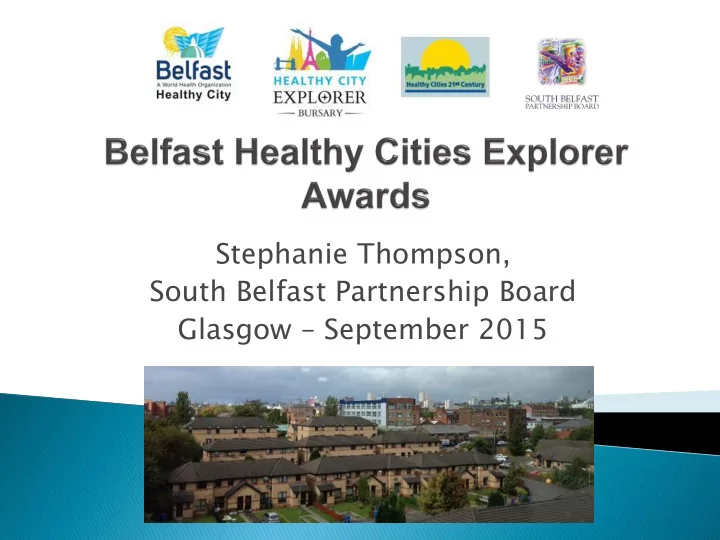
Stephanie Thompson, South Belfast Partnership Board Glasgow – September 2015
SLIDE 2
- To explore and bring innovation and
inspiration back to Belfast to tackle health inequalities in local communities
- An understanding of the public health
structures in the city
- Explore community and voluntary sector
targeted programmes to tackle the use and misuse
drugs and alcohol in communities.
SLIDE 3
World Healthy Cities - Health 2020 New Strategic Direction for Drugs and Alcohol DHSSPS Making Life Better Framework DHSSPS Fit and Well Changing Lives BSP Belfast Drug and Alcohol Coordinator Team
(Northern Ireland Regional DACTs)
SLIDE 4 Brings together over 80 members of the community, voluntary and
statutory sector working towards addressing health inequalities in South Belfast
Vision :
‘To work towards a healthy and equitable South Belfast’
Thematic Priorities in South Belfast for 2015-2017:
Emotional Wellbeing Physical Activity and Nutrition Addressing Isolation of Vulnerable Groups Use and Misuse of Alcohol and Drugs
SLIDE 5 The use and misuse of alcohol have impacted directly and indirectly on local communities, hospital admissions, education, employment, domestic violence and deaths suspected to be by suicide;
Mental Wellbeing
- 49% of self harm presentations at hospital departments in Belfast were a result of drug overdose
(2013)
- 33% of self harm presentations at hospital departments in Belfast were a result of alcohol
poisoning (2013)
Physical Wellbeing
- 17 deaths recorded as drug related deaths in South Belfast in 2013
- 15 deaths recorded as a result of alcohol related deaths in South Belfast in 2013
- 53% of Drug Misuse in Northern Ireland has been recorded in the Belfast HSC Trust (2010)
Community Wellbeing
- 45% of anti social behaviour incidents in South Belfast were drug or alcohol related (2013).
- 28% of crime in South Belfast were drug and alcohol related (2013)
SLIDE 6 World Healthy Cities aims to develop a creative, supportive and
motivating network to tackle health inequalities.
Belfast Healthy Cities through the explorer award bursaries
wishes to promote solidarity and bring best practice and effective leadership back to Belfast to address health challenges in a collaborative way.
Contributions to the delivery of the Phase VI goals and core
themes of Belfast Healthy Cities:
- Enabling the observation of leadership & participatory governance for health
- Provide direct access to WHO expertise in Glasgow to enable capacity
and innovation to be brought to Belfast to be developed into pilot projects that will maximum partnership approaches.
SLIDE 7 Understand the public health structures in Glasgow To evidence best practice joined up working and leadership
To evidence whole person approach programmes to tackle
the use and misuse of drugs and alcohol in Glasgow
To appreciate how positive impacts and outcome are
measured in another world healthy city
SLIDE 8
Changing Scotland's Relationship with Alcohol: A
Framework for Action
Glasgow’s Road to Recovery Glasgow’s Single Outcome Framework Thriving Places Approach Understanding Glasgow website Glasgow Games Planning Toolkit
SLIDE 9
- Glasgow’s Single Outcome Agreement (SOA) – 10
year formal agreement to target three priority areas:
cohol
- Youth Employment
- Vulnerable people
- Th
Thriving ving Place ces s approac
h – asset based approach
- ‘Doing with’ rather than ‘doing to’
SLIDE 10 An organisation funded by Glasgow Council to work in
partnership with Glasgow University and community groups
Role: Research and Development via pilot projects Understanding Glasgow website
SLIDE 11
Glasgow Games Toolkit
What is it? Interactive way for a group to engage in a
conversation
What do you need? Data that describes the current trends of
the city and its people
Identify potential shocks to the system (e.g. a recession, welfare
reform) and what the key concerns arising from these shocks would be
Link to: health, housing, transport, employment, mindset Participants developed a declaration relating to each topic
about how to address alcohol and drugs challenges in the city.
As a result, ‘the game’ provided 12 key recommendations to
policy-makers about how to ensure the city can meet the upcoming challenges.
SLIDE 12 Managing Partnerships for Improving Health and Wellbeing Research Obstacles for successful partnerships:
- Culture clashes between agencies vs integration or co-location
- Confusion about roles – trust and terms of reference
- Staff Capacity – Support and sharing responsibility
SLIDE 13
Prevention and education programmes in Glasgow
Weight for it! Campaign for Adults 2015 Clearer Choices Programme for Young People 2015
SLIDE 14 Community Rehabilitation Clinic programme Harm Reduction Model Counselling, Support and Relaxation Space Not Crisis Response – 4 days detox. 3 Phased programme:
aining Recov
ery Group up Thera rapy; py; goal setting, routines and understanding commitment to change
rt Recove
ry Model - Employment and Education support;
cellence nce and Volunte unteeri ering; g; understanding the impact the addiction has had on others; combined life coaching and CBT.
SLIDE 15
What is recovery?
Recovery is a process for individuals and communities It is not a single event It may take time to achieve and effort to maintain
SLIDE 16
Crisis Response Units in the Community Bridgeton Community Learning Campus Recovery Cafe Models
SLIDE 17 Glas asgo gow Home meless less Service ice
Service users include: homeless, those sleeping rough or who
have been experiencing a crisis through alcohol addiction
Person Centred Support Plan via MDT of professionals Short term and long term (9-12) months resettlement
programmes
Complimentary therapies are a necessity while using the
service: socialising network, community garden on-site, alternative therapies including kinetic therapy support, art therapy
SLIDE 18
Community Residential Unit Community Garden
SLIDE 19
- Providing centres in the community that make people feel safe
- Multi functional community space
- Physiotherapy Drop In
- Community Chiropodists
- Health and Wellbeing classes
- Service Users: general public, recovering addictions, recovery
mental health clients who suffered self harm
- Steps to Excellence 12 week programme model
- Peer Facilitator classes
- Craft and Creations social enterprise
- Community Achievement Awards with Glasgow Kelvin College
SLIDE 20
Above: Wall of Hope designed by service users in recover To left: Social Enterprise: Craft and Creations
SLIDE 21 Su Sunshine nshine Re Recovery very Cafe
- Established in April 2014 by Renfrewshire Drug
and Alcohol Council
- Based in a local church
- Supports people in recovery from drug and alcohol addiction
- Activities are run by volunteers who are in recovery
- Grant funded activities include: cooking, music groups,
homeless world cup
- Training and development opportunities are available for
volunteers; e.g. Food hygiene, health and safety, computing courses, book keeping
- Other examples; Phoenix Futures
SLIDE 22
Representative from the Scottish Drugs Recovery
Consortium – John White
Guide to developing a recovery cafe (2011) Key elements of recovery communities are:
Individual learning and development Reinforced by peer support and reprocity within helping relationships Overcoming deficit thinking and taking a positive
participatory approach
SLIDE 23 Glasgow faces similar issues in terms of coordinating services in local
areas to prevent duplication
Need for greater investment across the UK in recovery and re integration
back into communities
Services should be tailored for every individual – person centred plans Cities need to break down the stigma attached to addicts to enable
recovery and belonging in the community
Successful partnerships are based on the need to create a sense of
interdependence between organisations
SLIDE 24
- Action Plan for 2016-2018
- Partners: BDACT, Belfast Connections Team, South Belfast Health Forum and South
Belfast PCSP
- Priority 1: Prevention and Early Intervention
- Awareness Raising Education; with target groups on subject areas
- Information Sharing, Coordinated Campaigns for Belfast and Capacity Building
through existing structures and groups
- Priority 2: Reducing Supply and Demand
- Continue to promote locally the RAPID Removal Bins in South Belfast
- Regular feedback from information from the central DAMIS system
- Priority 3: Empowering local communities
- Training Needs Analysis of community and voluntary sector
- Investment by PHA into the most appropriate workforce development model
SLIDE 25 BSP – Belfast Drug and Alcohol Coordination Team: SB PCSP projects Belfast Recovery Centre – Bradbury Centre – in 6 month pilot phase Nightingale 24hr Centre - FASA - in operation South Belfast SIF One Stop Youth Support Service – awaiting funding
approval via OFMDFM
South Belfast Zen Garden – in development and seeking funding South Belfast Recovery Cafe pilot project – April 2016 onwards
- Social Enterprise Model, Steps to Excellence Programme, peer support, group activities
and health and wellbeing support service outreach
SLIDE 26
SLIDE 27
For further information or to discuss please contact: Stephanie Thompson Strategic Health Officer South Belfast Partnership Board Telephone: 02890 244 070 Email: stephanie.thompson@southbelfast.org