
SLIDE 1
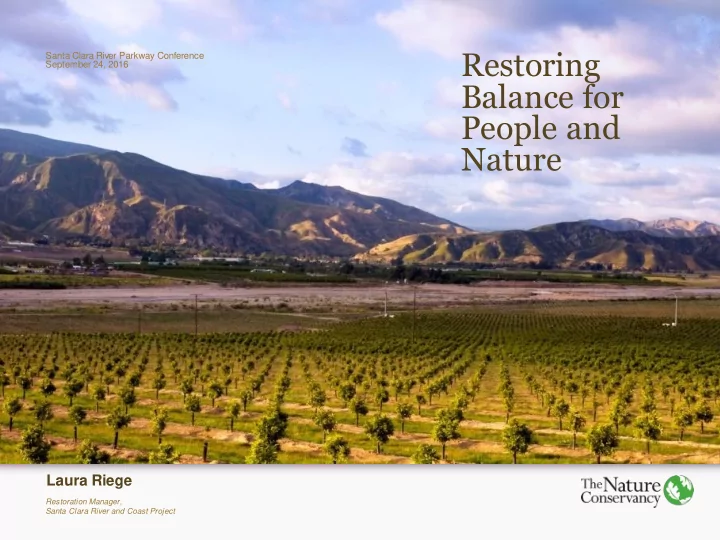
Santa Clara River Parkway Conference September 24, 2016
Laura Riege
Restoration Manager, Santa Clara River and Coast Project
Restoring Santa Clara River Parkway Conference September 24, 2016 - - PowerPoint PPT Presentation
Restoring Santa Clara River Parkway Conference September 24, 2016 Balance for People and Nature Laura Riege Restoration Manager, Santa Clara River and Coast Project TNCs Mission OUR MISSION Conserve the lands and waters on which all
Santa Clara River Parkway Conference September 24, 2016
Laura Riege
Restoration Manager, Santa Clara River and Coast Project
OUR MISSION
America founded to promote the science of ecology
disagreement about whether or not to take a political or activist stance on ecological preservation
to focus on preserving nature by protecting ecological communities
The Nature Conservancy
million acres of land and 5,000 river miles worldwide
marine conservation projects
network of private preserves in the U.S.
more than 30 countries
endangered and protected species
Utah Dept. Natural Resources Kylie Fischer Christopher Mosser, UC Davis
Least Bell’s Vireo Coast Horned Lizard Mountain Lion Southwestern Willow Flycatcher Arroyo Toad Southern California Steelhead Unarmored Threespine Stickleback Black Bear Pond Turtle Tidewater Goby California Red-legged Frog
Slender-horned Spineflower Ventura Marsh Milkvetch
Jasmine J. Watts
California Orcutt Grass San Fernando Valley Spineflower Nevin’s Barberry Lyon’s Pentachaeta
James Bailey
Habitat Loss and Destruction from:
uses
In 2005, American Rivers designated the Santa Clara River as one of the most threatened rivers in the nation.
California Invasive Plant Council ranked the Santa Clara River watershed as #2 of 24 watersheds making it a high priority for treatment.
for erosion control, and for the production of reeds for musical instruments
native vegetation
rivers too warm for native fish
difficult for birds and other wildlife to make nests or find cover
liters of water supply benefit annually
Milk thistle surrounded by rip gut brome Salt cedar (tamarisk) in bloom Salt cedar (tamarisk) Castor bean Short pod mustard Tree tobacco
Fillmore Ventura Santa Paula Acton Port Hueneme Oxnard
Ojai Pacific Palisades
Newhall Santa Clarita
Multi-benefit Conservation Program
Habitat conservation
Over 3,600 acres of river and coastal wetlands acquired Zoning policy achievements (Conservation Subdivision) Conservation and restoration by habitat nodes Wildlife corridors
Non-structural flood protection
Floodplain Easement Program Piloting green infrastructure program
Land Management
Promote agriculture as valued land use Leasing over 500 acres
Climate Change Adaptation
Coastal Resilience Ventura Natural Infrastructure
that will withstand flood and fire
effective and replicable throughout the river and coast
farmers for natural floodplain management
sea level rise
Griffith Wildlife Biology Griffith Wildlife Biology
parent or guardian
The Nature Conservancy – general info, national and international projects, membership www.nature.org The Santa Clara River & Coast Project description and nature hike schedule www.nature.org/ourinitiatives/regions/northamerica/unitedstates/california/plac esweprotect/la-ventura.xml Santa Clara River Parkway project description and reports www.santaclarariverparkway.org/ Coastal Resilience Ventura http://coastalresilience.org/ http://maps.coastalresilience.org/network/
LRiege@tnc.org 532 E. Main St., Suite 200 Ventura, CA 93001 (805) 290-4776