SLIDE 1 1
Responding to Disasters in the Foreign Responding to Disasters in the Foreign Service Setting Service Setting
Samuel Thielman, M.D., Ph.D. RMO/P Frankfurt
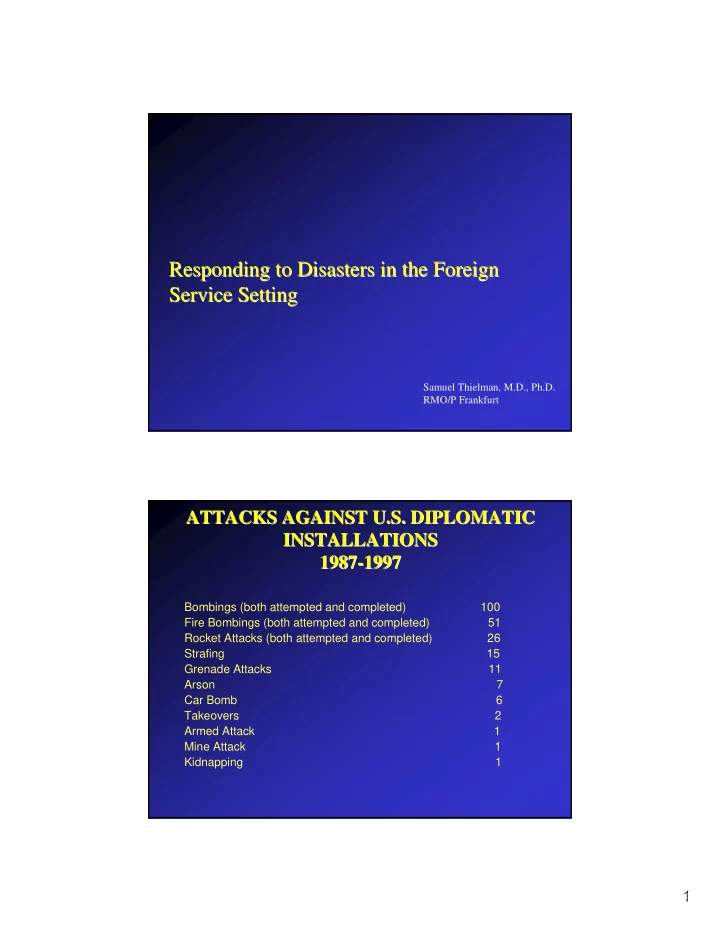
ATTACKS AGAINST U.S. DIPLOMATIC ATTACKS AGAINST U.S. DIPLOMATIC INSTALLATIONS INSTALLATIONS 1987 1987-
1997
Bombings (both attempted and completed) 100 Fire Bombings (both attempted and completed) 51 Rocket Attacks (both attempted and completed) 26 Strafing 15 Grenade Attacks 11 Arson 7 Car Bomb 6 Takeovers 2 Armed Attack 1 Mine Attack 1 Kidnapping 1
SLIDE 2 2
Attac ks on U.S. Diplomatic Installations, 1900 Attac ks on U.S. Diplomatic Installations, 1900-
1965
1900 1910 1935 1925 1920 1930 1915 1965 1960 1955 1950 1945 1940 Deaths Assault Destruction Arson Bombing No Lost Life Destruction Injury Attacks on U.S. Diplomatic Installations, 1900-1965
Aftermath of Liberian Civil War Aftermath of Liberian Civil War
Monrovia Mental Health Issues
- Exposure to human remains
- Extended exposure to extreme violence and threat of death
- Isolation from social supports
Outcome better than expected
- Careful selection of personnel who remained at embassy during crisis
- Group cohesiveness
- No American deaths
- Tangible benefit to Liberia because of strategy pursued by Mission
SLIDE 3
3
Psychological Response to Disasters Psychological Response to Disasters
Disaster Response Organizational Response Individual response Timing of response
Risk Factors Related to Characteristics of Risk Factors Related to Characteristics of Trauma Trauma
Man-made traumas (terrorism, bombings) Traumas involving cruelty Grotesque or horrific deaths Exposure to dead bodies of social peers Exposure to bodies or injuries of acquaintances Exposure to deaths or injuries of children
SLIDE 4
4
Risk Factors Related to Prior Medical Risk Factors Related to Prior Medical History History
Preexisting psychiatric disorder Acute stress disorder Bereavement Injury
Intervention after Mass Violence Intervention after Mass Violence
Psychological First Aid Critical Incident Stress Debriefing (no longer standard of care)
SLIDE 5
5
Managing Post Trauma Psychological Managing Post Trauma Psychological Issues Issues
Nightmares Hyper-arousal Derealization Waves of emotions
Harnessing Local Support/Usual Means of Harnessing Local Support/Usual Means of Support Support
Most useful usual means of support
Priority Varies depending on demographics Faith communities Prayer Family and Friends Fellow Survivors
Individual counseling is not usually ranked high by survivors following a disaster
SLIDE 6 6
Traumatic Event Traumatic Event
Definition is controversial Current definition in DSM: The person has been exposed to a traumatic event in which both of the following have been present: (1)the person experienced, witnessed, or was confronted with an event or events that involved actual or threatened death or serious injury, or a threat to the physical integrity of self or others (2)(2) the person's response involved intense fear, helplessness,
- r horror. Note: In children, this may be expressed instead by
disorganized or agitated behavior.
Trauma History Trauma History
Focus on trauma literature dealing with disasters, other thypse of trauma may be different.
SLIDE 7
7
Risk factors Risk factors
Nature and extent of disaster Prior exposure Prior psychiatric history “Constitution” Exposure to Trauma
Exposure to Trauma in the General Exposure to Trauma in the General Population Population
[Review: Surveys in US, Canada, and Mexico : 50 -90% adults had been exposed to a traumatic event.] Multiple trauma exposure is more common than not:
30% had a single trauma, 24% had two, 19% had three, 27% had four or more.
SLIDE 8 8
Common Reactions to Trauma Common Reactions to Trauma
Denial of feelings Sense of pointlessness Increased anxiety & vulnerability Nightmares Sleep disturbances Intrusive images & thoughts Shame, regret, blame, anger, guilt & bitterness Sense of isolation & loneliness
Posttraumatic Stress Disorder Posttraumatic Stress Disorder
- A. A traumatic event has occurred
- B. The traumatic event is persistently reexperienced
- C. Persistent symptoms of increased arousal (insomnia, irritability,
forgetfulness, easily startled)
- D. There is persistant avoidance of things associated event and
numbing of general responsiveness
- E. The disturbance has lasted for more than one month
SLIDE 9 9
Psychological First Aid Psychological First Aid
(Adapted fromAppendix A of Brymer, M et al, Psychological First (Adapted fromAppendix A of Brymer, M et al, Psychological First Aid: Field Operations Guide 2 Aid: Field Operations Guide 2nd
nd ed. 2006)
- ed. 2006)
- 1. PREPARATION
- 2. ENTERING THE SETTING
3.PROVIDING SERVICES
- 4. GROUP SETTINGS
- 5. MAINTAIN A CALM PRESENCE
- 6. BE SENSITIVE TO CULTURE AND DIVERSITY
- 7. BE AWARE OF AT-RISK POPULATIONS
Psychological First Aid Psychological First Aid
Contact and Engagement
- 1. Introduce yourself/ask about immediate needs
- 2. Confidentiality
SLIDE 10
10
Psychological First Aid Psychological First Aid
Safety and Comfort
Assure secure area Attend to hunger, clothing, shelter Provide information about the respose Promote social engagement Help separated children Attend to children who are separated from their parents/caregivers
Psychological First Aid Psychological First Aid
Stabilization Orient Use appropriate medications
SLIDE 11 11
Psychological First Aid Psychological First Aid Information Gathering: Current Needs and Concerns
- 1. Nature and severity of experiences during the disaster
- 2. Death of a loved one
- 3. Concerns about immediate post-disaster circumstances and ongoing threat
- 4. Separations from or concern about the safety of loved ones
- 5. Physical illness, mental health conditions, and need for medications
- 6. Losses (home, school, neighborhood, business, personal property, and
pets)
- 7. Extreme feelings of guilt or shame
- 8. Thoughts about causing harm to self or others
- 9. Availability of social support
- 10. Prior alcohol or drug use
- 11. Prior exposure to trauma and death of loved ones
- 12. Specific youth, adult, and family concerns over developmental impact
Psychological First Aid Psychological First Aid Practical Assistance
- 1. Offering practical assistance to children and adolescents :deal with
boredom
- 2. Identify the most immediate needs
- 3. Clarify the need
- 4. Discuss an action plan
- 5. Act to address the need
SLIDE 12 12
Psychological First Aid Psychological First Aid Connection with Social Supports
- 1. Enhance access to primary support persons (family and significant
- thers)
- 2. Encourage use of immediately available support persons
- 3. Discuss support-seeking and giving
- 4. Special considerations for children and adolescents
- 5. Modeling support
Psychological First Aid Psychological First Aid Information on Coping
- 1. Provide basic information about stress reactions
- 2. Review common psychological reactions to traumatic
experiences and losses Intrusive thoughts Avoidance and withdrawal Hyper-arousal Grief Sadness
SLIDE 13
13
Psychological First Aid Psychological First Aid Talking with children about body and emotional reactions
Provide basic information on ways of coping Teach simple relaxation techniques Coping for families Assisting with developmental issues Assist with anger management Address highly negative emotions Help with sleep problems Address alcohol and substance use
Psychological First Aid Psychological First Aid Linkage with Collaborative Services
Provide direct link to additional needed services Referrals for children and adolescents Referrals for older adults Promote continuity in helping relationships
SLIDE 14 14
Leadership Management Leadership Management
Engage leaders Offer informed and practical recommendations Encourage them to set an example in terms of respite and
Help them identify and manage employees who impede mission effectiveness Make them succeed in managing the crisis
Summary Summary
The Foreign Service has unique issues that affect the disaster response Delivering mental health care during a crisis requires a departure from the usual mental health care delivery model Be aware of organizational factors that impact the medical response to disasters Psychological First Aid, with its practical approach, is the current standard of care for mental health care following a disaster. Attend to the needs of leaders