
SLIDE 1
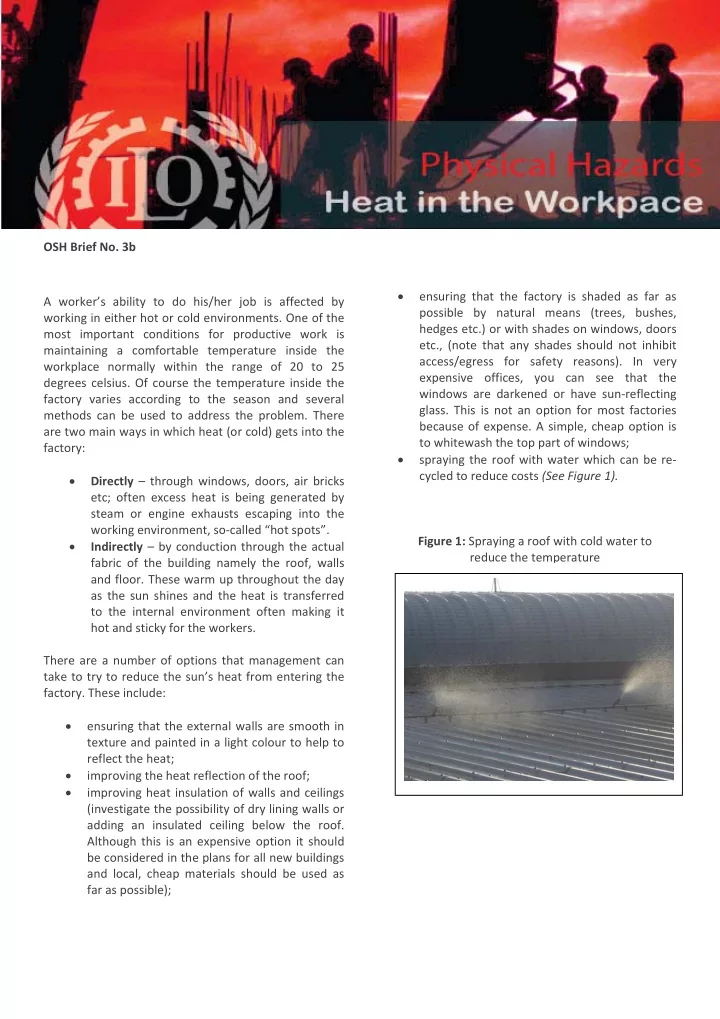
Figure 1: Spraying a roof with cold water to reduce the temperature OSH Brief No. 3b A worker’s ability to do his/her job is affected by working in either hot or cold environments. One of the most important conditions for productive work is maintaining a comfortable temperature inside the workplace normally within the range of 20 to 25 degrees celsius. Of course the temperature inside the factory varies according to the season and several methods can be used to address the problem. There are two main ways in which heat (or cold) gets into the factory:
- Directly – through windows, doors, air bricks
etc; often excess heat is being generated by steam or engine exhausts escaping into the working environment, so‐called “hot spots”.
- Indirectly – by conduction through the actual
fabric of the building namely the roof, walls and floor. These warm up throughout the day as the sun shines and the heat is transferred to the internal environment often making it hot and sticky for the workers. There are a number of options that management can take to try to reduce the sun’s heat from entering the
- factory. These include:
- ensuring that the external walls are smooth in
texture and painted in a light colour to help to reflect the heat;
- improving the heat reflection of the roof;
- improving heat insulation of walls and ceilings
(investigate the possibility of dry lining walls or adding an insulated ceiling below the roof. Although this is an expensive option it should be considered in the plans for all new buildings and local, cheap materials should be used as far as possible);
- ensuring that the factory is shaded as far as
possible by natural means (trees, bushes, hedges etc.) or with shades on windows, doors etc., (note that any shades should not inhibit access/egress for safety reasons). In very expensive offices, you can see that the windows are darkened or have sun‐reflecting
- glass. This is not an option for most factories
because of expense. A simple, cheap option is to whitewash the top part of windows;
- spraying the roof with water which can be re‐