SLIDE 1
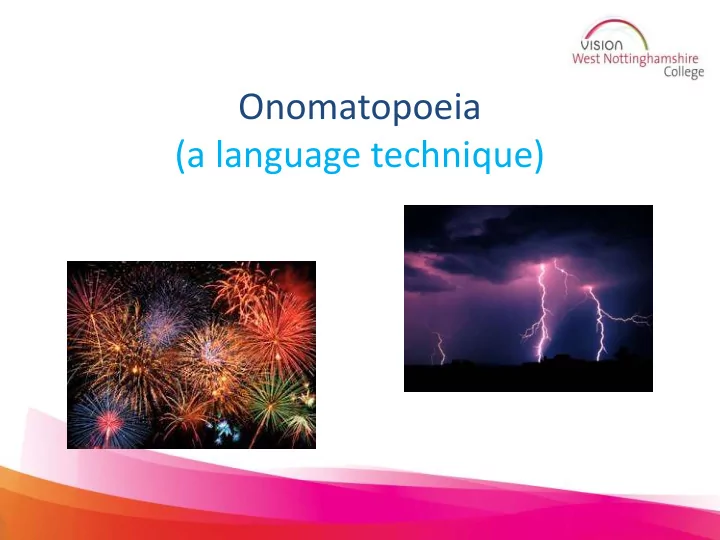
Onomatopoeia (a language technique)
SLIDE 2
Introduction
The purpose of this PowerPoint is to introduce the use of onomatopoeia as a language technique. By the end of this PowerPoint you will have the knowledge and understanding of how to identify the technique within a range of texts. When completing any form of writing activity for functional skills, try to apply the technique you’ve learned.
SLIDE 3 Learning outcomes
- To define the term ‘onomatopoeia’
- To develop knowledge and understanding of
the language technique
SLIDE 4
What do you already know? Onomatopoeia
Write down what you already know and understanding by the term ‘onomatopoeia’.
SLIDE 5
Definition
A word that imitates a natural sound it represents. For example, a dog barks, a cat purrs
SLIDE 6
Simple examples
The hum of the bees. The tweet of a bird. The oink of the pig. The pop of the balloon. The drip of a tap.
SLIDE 7 Further examples of
Identify the key word in each example.
- The sack fell into the river with a splash.
- The books fell on the table with a loud thump.
- He looked at the roaring sky.
- The rustling leaves kept me awake.
SLIDE 8
Examine the two examples below
“The stream flows in the forest.” “The gushing stream flows in the forest.” The reader is drawn to hear the sound of a “gushing stream” which makes the expression more effective.
SLIDE 9 Human voice sounds
- Blurt
- Chatter
- Giggle
- Growl
- Whisper
- Murmur
Can you name any others?
SLIDE 10 Alfred Lord Tennyson’s, Come down, O Maid
Identify the word from each line symbolising
‘The moan of doves in immemorial elms, And murmuring of innumerable bees.’
SLIDE 11 Can you identify two examples of onomatopoeia from the passage below?
Once upon a midnight dreary, while I pondered, weak and weary, Over many a quaint and curious volume of forgotten lore, While I nodded, nearly napping, suddenly there came a tapping, As of some one gently rapping, rapping at my chamber door. "'Tis some visiter," I muttered, "tapping at my chamber door — Only this, and nothing more."
SLIDE 12
Exam practice
Refer to the City & Guilds practice test paper, Noisy Office, Level 2 Question 2 Identify two language techniques that make the article more effective and provide an example of each from the text.
SLIDE 13 Further exam practice Question 5
Refer to the City & Guilds practice test paper, Noisy Office, Level 2
Can you identify two language techniques used in the quote below? “Whispering can create a climate of solitude, secrecy and suspicion, even fuelling paranoia, but a noisier
- ffice means that you can chat without having to
whisper.”
SLIDE 14
Exam practice answers
Q2 Onomatopoeia Title: Ring, Bang, Clatter Rule of Three Ring, Bang, Clatter Hyperbole Churn out documents all day
SLIDE 15 Exam practice answers
Question 5
“Whispering can create a climate of solitude, secrecy and suspicion, even fuelling paranoia, but a noisier
- ffice means that you can chat without having to
whisper.” Whisper – onomatopoeia Solitude, secrecy and suspicion – rule of three
SLIDE 16 Common examples (answers)
- The sack fell into the river with a splash.
- The books fell on the table with a loud thump.
- He looked at the roaring sky.
- The rustling leaves kept me awake.
SLIDE 17
Examples shared from Pinterest