
SLIDE 1
3/25/2015 1
Ne so silic a te s
(c o ntinue d )
- W. K
a nitpa nya c ha ro e n
I mag e so urc e http:/ / www.thiso lde arth.ne t/ I mag e s/ silic ate _struc ture s.jpg
- Learning goals
- 1. Learn more about Nesosilicates, particularly
the structures of garnet, zircon, and kyanite
- 2. Understand and able to explain the
p differences between end members in solid solutions
- 3. Understand key diagnostic properties of each
nesosilicate mineral
- Mo stly fo und in me ta mo rphic ro c ks
(e .g . sc hist, a mphib o lite , e c lo g ite ) a nd
Ga rne t X3Y2(SiO 4)3
(e .g . sc hist, a mphib o lite , e c lo g ite ) a nd so me in ig ne o us ro c ks (e .g . pe g ma tite , g ra nite )
- K
e y mine ra l to inte rpre t the P-T histo ry
I mag e so urc e http:/ / http:/ / www.impro ntaunika.it/ wp-c o nte nt/ uplo ads/ 2014/ 12/ L
- livina-dalla-c ristallo te rapia-alla-riduzio ne -de i-g as-se rra.jpg
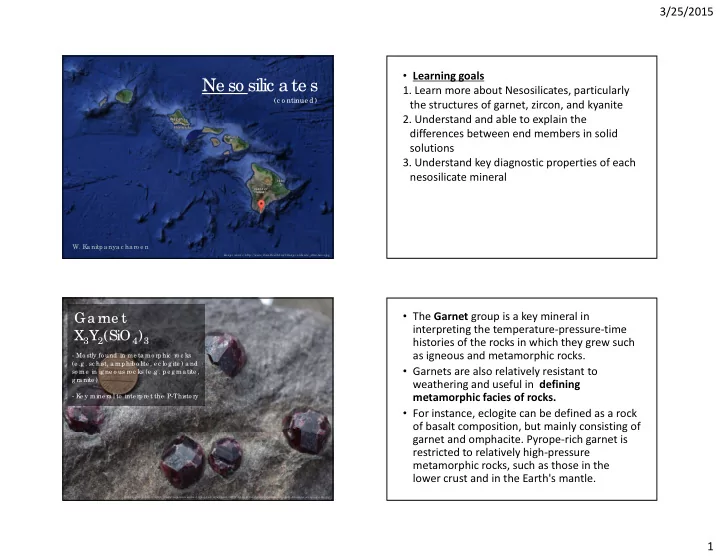
- The Garnet group is a key mineral in
interpreting the temperature‐pressure‐time histories of the rocks in which they grew such as igneous and metamorphic rocks.
- Garnets are also relatively resistant to
weathering and useful in defining metamorphic facies of rocks.
- For instance, eclogite can be defined as a rock
- f basalt composition, but mainly consisting of