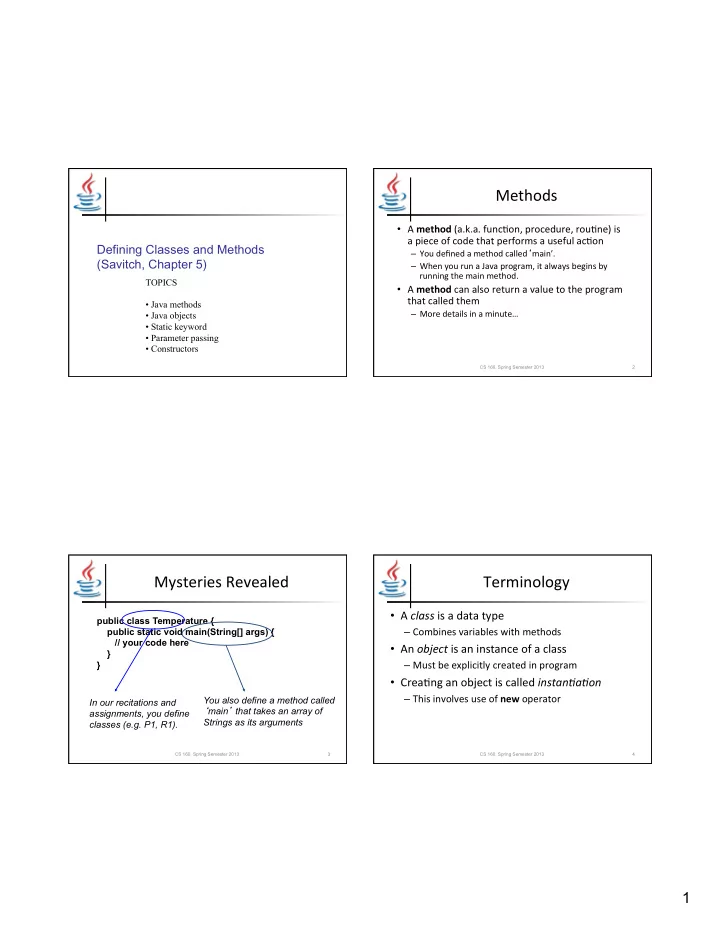
Mysteries Revealed Terminology A class is a data type - - PDF document

mysteries revealed terminology
SMART_READER_LITE
LIVE PREVIEW

Mysteries Revealed Terminology A class is a data type - - PDF document

Methods A method (a.k.a. func2on, procedure, rou2ne) is a piece of code that performs a useful ac2on Defining Classes and Methods You defined a method


slide-1
SLIDE 1

1

Defining Classes and Methods (Savitch, Chapter 5)

TOPICS

  • Java methods
  • Java objects
  • Static keyword
  • Parameter passing
  • Constructors

Methods ¡

  • A ¡method ¡(a.k.a. ¡func2on, ¡procedure, ¡rou2ne) ¡is ¡

a ¡piece ¡of ¡code ¡that ¡performs ¡a ¡useful ¡ac2on ¡

– You ¡defined ¡a ¡method ¡called‘main’. ¡ – When ¡you ¡run ¡a ¡Java ¡program, ¡it ¡always ¡begins ¡by ¡ running ¡the ¡main ¡method. ¡

  • A ¡method ¡can ¡also ¡return ¡a ¡value ¡to ¡the ¡program ¡

that ¡called ¡them ¡

– More ¡details ¡in ¡a ¡minute… ¡

CS 160, Spring Semester 2013 2

Mysteries ¡Revealed ¡

public class Temperature { public static void main(String[] args) { // your code here } } In our recitations and assignments, you define classes (e.g. P1, R1). You also define a method called ‘main’ that takes an array of Strings as its arguments

CS 160, Spring Semester 2013 3

Terminology ¡

  • A ¡class ¡is ¡a ¡data ¡type ¡

– Combines ¡variables ¡with ¡methods ¡

  • An ¡object ¡is ¡an ¡instance ¡of ¡a ¡class ¡

– Must ¡be ¡explicitly ¡created ¡in ¡program ¡

  • Crea2ng ¡an ¡object ¡is ¡called ¡instan,a,on ¡

– This ¡involves ¡use ¡of ¡new ¡operator ¡

CS 160, Spring Semester 2013 4

slide-2
SLIDE 2

2

Data ¡inside ¡objects ¡and ¡classes ¡

  • They ¡are ¡of ¡two ¡types ¡

– They ¡may ¡belong ¡to ¡the ¡class ¡(and ¡will ¡take ¡the ¡ same ¡value ¡for ¡all ¡the ¡objects) ¡ – They ¡may ¡belong ¡to ¡the ¡object ¡(and ¡can ¡take ¡ different ¡values ¡for ¡each ¡object) ¡ – Objects ¡of ¡the ¡former ¡type ¡must ¡be ¡marked ¡as ¡ sta2c ¡to ¡allow ¡the ¡compiler ¡to ¡differen2ate ¡

CS 160, Spring Semester 2013 5

Another ¡mystery: ¡sta2c ¡

  • Methods ¡are ¡called ¡with ¡an ¡instan2ated ¡object ¡
  • f ¡the ¡type ¡class: ¡

– The ¡nota2on ¡is ¡objectname.method() ¡ – You ¡must ¡have ¡a ¡String ¡variable ¡called ¡word ¡to ¡call ¡word.length() ¡ – The ¡length() ¡method ¡can ¡access ¡data ¡in ¡the ¡instance ¡it ¡is ¡called ¡on ¡ – Such ¡methods ¡are ¡called ¡instance ¡methods ¡

  • Excep2on: ¡sta2c ¡methods ¡can ¡be ¡called ¡with ¡
  • nly ¡the ¡class ¡name, ¡i.e. ¡no ¡instance: ¡

– The ¡nota2on ¡is ¡classname.method() ¡ – Not ¡all ¡methods ¡need ¡to ¡access ¡data ¡specific ¡to ¡objects ¡ – Sta2c ¡declares ¡that ¡a ¡method ¡will ¡not ¡access ¡instance ¡data ¡ – Sta2c ¡methods ¡may ¡access ¡class ¡data, ¡but ¡not ¡instance ¡data ¡

CS 160, Spring Semester 2013 6

public ¡sta2c ¡void ¡main ¡

  • Remember ¡that ¡magic ¡incanta2on ¡at ¡the ¡start ¡
  • f ¡your ¡program? ¡

– main ¡is ¡the ¡name ¡of ¡your ¡method ¡

  • The ¡main ¡method ¡is ¡called ¡by ¡the ¡OS ¡at ¡program ¡startup. ¡

– void ¡says ¡that ¡the ¡main ¡func2on ¡does ¡not ¡return ¡a ¡value ¡

  • What ¡would ¡the ¡OS ¡do ¡with ¡a ¡return ¡value? ¡

– sta5c ¡says ¡that ¡main ¡will ¡not ¡access ¡instance ¡variables ¡

  • Because ¡the ¡OS ¡needs ¡to ¡call ¡it ¡without ¡crea2ng ¡a ¡class ¡instance ¡

– public ¡is ¡des2ned ¡to ¡remain ¡a ¡mystery ¡just ¡a ¡bit ¡longer. ¡ ¡

CS 160, Spring Semester 2013 7

Sta2c ¡methods ¡

  • ‘main’ ¡is ¡an ¡example ¡of ¡a ¡sta2c ¡method ¡
  • It ¡can ¡only ¡access ¡class ¡variables ¡(or ¡sta2c ¡

variables) ¡

  • Therefore ¡‘main’ ¡cannot ¡access ¡instance ¡
  • variables. ¡To ¡use ¡instance ¡variables, ¡we ¡will ¡

have ¡main ¡create ¡an ¡instance ¡of ¡its ¡class… ¡

  • But ¡first, ¡let’s ¡see ¡some ¡sta2c ¡methods ¡

– First ¡we ¡will ¡see ¡sta2c ¡methods ¡that ¡don’t ¡share ¡data ¡ – Then ¡we ¡will ¡see ¡sta2c ¡methods ¡that ¡can ¡share ¡data ¡

CS 160, Spring Semester 2013 8

slide-3
SLIDE 3

3

Simple ¡example ¡(main ¡method ¡ calling ¡snowService) ¡

import ¡java.u2l.Scanner; ¡ public ¡class ¡SnowRemoval ¡{ ¡ ¡ ¡ ¡ ¡ ¡ ¡ ¡ ¡public ¡sta2c ¡void ¡main(String[] ¡args) ¡{ ¡ ¡ ¡ ¡ ¡ ¡ ¡ ¡ ¡ ¡ ¡ ¡ ¡ ¡ ¡ ¡ ¡System.out.println("Enter ¡your ¡address:"); ¡ ¡ ¡ ¡ ¡ ¡ ¡ ¡ ¡ ¡ ¡ ¡ ¡ ¡ ¡ ¡ ¡Scanner ¡keyboard ¡= ¡new ¡Scanner(System.in); ¡ ¡ ¡ ¡ ¡ ¡ ¡ ¡ ¡ ¡ ¡ ¡ ¡ ¡ ¡ ¡ ¡String ¡address ¡= ¡keyboard.nextLine(); ¡ ¡ ¡ ¡ ¡ ¡ ¡ ¡ ¡ ¡ ¡ ¡ ¡ ¡ ¡ ¡ ¡int ¡delay ¡= ¡snowService(address); ¡ ¡ ¡ ¡ ¡ ¡ ¡ ¡ ¡ ¡ ¡ ¡ ¡ ¡ ¡ ¡ ¡if(delay==0) ¡ ¡ ¡ ¡ ¡ ¡ ¡ ¡ ¡ ¡ ¡ ¡ ¡ ¡ ¡ ¡ ¡ ¡ ¡ ¡ ¡System.out.println("My ¡driveway ¡is ¡safe ¡now”); ¡ ¡ ¡ ¡ ¡ ¡ ¡ ¡ ¡ ¡ ¡ ¡ ¡ ¡ ¡ ¡else ¡// ¡assume ¡status ¡is ¡non-­‑nega2ve ¡ ¡ ¡ ¡ ¡ ¡ ¡ ¡ ¡ ¡ ¡ ¡ ¡ ¡ ¡ ¡ ¡ ¡ ¡ ¡ ¡System.out.println(“I ¡have ¡to ¡wait ¡for ¡“ ¡+ ¡delay ¡+ ¡“ ¡hours”); ¡ ¡ ¡ ¡ ¡ ¡ ¡ ¡ ¡} ¡

CS 160, Spring Semester 2013 9

Simple ¡example ¡(snowService ¡ method) ¡

¡ ¡ ¡ ¡ ¡ ¡ ¡ ¡ ¡public ¡sta2c ¡int ¡snowService(String ¡home){ ¡ ¡ ¡ ¡ ¡ ¡ ¡ ¡ ¡ ¡ ¡ ¡ ¡ ¡ ¡ ¡ ¡System.out.prina("Clearing ¡driveway ¡of ¡%s...", ¡home); ¡ ¡ ¡ ¡ ¡ ¡ ¡ ¡ ¡ ¡ ¡ ¡ ¡ ¡ ¡ ¡ ¡System.out.println(“…done"); ¡ ¡ ¡ ¡ ¡ ¡ ¡ ¡ ¡ ¡ ¡ ¡ ¡ ¡ ¡ ¡ ¡System.out.println("Clearing ¡sidewalk"); ¡ ¡ ¡ ¡ ¡ ¡ ¡ ¡ ¡ ¡ ¡ ¡ ¡ ¡ ¡ ¡ ¡return ¡0; ¡ ¡ ¡ ¡ ¡ ¡ ¡ ¡ ¡} ¡ } ¡ ¡

CS 160, Spring Semester 2013 10

Communica2on ¡between ¡ calling ¡and ¡called ¡methods ¡

  • Method ¡parameters: ¡

– Method ¡declares ¡a ¡parameter ¡“formal ¡parameter” ¡to ¡ state ¡what ¡can ¡be ¡provided ¡by ¡the ¡calling ¡program. ¡ ¡ ¡

public ¡String ¡reverseCase ¡(String ¡s1) ¡

– Indicates ¡the ¡calling ¡program ¡must ¡specify ¡a ¡String ¡

public ¡int ¡returnRandom() ¡

– Indicates ¡the ¡calling ¡program ¡specifies ¡no ¡params ¡

CS 160, Spring Semester 2013 11

Communica2on ¡between ¡ calling ¡and ¡called ¡methods ¡

  • Method ¡return ¡type ¡and ¡value: ¡

– Can ¡return ¡void ¡(i.e., ¡nothing) ¡ ¡ – Can ¡return ¡a ¡type ¡(e.g., ¡int, ¡char, ¡ ¡String, ¡etc) ¡

  • If ¡a ¡type ¡is ¡returned, ¡there ¡must ¡be ¡a ¡return ¡statement ¡in ¡

the ¡method ¡body ¡

  • There ¡must ¡be ¡a ¡return ¡for ¡each ¡reachable ¡part ¡of ¡the ¡code ¡

– Return ¡type ¡must ¡match ¡in ¡calling ¡program ¡

¡

CS 160, Spring Semester 2013 12

slide-4
SLIDE 4

4

Communica2on ¡between ¡ calling ¡and ¡called ¡methods ¡

public ¡String ¡reverseCase ¡(String ¡s1) ¡ public ¡int ¡returnRandom() ¡

  • Calling ¡method: ¡

– Supplies ¡arguments ¡that ¡must ¡match ¡the ¡type ¡of ¡the ¡ parameters ¡in ¡the ¡method ¡declara2on ¡ – Uses ¡the ¡return ¡value ¡to ¡do ¡something ¡ – Return ¡value ¡must ¡match ¡type ¡of ¡variable ¡ ¡

System.out.print(reverseCase(strname)); ¡ int ¡i ¡= ¡returnRandom(); ¡

CS 160, Spring Semester 2013 13

Cau2on: ¡Pass ¡by ¡value ¡

  • What ¡do ¡you ¡expect ¡this ¡to ¡print? ¡

¡

public ¡class ¡PassByValue ¡ ¡{ ¡ ¡ ¡ ¡ ¡ ¡ ¡ ¡ ¡public ¡sta2c ¡void ¡main(String[] ¡args) ¡ ¡{ ¡ ¡ ¡ ¡ ¡ ¡ ¡ ¡ ¡ ¡ ¡ ¡ ¡ ¡ ¡ ¡ ¡int ¡num ¡= ¡100; ¡ ¡ ¡ ¡ ¡ ¡ ¡ ¡ ¡ ¡ ¡ ¡ ¡ ¡ ¡ ¡ ¡increment(num); ¡ ¡ ¡ ¡ ¡ ¡ ¡ ¡ ¡ ¡ ¡ ¡ ¡ ¡ ¡ ¡ ¡System.out.println("Ager ¡calling ¡increment, ¡num ¡is ¡" ¡+ ¡num); ¡ ¡ ¡ ¡ ¡ ¡ ¡ ¡ ¡} ¡ ¡ ¡ ¡ ¡ ¡ ¡ ¡ ¡public ¡sta2c ¡void ¡increment(int ¡n) ¡{ ¡ ¡n++; ¡} ¡ } ¡

  • The ¡value ¡of ¡the ¡argument ¡is ¡copied. ¡Any ¡changes ¡to ¡the ¡copy ¡

are ¡not ¡reflected ¡in ¡the ¡original ¡argument. ¡

¡

CS 160, Spring Semester 2013 14

Cau2on: ¡Pass ¡by ¡value ¡

  • Another ¡example ¡

public ¡class ¡PassByValueString ¡{ ¡ ¡ ¡ ¡ ¡ ¡ ¡ ¡ ¡public ¡sta2c ¡void ¡main(String[] ¡args) ¡{ ¡ ¡ ¡ ¡ ¡ ¡ ¡ ¡ ¡ ¡ ¡ ¡ ¡ ¡ ¡ ¡ ¡String ¡word ¡= ¡new ¡String("Good ¡morning"); ¡ ¡ ¡ ¡ ¡ ¡ ¡ ¡ ¡ ¡ ¡ ¡ ¡ ¡ ¡ ¡ ¡changeGree2ng(word); ¡ ¡ ¡ ¡ ¡ ¡ ¡ ¡ ¡ ¡ ¡ ¡ ¡ ¡ ¡ ¡ ¡System.out.println("Ager ¡calling ¡changeGree2ng, ¡word ¡is ¡" ¡+ ¡word); ¡ ¡ ¡ ¡ ¡ ¡ ¡ ¡ ¡} ¡ ¡ ¡ ¡ ¡ ¡ ¡ ¡ ¡ ¡public ¡sta2c ¡void ¡changeGree2ng(String ¡w) ¡{ ¡ ¡ ¡ ¡ ¡ ¡ ¡ ¡ ¡ ¡ ¡ ¡ ¡ ¡ ¡ ¡ ¡w ¡= ¡new ¡String("Good ¡night"); ¡ ¡ ¡ ¡ ¡ ¡ ¡ ¡ ¡} ¡ } ¡

  • Gree2ng ¡remains ¡unchanged ¡

¡

CS 160, Spring Semester 2013 15

Incorrect ¡Swapping ¡

public ¡class ¡Swapper ¡{ ¡ ¡ ¡ ¡ ¡ ¡ ¡ ¡ ¡public ¡sta2c ¡void ¡main(String[] ¡args) ¡{ ¡ ¡ ¡ ¡ ¡ ¡ ¡ ¡ ¡ ¡ ¡ ¡ ¡ ¡ ¡ ¡ ¡String ¡s1 ¡= ¡"Mar2n"; ¡ ¡ ¡ ¡ ¡ ¡ ¡ ¡ ¡ ¡ ¡ ¡ ¡ ¡ ¡ ¡ ¡String ¡s2 ¡= ¡"Scorcese"; ¡ ¡ ¡ ¡ ¡ ¡ ¡ ¡ ¡ ¡ ¡ ¡ ¡ ¡ ¡ ¡ ¡swap(s1, ¡s2); ¡ ¡ ¡ ¡ ¡ ¡ ¡ ¡ ¡ ¡ ¡ ¡ ¡ ¡ ¡ ¡ ¡System.out.println(“main: ¡Ager ¡swap, ¡s1=" ¡+s1+ ¡" ¡and ¡s2=" ¡+s2); ¡ ¡ ¡ ¡ ¡ ¡ ¡ ¡ ¡} ¡

¡

¡ ¡ ¡ ¡ ¡ ¡ ¡ ¡public ¡sta2c ¡void ¡swap(String ¡x, ¡String ¡y) ¡{ ¡ ¡ ¡ ¡ ¡ ¡ ¡ ¡ ¡ ¡ ¡ ¡ ¡ ¡ ¡ ¡ ¡System.out.println(“swap: ¡Before ¡swap, ¡x=“ ¡+x+ ¡“ ¡and ¡y=“ ¡+y); ¡ ¡ ¡ ¡ ¡ ¡ ¡ ¡ ¡ ¡ ¡ ¡ ¡ ¡ ¡ ¡ ¡ ¡ ¡ ¡ ¡ ¡ ¡ ¡ ¡ ¡ ¡ ¡ ¡ ¡ ¡ ¡String ¡temp ¡= ¡x; ¡x ¡= ¡y; ¡y ¡= ¡temp; ¡ ¡ ¡ ¡ ¡ ¡ ¡ ¡ ¡ ¡ ¡ ¡ ¡ ¡ ¡ ¡ ¡System.out.println(“swap: ¡Ager ¡swap, ¡x=" ¡+x+ ¡" ¡and ¡y=" ¡+y); ¡ ¡ ¡ ¡ ¡ ¡ ¡ ¡ ¡} ¡ } ¡

  • ¡Nothing ¡gets ¡swapped! ¡

CS 160, Spring Semester 2013 16

slide-5
SLIDE 5

5

Use ¡methods ¡for ¡subtasks ¡

  • The ¡general ¡rule ¡is: ¡

– Break ¡subtasks ¡into ¡tasks ¡un2l ¡tasks ¡are ¡trivial ¡ – Every ¡subtask ¡is ¡a ¡method ¡ – Some ¡methods ¡(subtasks) ¡may ¡call ¡others ¡

CS 160, Spring Semester 2013 17

Objects ¡

  • An ¡object ¡in ¡Java ¡is ¡ ¡

– A ¡set ¡of ¡methods ¡(think: ¡func2ons) ¡ – A ¡set ¡of ¡members ¡(think: ¡variables) ¡

  • Fancy ¡CS ¡buzzwords: ¡

– Objects ¡encapsulate ¡data ¡and ¡func,onality ¡ – Objects ¡encapsulate ¡behavior ¡and ¡state ¡

CS 160, Spring Semester 2013 18

Object ¡Example: ¡String ¡

  • You ¡have ¡been ¡using ¡objects ¡all ¡along ¡
  • String ¡is ¡an ¡example ¡of ¡an ¡object ¡in ¡Java ¡

– The ¡characters ¡are ¡the ¡data ¡in ¡the ¡object ¡ – Methods ¡include: ¡

  • length() ¡: ¡how ¡long ¡is ¡the ¡string? ¡
  • charAt(int): ¡what ¡character ¡is ¡at ¡a ¡given ¡posi2on? ¡ ¡
  • Syntax: ¡

– You ¡call ¡an ¡object’s ¡method ¡using ¡‘.’ ¡and ¡args ¡() ¡

  • E.g.: ¡word.charAt(5); ¡word.length() ¡

CS 160, Spring Semester 2013 19

Another ¡example: ¡Scanner ¡

  • Scanner ¡is ¡a ¡more ¡complex ¡object ¡
  • Its ¡data ¡is ¡a ¡stream ¡of ¡characters ¡

– May ¡come ¡from ¡a ¡file ¡ – May ¡come ¡from ¡the ¡terminal ¡(a ¡stream) ¡ – May ¡come ¡from ¡a ¡string ¡

  • Its ¡ac2ons ¡are ¡to ¡parse ¡and ¡interpret ¡the ¡

characters ¡

– next() ¡returns ¡the ¡next ¡valid ¡string ¡ – nextInt() ¡returns ¡the ¡next ¡valid ¡integer ¡ – nextDouble() ¡returns ¡the ¡next ¡valid ¡double ¡ – … ¡and ¡there ¡are ¡many ¡more ¡(see ¡on-­‑line ¡Java ¡ reference) ¡

CS 160, Spring Semester 2013 20

slide-6
SLIDE 6

6

Classes ¡as ¡data ¡types ¡

  • Classes ¡are ¡data ¡types ¡(just ¡like ¡primi2ves): ¡

int counter; String word; MyClass example;

  • By ¡conven2on, ¡class ¡names ¡are ¡capitalized ¡
  • Variables ¡with ¡object ¡types ¡s2ll ¡need ¡names ¡

– E.g. ¡counter, ¡word, ¡and ¡example ¡above ¡

  • Variables ¡cannot ¡be ¡used ¡un2l ¡they ¡are ¡assigned ¡

values ¡

– True ¡for ¡both ¡primi2ve ¡and ¡object ¡types ¡

CS 160, Spring Semester 2013 21

Object ¡Instances ¡

  • The ¡value ¡assigned ¡to ¡a ¡variable ¡of ¡an ¡
  • bject ¡type ¡is ¡an ¡object ¡instance ¡
  • For ¡example: ¡

¡ ¡ ¡ ¡ ¡String ¡word ¡= ¡“the”; ¡ ¡ ¡ is ¡the ¡same ¡as ¡

String word = new String(“the”);

  • word ¡is ¡a ¡variable ¡of ¡type ¡String. ¡
  • String(“the”) ¡creates ¡an ¡instance ¡of ¡String ¡

CS 160, Spring Semester 2013 22

Object ¡constructors ¡

  • All ¡0bject ¡instances ¡are ¡created ¡using ¡the ¡

keyword ¡new. ¡ ¡ String ¡s1 ¡= ¡new ¡String(“example”); ¡ ¡

  • This ¡creates ¡a ¡new ¡string ¡and ¡calls ¡the ¡string ¡

constructor ¡passing ¡it ¡the ¡value ¡“example” ¡ ¡

CS 160, Spring Semester 2013 23

Object ¡constructors ¡

  • When ¡you ¡create ¡an ¡object, ¡you ¡do ¡so ¡by ¡

calling ¡constructor ¡method. ¡ ¡ ¡

  • The ¡constructor ¡method’s ¡name ¡is ¡the ¡same ¡

as ¡the ¡class. ¡

  • The ¡constructor ¡method ¡is ¡used ¡to ¡ini2alize ¡

the ¡state ¡of ¡the ¡object ¡(i.e. ¡ini2alize ¡the ¡ variables) ¡

CS 160, Spring Semester 2013 24

slide-7
SLIDE 7

7

More ¡Mysteries ¡Revealed ¡

Scanner terminal = new Scanner(System.in); Scanner is an object class that parses character streams so that they can be easily read as strings, ints

  • r other data types

Declares a variable called ‘terminal’ of type Scanner Initializes terminal to be a specific Scanner that reads from System.in

CS 160, Spring Semester 2013 25

Methods ¡inside ¡a ¡class ¡

  • Order ¡of ¡wri2ng ¡methods ¡is ¡arbitrary ¡

– Generally ¡constructors ¡are ¡wrinen ¡first ¡

  • Shared ¡data ¡problem: ¡what ¡if ¡two ¡methods ¡need ¡to ¡

share ¡data? ¡

– One ¡subtask ¡reads ¡input ¡and ¡creates ¡a ¡string ¡of ¡words ¡ – Another ¡subtask ¡checks ¡each ¡word ¡in ¡the ¡string ¡and ¡does ¡ something ¡with ¡it ¡

CS 160, Spring Semester 2013 26

Solu2on ¡#1 ¡

  • Method1 ¡for ¡subtask ¡1 ¡returns ¡a ¡value,v ¡
  • Method2 ¡for ¡subtask ¡2 ¡uses ¡the ¡value,v ¡
  • Example: ¡

public ¡sta5c ¡void ¡main(String[] ¡args) ¡ ¡{ ¡ ¡ ¡ ¡ ¡ ¡ ¡ ¡String ¡wordList ¡= ¡ ¡ ¡readInput(); ¡ ¡ ¡ ¡ ¡ ¡ ¡ ¡processWords(wordList); ¡ ¡} ¡ ¡

CS 160, Spring Semester 2013 27

Solu2on ¡#2 ¡

  • Use ¡instance ¡variables ¡

– Define ¡String ¡wordList; ¡as ¡an ¡instance ¡variable ¡ – Any ¡method ¡of ¡a ¡class ¡can ¡access ¡its ¡variables ¡

  • readInput() ¡can ¡create ¡& ¡write ¡the ¡string ¡
  • processWords() ¡can ¡access ¡it ¡

CS 160, Spring Semester 2013 28

slide-8
SLIDE 8

8

Data ¡Variables ¡in ¡Classes ¡

  • How ¡does ¡a ¡method ¡access ¡data ¡in ¡a ¡class? ¡

– Every ¡method ¡can ¡access ¡the ¡class ¡instance ¡it ¡is ¡called ¡on ¡

  • Think ¡of ¡word.length(); ¡it ¡can ¡access ¡the ¡data ¡in ¡the ¡string ¡‘word’ ¡
  • Think ¡of ¡the ¡class ¡instance ¡as ¡a ¡‘hidden’ ¡argument ¡to ¡the ¡method ¡

– Class ¡variables ¡look ¡like ¡any ¡other ¡variables ¡in ¡the ¡code ¡of ¡ a ¡method ¡

  • They ¡do ¡not ¡need ¡to ¡be ¡‘re-­‑declared’ ¡

CS 160, Spring Semester 2013 29

Simple ¡example ¡

public ¡class ¡Course ¡{ ¡ ¡ ¡ ¡ ¡ ¡ ¡ ¡ ¡String ¡department, ¡number ¡ ¡ ¡ ¡ ¡ ¡ ¡ ¡ ¡ ¡public ¡Course(String ¡dept, ¡String ¡num) ¡{ ¡ ¡ ¡ ¡ ¡ ¡ ¡ ¡ ¡ ¡ ¡ ¡ ¡ ¡ ¡ ¡ ¡department ¡= ¡dept; ¡ ¡ ¡ ¡ ¡ ¡ ¡ ¡ ¡ ¡ ¡ ¡ ¡ ¡ ¡ ¡ ¡number ¡= ¡num; ¡ ¡ ¡ ¡ ¡ ¡ ¡ ¡ ¡} ¡ ¡ ¡ ¡ ¡ ¡ ¡ ¡ ¡public ¡String ¡getFullName(){ ¡ ¡ ¡ ¡ ¡ ¡ ¡ ¡ ¡ ¡ ¡ ¡ ¡ ¡ ¡ ¡ ¡return ¡new ¡String(department ¡+ ¡" ¡" ¡+ ¡number); ¡ ¡ ¡ ¡ ¡ ¡ ¡ ¡ ¡} ¡ ¡ ¡ ¡ ¡ ¡ ¡ ¡ ¡public ¡sta2c ¡void ¡main(String[] ¡args) ¡{ ¡ ¡ ¡ ¡ ¡ ¡ ¡ ¡ ¡ ¡ ¡ ¡ ¡ ¡ ¡ ¡ ¡Course ¡c1 ¡= ¡new ¡Course("CS", ¡"160"); ¡ ¡ ¡ ¡ ¡ ¡ ¡ ¡ ¡ ¡ ¡ ¡ ¡ ¡ ¡ ¡ ¡System.out.println(c1.getFullName()); ¡ ¡ ¡ ¡ ¡ ¡ ¡ ¡ ¡} ¡ } ¡

¡

CS 160, Spring Semester 2013 30