Liverpool City Councils invest -to- earn strategy There is no risk - - PowerPoint PPT Presentation

liverpool city
SMART_READER_LITE
LIVE PREVIEW

Liverpool City Councils invest -to- earn strategy There is no risk - - PowerPoint PPT Presentation

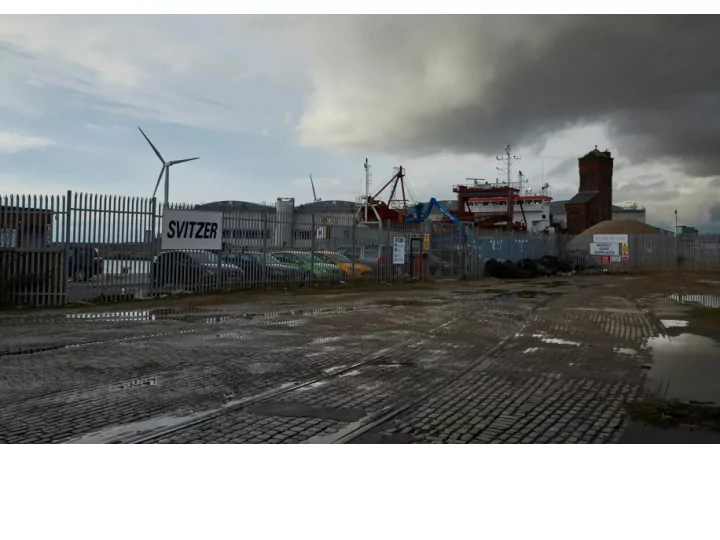
Liverpool City Councils invest -to- earn strategy There is no risk to the city or the council from what we are doing . . . We are trying to bring in more revenue and this should make a profit of 200m over the next 25 years . . .


slide-1
SLIDE 1
slide-2
SLIDE 2
slide-3
SLIDE 3

Liverpool City Council’s ‘invest-to-earn’ strategy

“There is no risk to the city or the council from what we are doing . . . We are trying to bring in more revenue and this should make a profit of £200m over the next 25 years . . . what we can do as a council is borrow at cheap rates and with that money we can help regenerate a wide area of north Liverpool as well as helping Everton. People have got to understand this is a commercial deal to enable us to make money” (Joe Anderson, Mayor of Liverpool, 2018)

Source: Wilson, P (2018) “Liverpool mayor defends city’s £280m loan to Everton for stadium scheme”, The Guardian, https://www.theguardian.com/footba ll/2018/jan/10/everton; Accessed: 29 August 2018

slide-4
SLIDE 4

Financialising city statecraft and infrastructure

‘Subnational Governance’ Seminar, Heseltine Institute for Public Policy, Practice and Place, University of Liverpool, September 2019 Andy Pike andy.pike@ncl.ac.uk

slide-5
SLIDE 5
slide-6
SLIDE 6

Explaining the financialising of the local state and infrastructure

  • Financialising infrastructure: from public good to asset class
  • Managerial, entrepreneurial or financialised governance?
  • Towards financialising city statecraft and infrastructure…
  • I – Colliding municipal and public with commercial and private

finance

  • II – Continuing national government managerialism and control
  • III - Spatially biased infrastructure investment undermining

spatial rebalancing in the UK

  • Conclusions
slide-7
SLIDE 7

Financialising infrastructure: from public good to asset class…

slide-8
SLIDE 8

Defining financialisation

  • Current “special” episode of “global

financialisation”, “exponential growth”, “phenomenal acceleration” and [enhanced] “pressure asserted by finance” (Harvey 2015: 100, 177-78)

  • Use values of the fixed capital locked in place in

infrastructure transformed into exchange values and rendered liquid, transactable and mobile by “capitalization” (Harvey 2012: 11)

Source: Harvey, D. (2015) Seventeen Contradictions and the End of Capitalism, Oxford University Press: Oxford; Harvey, D. (2012) “The urban roots of financial crises: reclaiming the city for anti-capitalist struggle”, Socialist Register, 48, 1-35

slide-9
SLIDE 9
  • Attractive and less volatile

returns

  • Low sensitivity to swings in

business cycles and markets

  • Inflation hedge
  • Low default rates
  • Natural monopolies due to

network characteristics, capital intensity or government policy

  • Generally low technological

risk

  • Essential services for

populations and businesses relating to physical flows (i.e. broadband, energy, transport)

  • r to social goods (education,

healthcare)

  • Government as a direct client,

highly proximate to the transaction (via economic regulation) and/or guarantor

  • Long term and supporting high

leverage (debt)

  • Stable and predictable cash

flows

From public good to asset class…

Source: Adapted from Inderst, G. (2010) “Infrastructure as an asset class”, EIB Papers, 15, 1, 70-104

slide-10
SLIDE 10

Source: Adapted from IPE Real Assets (2017: 1)

Top 20 ‘global infrastructure investors’ ranked by infrastructure assets ($000s), 2017

Rank Investor Type Country Infrastructure assets Total assets % infrastructure 1 China Investment Corporation Sovereign wealth fund China 40,676,000 813,513,000 5.0 2 Abu Dhabi Investment Authority Sovereign wealth fund UAE 24,840,000 828,000,000 3.0 3 Canada Pension Plan Investment Board Crown corporation Canada 18,234,800 237,802,000 7.7 4 National Pension Service Public pension fund South Korea 16,020,200 498,004,000 3.2 5 Ontario Teachers’ Pension Plan Private pension fund Canada 13,215,000 130,368,000 10.1 6 OMERS Public pension fund Canada 13,024,900 79,825,700 16.3 7 APG Public pension fund Netherlands 12,850,500 514,021,000 2.5 8 Legal & General Financial services company UK 12,301,600 575,535,000 2.1 9 CDPQ Crown corporation Canada 10,913,500 154,199,000 7.1 10 Australian Super Private pension fund Australia 8,617,230 81,245,200 10.6

slide-11
SLIDE 11

Source: ONS and OBR

Public sector net investment, % of GDP, 1955/56-2017/18

1 2 3 4 5 6 7 8 1955-56 1957-58 1959-60 1961-62 1963-64 1965-66 1967-68 1969-70 1971-72 1973-74 1975-76 1977-78 1979-80 1981-82 1983-84 1985-86 1987-88 1989-90 1991-92 1993-94 1995-96 1997-98 1999-2000 2001-02 2003-04 2005-06 2007-08 2009-10 2011-12 2013-14 2015-16 2017-18

slide-12
SLIDE 12
slide-13
SLIDE 13

Temporality Type Examples Established, ‘Tried and tested’ Newer, Innovative Taxes and fees Special assessments; User fees and tolls; Other taxes Grants Extensive range of grant programmes at multiple levels Debt finance General obligation bonds; Revenue bonds; Conduit bonds Tax incentives New market/historic/housing tax credits; Tax credit bonds; Property tax relief; Enterprise Zones Developer fees Impact fees; Infrastructure levies Platforms for institutional investors Pension infrastructure platforms; State infrastructure banks; Regional infrastructure companies; Real estate investment trusts Value capture mechanisms Tax increment financing; Special assessment districts; Sales tax financing; Infrastructure financing districts; Community facilities districts; Accelerated development zones Public private partnerships Private finance initiative; Build-(own)-operate-(transfer); Build-lease-transfer; Design-build-operate-transfer Asset leverage and leasing mechanisms Asset leasing; Institutional lease model; Local asset- backed vehicles Revolving infrastructure funds Infrastructure trusts; “Earn Back” funds

Funding and financing practices

slide-14
SLIDE 14

Managerial, entrepreneurial or financialised governance?

slide-15
SLIDE 15

Managerial, entrepreneurial or financialised governance?

Managerial Entrepreneurial Financialised

  • Direct national and local

state ownership, management and planning

  • Nationalisation and

national state-regulated provision of public goods – constructing the ‘modern infrastructural ideal’

  • Economic and social
  • bjectives in national

Keynesian frame

  • National government

funding and financing through taxes, user fees, grants and debt

  • Privatisation, contracting-out

and ‘marketisation’

  • National and local state

’hollowing-out’ – dismantling the ‘modern infrastructural ideal’

  • Economic objectives, cost

reduction priority, consumer service provision

  • Public-private partnerships
  • Public funding of private

financing, user fees and debt

  • Financial institution and

capital markets engagement

  • National and local state-

market inter-relations, hybrid institutions

  • Productivity and growth
  • bjectives, fiscal

localisation

  • New ‘asset class’ risk,

return, maturity focus

  • Securitisation, ‘value

capture’ mechanisms, public commercial asset leverage, leasing, revolving funds

slide-16
SLIDE 16

The limits of existing frameworks

  • Reaching the limits of archetypes and transformation

frameworks…‘entrepreneurial’ (Harvey 1989), ‘financialised’ (Aalbers 2015), ‘asset price’ (Byrne 2016), ‘speculative’ (Goldman 2011), ‘austerity’ (Peck 2012)...urbanisms and governance?

  • Inconvenience of enduring managerialism…especially in

highly centralised political economies and variegations of capitalism (e.g. UK, O’Brien and Pike 2018)

  • Challenge to explain the “messy actualities” (Fuller 2013:

645) of mixing, hybridising and “mutating urban governance” (Peck and Whiteside 2016: 6)...

slide-17
SLIDE 17
slide-18
SLIDE 18

The emergence of ‘statecraft’ in local, regional and urban studies I – Examples

  • Bulpittian analyses of decentralised governance in England

(Ayres et al. 2017, Moran et al. 2018)

  • “Scalecraft” (Fraser 2010: 332) as part of statecraft

(Pemberton and Searle 2016, Morphet 2017)

  • Statecraft without Bulpitt: ““geo-economic statecraft at the

municipal level” (Kutz 2017: 1224) and “municipal statecraft” beyond growth agendas (Lauermann 2016: 1)

  • Localised statecrafts: “Malagueñian statecraft” (Kutz 2017:

1233)

slide-19
SLIDE 19

The emergence of ‘statecraft’ in local, regional and urban studies II – Critique

  • Selective use of Bulpitt’s approach with limited reference to

critiques and further elaboration

  • Statecraft invoked but not specified, defined or situated in a

wider conceptual and theoretical framework

  • Uneven treatment of statecraft’s scalar/territorial and

relational/networked geographies

  • Partial recognition of the temporally and geographically

specific nature of statecraft conceptions and theorisations

slide-20
SLIDE 20

Towards city statecraft I…

  • “the art of city government and management of

state affairs and relations…concerned with the practice of government and governance, how state authority and power is accumulated and deployed by city government, and how the affairs of city government are administered in relations with other state, para-state and non-state actors at the city/city-regional scale and with the national state and supra-national institutions” (Pike et al. 2019)

slide-21
SLIDE 21

Towards city statecraft II…

  • Handles complexity, contingency and differentiated
  • utcomes of governance in particular geographical and

temporal settings

  • Analyses and explains messy agency of actors, their

interests, inter-relations, and politics over space and time

  • Identifies actors in funding, financing and governing

cities and addresses what is being financialised by who, where, when, how and why?

slide-22
SLIDE 22

Sir Albert Bore’s “Jaws of doom” graph

Source: Birmingham City Council

slide-23
SLIDE 23

I – Colliding municipal and public with commercial and private finance

Dimension Municipal and public Commercial and private Actors

  • National and local governments

and agencies

  • Politicians, officials
  • Financial institutions
  • Managers, specialists

Social relations

  • With publics
  • With investors and capital markets

Objectives

  • Public goods provision
  • Economic, social and

environmental welfare

  • Social and spatial equity and

distribution

  • Returns on investment

Accountabilities

  • Formal and legal to taxpayers
  • External creditors
  • Formal and legal for Plcs to

investors

  • Creditors

Frames of action

  • Slow, stable, bureaucratic
  • Long-term and inter-generational
  • utlook
  • Low future discount rate, higher

present value of future cash flows

  • Risk-averse
  • Incremental innovation
  • Fast, unstable, agile
  • Shorter-term outlook
  • High future discount rate, lower

present value of future cash flows

  • Risk-seeking
  • Innovative

Geographies

  • Territorialised, immobile
  • De-territorialised, highly mobile
slide-24
SLIDE 24

Local government total borrowing by source, England (%), 2009/10-2015/16

Source: CLG Local Government Financial Statistics, Various Years 0% 10% 20% 30% 40% 50% 60% 70% 80% 90% 100% 2009-10 2010-11 2011-12 2012-13 2013-14 2014-15 2015-16 Negotiable bonds Listed securities

  • ther than bonds

Banks Other financial intermediaries Private non-financial corporations

slide-25
SLIDE 25

Local government total expenditure on fixed assets, England (£m), 1997/98-2016/17*

Source: CLG Local Government Financial Statistics, Various Years

5,000 10,000 15,000 20,000 25,000 1997-98 1998-99 1999-00 2000-01 2001-02 2002-03 2003-04 2004-05 2005-06 2006-07 2007-08 2008-09 2009-10 2010-11 2011-12 2012-13 2013-14 2014-15 2015-16 2016-17

* 2017 prices. Includes: acquisition of land and existing buildings and works; new construction and conversion; vehicles, plant equipment and machinery; and, intangible assets.

slide-26
SLIDE 26

Local government asset purchases (>£40m), 2018

Local government Value (£m) Description Spelthorne Borough Council 380 Former BP Campus Buckinghamshire County Council 180 Energy-from-waste plant Surrey Heath Borough Council 104 Town centre development and industrial park Stockport Council 80 Merseyway shopping centre Leeds City Council 45 Sovereign Square office development Eastleigh Borough Council 40 Agea Bowl cricket stadium

slide-27
SLIDE 27

“While local authorities are furiously selling assets to plug gaps in their budgets resulting from central government funding cuts, they have simultaneously been accumulating property assets across the country. Such has been the buying spree that they are now a significant force in the commercial property market. This is largely thanks to cheap finance provided by an arm of the UK Treasury” (Plender 2017: 1).

“A quirky and hazardous corner of British public finance”

slide-28
SLIDE 28

II – Continuing national government managerialism and control

slide-29
SLIDE 29

III – Spatially biased infrastructure investment undermining spatial rebalancing in the UK

slide-30
SLIDE 30

Source: Adapted from HM Treasury (2017) and Mor (2017: 20)

Public spending on infrastructure by country and region (£ per head), 2011/12-2015/16*

1000 2000 3000 4000 5000 6000 London Scotland Northern Ireland Wales North West North East Yorkshire and the Humber East of England West Midlands South East East Midlands South West

slide-31
SLIDE 31

Source: Transport: Per Capita Costs: Written question – 111722, Hansard, 17 November 2017, https://www.parliament.uk/business/publications/written-questions-answers-statements/written-question/Commons/2017-11-06/111722/; Accessed: 12 June 2018

Department for Transport capital expenditure on transport per capita by country and region, 2012/13-2016/17

50 100 150 200 250 300 350 2012-13 2013-14 2014-15 2015-16 2016-17 Expenditure (£) East of England East Midlands London North East North West South East South West West Midlands Yorkshire and the Humber England

slide-32
SLIDE 32

Northern Powerhouse and infrastructure: funding the £60- 70bn?

Source: Transport for the North

slide-33
SLIDE 33

Liverpool City Council’s ‘Green City Deal’

“This proposed City Deal centres on positioning Liverpool as the go-to place for clean technology investment, training and job creation through an inclusive and sustainable growth strategy” (Joe Anderson, Mayor, Liverpool City Council, 2019)

Source: Thorp, L. (2019) “Huge £230m new deal for Liverpool aims to create thousands of jobs and homes to transform city’s future”, The Liverpool Echo,30 July, https://www.liverpoolecho.co.uk/news/liverpool-news/huge- 230m-new-deal-liverpool-16664348

slide-34
SLIDE 34

Conclusions…financialising city statecraft I

  • Financialising city statecraft under austerity and

decentralisation in the UK...

  • Reconfiguring the role and nature of the local state as

agent and object of financialising relations, processes and practices...

  • Mixing, hybridising and mutating managerial,

entrepreneurial and financialised strategies, instruments and governance

slide-35
SLIDE 35

Conclusions…financialising city statecraft II

  • Public and private actors shape the geographically and

institutionally differentiated extent, nature and pace of financialisation over time and space = uneven geographies of city statecraft and urban prosperity

  • Need more grounded, measured and balanced

conceptions of ‘financialisation-in-motion’ that recognise its social, spatial and institutional constitution, unevenness, implications, and limits

slide-36
SLIDE 36

Acknowledgements

The research in this project is being undertaken as part of the Infrastructure BUsiness models, valuation and Innovation for Local Delivery (iBUILD) research centre funded by Engineering and Physical Sciences Research Council and Economic and Social Research Council (https://research.ncl.ac.uk/ibuild/).