Klepietkavce Subphylum Chelicerata Chelicerata (klepietkavce) - - - PowerPoint PPT Presentation

klepietkavce subphylum chelicerata chelicerata
SMART_READER_LITE
LIVE PREVIEW

Klepietkavce Subphylum Chelicerata Chelicerata (klepietkavce) - - - PowerPoint PPT Presentation

Klepietkavce Subphylum Chelicerata Chelicerata (klepietkavce) - special mouthparts called chelicera General characteristics - includes 2 classes - Xiphosura (horseshoe crab) - Arachnida (spiders, ticks, scorpions, & mites) - have a


slide-1
SLIDE 1

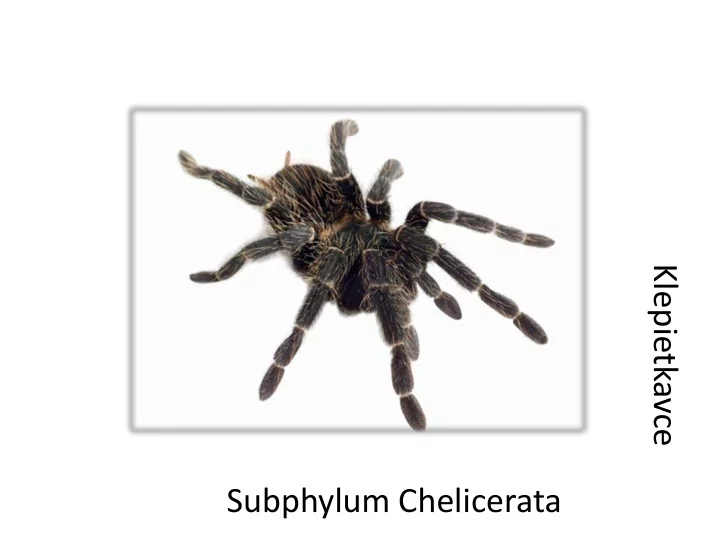
Subphylum Chelicerata Klepietkavce

slide-2
SLIDE 2

Chelicerata (klepietkavce)

  • special mouthparts

called chelicera

slide-3
SLIDE 3

General characteristics

  • includes 2 classes
  • Xiphosura (horseshoe crab)
  • Arachnida (spiders, ticks, scorpions, & mites)
  • have a cephalothorax (fused head & thorax) and abdomen
  • no antenna
  • simple eyes or ocelli
  • have 6 pairs of jointed appendages:
  • chelicerae - claws or fangs (1 pair)
  • pedipalps - used for feeding, walking, sensing, transferring sperm (1

pair)

  • walking legs - movement (4 pairs)
slide-4
SLIDE 4

Xiphosura

  • marine
  • not true crabs
  • fanglike pincers or chelicera
  • use book gills to breathe

horseshoe crab – ostrochvost americký

slide-5
SLIDE 5

Arachnids

  • terrestrial
  • 8 legs
  • chelicera or fangs with venom
  • celli
  • no antenna
  • breathe by book lungs or tracheal tubes
slide-6
SLIDE 6

Spiders

  • feeds on insects (carnivores)
  • have oval shaped, unsegmented abdomen
  • cephalothorax connected by narrow waist to abdomen
  • have 8 simple eyes or ocelli
  • fangs pierce prey, inject poison & suck out body fluids
  • pedipalps on head help sense prey & move it to the mouth
  • hemocycanin is oxygen-carrying pigment in blood
  • have silk glands to make silk & spinnerets to release silk for

webs

  • breathe by book lungs & tracheal tubes
slide-7
SLIDE 7
slide-8
SLIDE 8
slide-9
SLIDE 9

Mites and ticks

  • parasitic arachnid
  • fused cephalothorax & abdomen
  • most abundant arachnid
  • need blood meal to molt
  • mites can damage fruit & feed on dead skin at base of hair

follicle

  • ticks carry Lyme disease & Rocky Mountain Spotted Fever
slide-10
SLIDE 10
slide-11
SLIDE 11
slide-12
SLIDE 12

Scorpions

  • have a cephalothorax & long segmented abdomen curled
  • ver body
  • prefer dry regions
  • poisonous stinger on end of abdomen
  • breathe through book lungs
  • pedipalps modified into claws
  • nocturnal predators
slide-13
SLIDE 13