
SLIDE 1
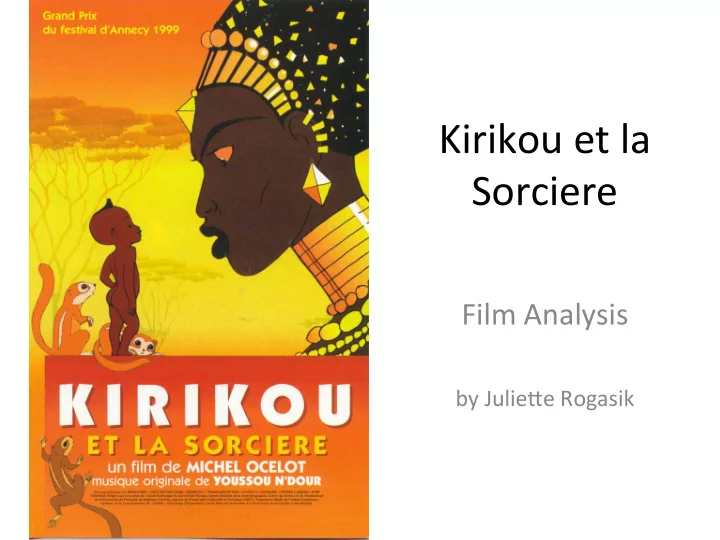
Kirikou et la Sorciere Film Analysis by Julie6e - - PowerPoint PPT Presentation
Kirikou et la Sorciere Film Analysis by Julie6e Rogasik Michel Ocelot Les Trois Inventeurs (1980) Princes et Princesses (2000) Born in France
teenager ¡
Princes ¡et ¡Princesses ¡(2000) ¡ Les ¡Trois ¡Inventeurs ¡(1980) ¡ ¡
Ocelot’s ¡style: ¡sHlls ¡from ¡Kirikou ¡
like ¡cutouts ¡from ¡different ¡materials) ¡
– West ¡African ¡tradiHonal ¡art ¡is ¡made ¡from ¡dark ¡wood, ¡gold, ¡bronze ¡or ¡clay ¡
– Chief ¡decorator ¡is ¡sculptor ¡Anne-‑Lise ¡Koehler ¡
Yoruba ¡Water ¡Vessel, ¡13" ¡high, ¡rim ¡6 ¡1/2", ¡No. ¡72.3.114, ¡Ita ¡Yemoo ¡ Museum ¡of ¡Yoruba ¡Po6ery, ¡Ile ¡Ife, ¡Nigeria. ¡Photo ¡by ¡Ron ¡du ¡Bois, ¡
Karaba’s ¡hut ¡
Karaba’s ¡scream ¡
“How ¡strange ¡it ¡is, ¡to ¡ no ¡longer ¡feel ¡the ¡ slightest ¡suffering.” ¡ “In ¡a ¡ moment, ¡that ¡ li6le ¡animal ¡ will ¡be ¡pinned ¡ to ¡the ¡ ground!” ¡
Long ¡takes: ¡20 ¡sec. ¡ 34 ¡sec. ¡ 20 ¡sec. ¡
unchanging, ¡unspoiled ¡realm ¡ (Encountering ¡the ¡Other(s), ¡Gisela ¡ Brinker-‑Gabler) ¡
– Colonial ¡cinema ¡is ¡made ¡of ¡“images ¡coming ¡ from ¡outside” ¡while ¡African ¡cinema ¡is ¡made ¡
– “Whites ¡must ¡not ¡[take] ¡advantage ¡of ¡their ¡ privileged ¡speaking ¡posiHons ¡to ¡contract ¡an ¡ external ¡vision ¡of ¡‘us’ ¡which ¡may ¡pass ¡for ¡our ¡ ‘reality.’ ¡There ¡must ¡be ¡limits ¡to ¡the ¡ways ¡
conceptual ¡frameworks ¡which ¡are ¡not ¡our ¡
Rousseau, ¡“The ¡Dream” ¡ SHll ¡from ¡“Kirikou” ¡
automaHcally ¡becoming ¡a ¡mis-‑representaHon ¡or ¡an ¡extension ¡of ¡ colonialism? ¡
just ¡have ¡to ¡be ¡a ¡good ¡filmmaker.” ¡
(themes ¡unique ¡to ¡Africa) ¡
a ¡story ¡that ¡was ¡“not ¡his ¡to ¡tell,” ¡so ¡most ¡of ¡the ¡plotline ¡is ¡from ¡his ¡own ¡ imaginaHon ¡
20th ¡century ¡world, ¡which ¡is ¡at ¡once ¡marked ¡by ¡borrowing ¡and ¡lending ¡ across ¡porous ¡cultural ¡boundaries, ¡and ¡saturated ¡with ¡inequality, ¡power, ¡ and ¡dominaHon.” ¡
French ¡ciHzen ¡who ¡considers ¡himself ¡West-‑African ¡
to ¡history ¡
– Burning ¡of ¡the ¡house ¡ – Karaba ¡capturing ¡the ¡children ¡in ¡the ¡tree-‑cage ¡ – The ¡story ¡of ¡Karaba’s ¡abuse ¡
we ¡create ¡between ¡“self” ¡and ¡“other” ¡are ¡ ulHmately ¡ill-‑defined ¡ ¡
framework, ¡giving ¡it ¡an ¡intrinsically ¡acultural ¡feel: ¡
– The ¡sorceress ¡is ¡mean ¡because ¡she ¡is ¡suffering ¡ – We ¡must ¡be ¡happy ¡the ¡way ¡we ¡are ¡ – The ¡greedy ¡creature ¡gets ¡thirsHer ¡the ¡more ¡he ¡drinks ¡
European ¡sources; ¡animated ¡in ¡France, ¡Hungary, ¡ Luxembourg ¡and ¡Latvia; ¡voices ¡recorded ¡in ¡Dakar ¡
through ¡its ¡huge ¡success ¡in ¡France ¡(1.5 ¡million ¡ Hckets) ¡
– These ¡characters ¡have ¡become ¡anchored ¡in ¡French ¡ children’s ¡minds ¡as ¡characters ¡to ¡which ¡they ¡can ¡idenHfy ¡ – Kirikou’s ¡wise ¡grandfather ¡is ¡everybody’s ¡wise ¡grandfather ¡ – The ¡village ¡is ¡everybody’s ¡village ¡
History, ¡and ¡Culture” ¡(SUNY ¡Press, ¡1995), ¡309. ¡
Indien, ¡44 ¡(2010), ¡227-‑241. ¡h6p://oceanindien.revues.org/582 ¡ ¡
and ¡the ¡Postcolonial,” ¡History ¡Workshop ¡Journal, ¡39 ¡(1995), ¡164-‑81. ¡
Companion ¡to ¡Contemporary ¡French ¡Cinema” ¡(2014), ¡335-‑337. ¡
h6p://www.nga.gov/content/ngaweb/features/slideshows/henri-‑ rousseau.html ¡ ¡
Columbia ¡University ¡Press, ¡2003), ¡pp. ¡71-‑102. ¡
Postcolonial ¡ExoDc: ¡MarkeDng ¡the ¡Margins, ¡by ¡G. ¡Huggan ¡(Abingdon: ¡ Routledge, ¡2002), ¡pp. ¡155-‑176. ¡
Paris: ¡Les ¡Enfants ¡De ¡Cinéma. ¡