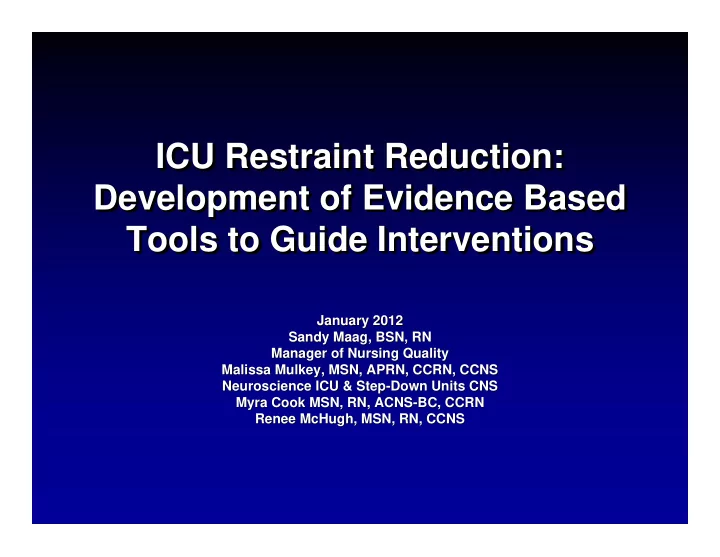
SLIDE 13 ICU Restraint Minimization Algorithm
Is patient exhibiting behaviors that may warrant restraints?
PAIN? DELIRIUM ? Check NPAT score or visual analog scale If pain is present, administer pharmacologic/non- pharmacologic as appropriate Reassess pain at least q1hr after intervention and prn
YES NO
visitation if calming to patient.
Continue to monitor effectiveness of interventions Consider pain
Positive for delirium Negative for delirium
Consider anxiety YES
Hyper delirium
NO
Hypo delirium
All patients: soft music, minimal environmental stimuli. Maintain circadian rhythms: lights on during day, dark at night. Clocks & calendars in room. Consider anxiolytic Contact Psychiatry if unable to control behavior.
Continuously assess mental status of patient
Do not restrain or d/c restraints
Assess Causes
Hypoxia, pain, anxiety, delirium
Use Restraints as a Last Resort
Restrain patient to prevent self-harm or risk of physical injury and where staff are in immediate risk of harm. Review medications with pharmacist and review medications to identify: Potential drug withdrawal , alcohol withdrawal, reactions/interactions.
YES NO
Check... Tool to be decided
YES YES
- Review home medications & resume as necessary
- R/O delirium
- Don’t give an anxiolytic if delirium is suspected -
this will exacerbate delirium
Assess for hypoxia immediately. Assess toileting needs. Comfort, Reassure. ANXIETY? Check MAAS Determine cause:
Drugs:
- Opiates,
- Anxiolytics
- Anticholinergics:
benedryl, ditropan pepcid, steroids, Disease Processes:
- Encephalopathy
- DrugIntoxication or
drug interactions
Chronic Anxiety? Acute Anxiety?
Agitated?
Pain Controlled?
ICU Restraint Minimization Algorithm
Is patient exhibiting behaviors that may warrant restraints?
PAIN? DELIRIUM ? Check NPAT score or visual analog scale If pain is present, administer pharmacologic/non- pharmacologic as appropriate Reassess pain at least q1hr after intervention and prn
YES NO
visitation if calming to patient.
Continue to monitor effectiveness of interventions Consider pain
Positive for delirium Negative for delirium
Consider anxiety YES
Hyper delirium
NO
Hypo delirium
All patients: soft music, minimal environmental stimuli. Maintain circadian rhythms: lights on during day, dark at night. Clocks & calendars in room. Consider anxiolytic Contact Psychiatry if unable to control behavior.
Continuously assess mental status of patient
Do not restrain or d/c restraints
Assess Causes
Hypoxia, pain, anxiety, delirium
Use Restraints as a Last Resort
Restrain patient to prevent self-harm or risk of physical injury and where staff are in immediate risk of harm. Review medications with pharmacist and review medications to identify: Potential drug withdrawal , alcohol withdrawal, reactions/interactions.
YES NO
Check... Tool to be decided
YES YES
- Review home medications & resume as necessary
- R/O delirium
- Don’t give an anxiolytic if delirium is suspected -
this will exacerbate delirium
Assess for hypoxia immediately. Assess toileting needs. Comfort, Reassure. ANXIETY? Check MAAS Determine cause:
Drugs:
- Opiates,
- Anxiolytics
- Anticholinergics:
benedryl, ditropan pepcid, steroids, Disease Processes:
- Encephalopathy
- DrugIntoxication or
drug interactions
Chronic Anxiety? Acute Anxiety?
Agitated?
Pain Controlled?
Decision Algorithm Decision Algorithm