
SLIDE 1
Guten Morgen!
Guten Morgen! What this presentation will go through All about why - - PowerPoint PPT Presentation
Guten Morgen! What this presentation will go through All about why and how to create & transform content for social media. 1. It starts with the why the context and research that illustrates the importance of creating
Guten Morgen!
All about ‘why’ and ‘how’ to create & transform content for social media.
importance of creating content for social media
★ The session serves as a guide for you all, but it can be used as a handout for your social media teams to implement as I’ve included examples and more tactical details in the appendix
z
Present Past
Institution website Family/Friends/Peers Institution website Family/Friends/Peers Professional Networks Personal Networks
The student decision-making journey has changed! More than ever before. Students are looking to their social networks when doing their research.
Source: Connecting with Today’s Prospective Student, LinkedIn – 8/2015
5
The Internet enables prospects to self-educate by gathering information on schools anonymously
72% of prospects developed their short list of schools before reaching out to a school representative
Connecting with Today’s Prospective Student, LinkedIn
So schools must influence prospects early in the decision cycle... By being ‘always-on’ and present
Source: Connecting with Today’s Prospective Student, LinkedIn – 8/2015
“Demystifying the Consumer Journey?” - Millward Brown Digital research and LinkedIn research
540
DAYS
Higher Education
HE
Millward Brown Digital research and LinkedIn research
7
8
No seasonality. Students are constantly searching
9
Educate, inform and inspire your prospective students by sharing guides, global trends, research, industry news and positioning yourselves as thought leaders on social Of students use social media when deciding where to enroll
Times Higher Education Research
Times Higher Education research
AWARENESS CONSIDERATION DECISION
Education and industry news Institution rankings Information on courses and degree programs Expert commentary and reviews Staff and lecturer profiles Career Advice Alumni profiles/achievements
Source: Connecting with Today’s Prospective Student, LinkedIn – 8/2015
The three stages of the HE decision-making process With different types of information sought by prospects in each stage
educational, non-promotional educational, specific, not overly ‘sales-y’ differentiate your programme, show life at/after your school
Step 1 Step 2 Step 3 Step 4 Intro
> Increase awareness > Purchase consideration
Brand
> Generate qualified leads > nurture leads
Demand
Brand KPIs: Reach | Impressions | Engagement rates | CTR | Followers Lead Gen KPIs: Leads, CPL | Earned impressions, reach & engagements
What do you want to achieve and how will you measure it. Understanding your goals and objectives will help you set the right metrics.
answered?
2019 B2B Content Marketing Research: Content Marketing Institute/MarketingProfs
understand your audience and who is actually coming to your website
LinkedIn Insight Tag Google Analytics
...And ultimately who to target
Put your audience needs first to successfully build trust
When you create content based on THOSE needs – what are you really trying to do?
content to drive action
you’re creating a bond and becoming a credible and trusted resource
Step 1 Step 2 Step 3 Intro Step 4
Being Helpful Telling Stories Being Human
Think about the benefit to the member first Will it make your audience more informed, productive, or successful? Be consistent and build
Aim to Inspire People want to talk to people. Think about emotional
Anticipation | Surprise | Excitement
To give your audience content they want and need where ever they’re looking for it.
Tyrion literally steals the cadence of the content marketing masterclasses I’ve ever run. For one moment, Tyrion becomes a Content Marketing Thought Leader!
Step 1 Step 2 Step 3 Intro Step 4
By starting with your organic content, you ensure you’re investing in your highest-performing content for paid campaigns. Then
Invest in the best
content Paid amplifies
reach
Organic ex.
University Pages Facebook Groups Instagram Twitter Blogs
Display Ads Sponsored Content Lead Gen campaigns Account Based Marketing
Paid ex.
Disney’s ‘BLOCKBUSTER’ method. They see what works and they repurpose it!
“Back catalogue” “Net-new”
Supporting “teasers” Drive interest to the main asset Gated Blockbuster eg eBook, research Valuable content designed for lead capture
Benefit #1: Increased lead generation Benefit #2: Acquiring prospective student leads earlier in the journey Benefit #3: Start nurturing and segmenting the right students for you
to select the questions prospects should answer before they access the content
provides a next step for prospective students who aren’t yet ready to apply
Real life examples of how you can map your content to each phase of the decision journey
Rankings, News, Career Advice, Courses/Degrees Program Value, News, Blog Content Webinars taster, Faculty Profiles, reviews, On-Campus Events, Alumni Testimonials Awareness Consideration Decision Awareness
★ Answerthepublic.com ★ Google Trends ★ Look to your website:
company blog, PR news section, company resources. I guarantee there is something that can be repurposed for social media
FIND QUESTIONS TO ANSWER
★Then use Google analytics to understand what part of the site people are going to, what articles they’re reading, what interests them
FIND QUESTIONS TO ANSWER
FIND QUESTIONS TO ANSWER
“How to choose a university for master degree?”
Groundbreaking research / thought leadership that constantly builds Harvard’s prestige It’s consumer-oriented and non-promotional tool. Employee stories / employee promotions visual identifier Strong / identifiable brand colours
Step 1 Step 2 Step 3 Step 4 Intro
Unlock and activate the voices of your alumni, faculty and employees
➔ This is because they are telling your story for you. I am more likely to take the
➔ It massively extends your reach as it reaches all of their networks ➔ Can help with crisis comms. If you have strong advocates/brand, that can defend you
➔ Incorporate alumni in your content in the final stages of the prospect’s journey ➔ Their testimonials are powerful and should be a part of your content marketing message ➔ An engaged alumni will give you their time, talent and network that can make a huge impact.
A Corporate’s Owned Reach Vs Earned Reach
763,111 54,900 401,025 Total Reach Today 1,219,036
Current Brand Social Reach Number of followers for each channel to calculate the total reach below. Employee Advocacy Reach Multiply number of employees by the average number of connections each individual has. Total this up for potential reach, then calculate if just 10% were activated.
273 = 208 = 145 =
Total Potential Reach 54,462,000
= 87,000
X X X 23,751,000 18,096,000 12,615,000
X 0.1 =
5,446,200
5x more reach
Step 1 Step 2 Step 3 Step 4 Intro
(Jeff Bezos, Amazon CEO)
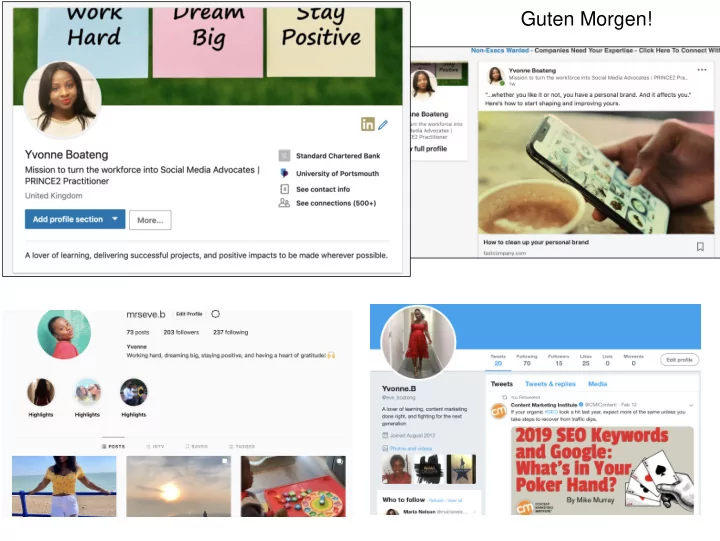
I am testament to the power of social media. 4 of my most humbling and biggest professional opportunities came through just by being present Social media is powerful so let’s harness it to build strong:
Awareness Preference Advocates (alumni, faculty, employees)
Step 1:
Define your brand: start with the end in mind
Step 2:
Bring your brand to life on LinkedIn (basic level)
Step 3:
Make relevant connections to build your network
Step 4:
Share helpful content to engage your network
46
1- Set goals, objectives and metrics 2- Understand the who, where, what of your audience 3- First offer value to your audience 4- Invest in an integrated organic and paid strategy 5- Create, atomise and repurpose content 6 - Use a consistent brand identity to differentiate yourself 7 - Activate your alumni, faculty and employee voices
www.linkedin.com/yvonne-boateng
When looking at the behavior of LinkedIn members by decision stage, MBA intenders were:
3x more likely to follow a company in the Awareness phase 2.5x more likely to be active in groups in the Discovery phase 5.5x more likely to view jobs in the Selection phase
Source: Connecting with Today’s Prospective Student, LinkedIn – 8/2015
51 Source: Connecting with Today’s Prospective Student, LinkedIn – 8/2015
develop their short list before reaching out to a school representative
make the prospects’ short list
end up enrolling at a school from their short list
○ e.g. character length restrictions for twitter, FB & IG penalising images with text overlaid ○ The more you can understand this, the better your content will perform
150 characters to avoid truncation on mobile
going to go if they engage with your ad to boost landing page conversion rates
Try to keep 3 or 4 running at any one time. swap out low performing ones and introduce new ones
Awareness Stage Content Prospective students are seeking out educational content that will answer their questions and help them make one of the biggest decisions of their lives. At this stage, it’s important to keep content offers high-level, non-promotional, and above all, honest. Gated Content Ideas for the Awareness Stage: ➔ The Ultimate Guide to Choosing a College Major | The Top 20 In-Demand College Majors of 2019 | How to Afford College as a First Generation Student Consideration Stage Content Prospective students have answered their first wave of questions and are on the hunt for schools that fit their desired criteria. At this stage, it’s OK to mention things specific to your college or university, but the content should still be mainly educational in nature and not overly salesy. Gated Content Ideas for the Consideration Stage: ➔ Guide to Writing a Winning statement | Navigating the Financial Aid Process | Interactive Financial Aid Calculator Decision Stage Content Students are actively comparing their options and weighing the pros and cons of each. At this stage, it’s important to not only get into the specifics of what you’re selling but also differentiate your Programme from the competition. Students in the decision stage want to see how they would fit into your school and what impact it might have on their careers and lives. Since we know emotions play a huge role in any decision-making process, it’s important for your content to connect on an emotional level. Gated Content Ideas for the Decision Stage: ➔ Virtual Reality Tour | Have student ambassadors host a webinar where they answer commonly asked campus tour
Volt Edu research