
SLIDE 1
Gold Coast Regional Beekeepers Inc.
Prepared by John Polley
Gold Coast Regional Beekeepers Inc. Prepared by John Polley The - - PowerPoint PPT Presentation
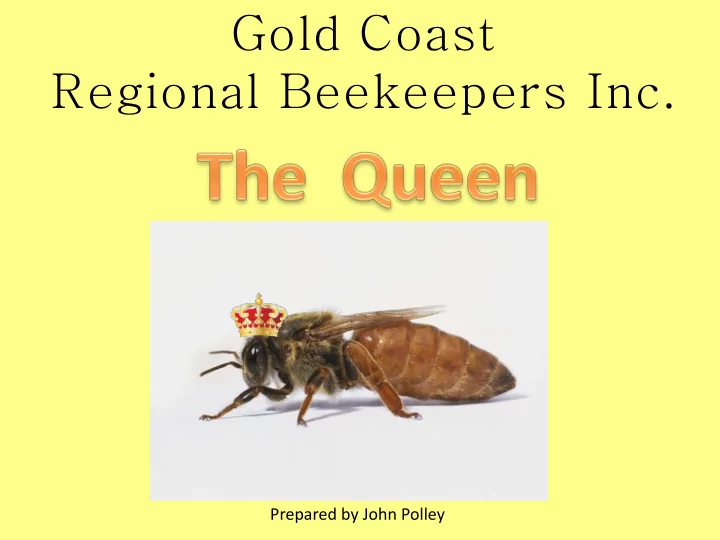
Gold Coast Regional Beekeepers Inc. Prepared by John Polley The Queen Bee The queen bee is the heart and soul of the honey bee colony. She is the reason for nearly everything the rest of the colony does. The queen is the only bee without which
Prepared by John Polley
Queen bee SWARM cells Queen bee SUPERCEEDURE cells
Perfectly symmetrical royal cell hangs head down from a comb.
The Queen Emerges The Queen emerging from the Queen cell
Section of a queen-rearing cell removed to expose the Pupa during it’s metaphoric transformation.
Mating occurs in flight over ten meters above ground. The young queen, born five to six days earlier, has only ventured out of the hive for her reconnaissance flight. When sexually mature, she leaves the hive on a fair windless day and mates with about a dozen males to fill her spermatheca. Mating results in death for the drones.
A queen moves on a frame with the workers (her daughters) looking for honey. Her head has developed mandibles. Her thorax is larger than that of ordinary bees and the abdomen, which contains fully developed genital organs, is very
The queen, marked by the beekeeper, is laying eggs surrounded by her retinue. A few bees lick her body and a large number of bees touch her with their antennae's. Marking queens allows beekeepers to identify queens, to know their age and their laying cycles. The gentle queen bee has a stinger, but it is rare for a beekeeper to be stung by a queen bee. In general, queen bees use their stingers only to kill rival queens that may emerge or be introduced in the hive.
3 1 6 9 18 16