SLIDE 1
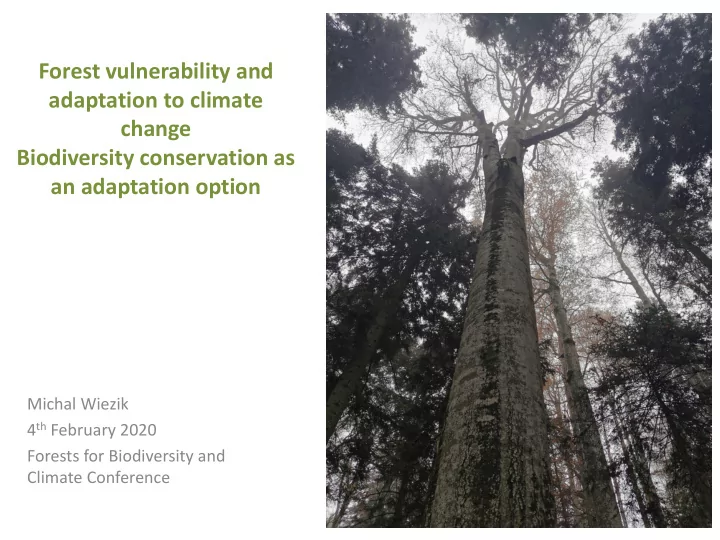
Forest vulnerability and adaptation to climate change Biodiversity conservation as an adaptation option
Michal Wiezik 4th February 2020 Forests for Biodiversity and Climate Conference
SLIDE 2 Moder Modern for
estry Er Era appr
. 200 yrs Ada Adapta ptation of tion of for
est(r (ry), y), ho how, , when hen and and to to wha hat?
SLIDE 3
400+ 100 Sustainable forest management? What about the Environmental Pillar? To: Protect, sustain, and restore the health of critical natural habitats and ecosystems
NO COUNTRY FOR OLD ... FOREST?
SLIDE 4
Architecture of the below-ground plant–fungus network in a temperate forest
COMPLEXITY of a forest
Implications for ADAPTATION and RESILIENCE potential Role of BIODIVERSITY
SLIDE 5
What and where is the BIODIVERSITY? The role of Early seral stages and Old-growth forest
SLIDE 6 Managed forest, simplification of structure
Sukcesný čas early medium
SLIDE 7
Typical structure of primary forest, with relatively open canopy (Pilsko, Slovakia)
SLIDE 8
Extream yet wide spread form of spruce plantation. Maximum stock vs minimum resilience, stability, biodiversity and aesthetics. (Collapse due tu climate change?)
SLIDE 9
SLIDE 10 Complex/Intact ecosystems HAVE GREATER CAPABILITY TO OVERCOME ENVIRONMENTAL STRESSORS, including changes to climate, than simplified (degraded) ones as they have inherent properties that enable them to maximize their adaptive capacity.
- more above- and belowground carbon stored
- more faunal complexity (helps carbon stoarage and
sequestretion)
- major carbon sequestration (soil, biomass, necromass)
- regulating local and regional weather regime
- generation of rain and reduced risks of drought
- ensuring hydrological services
- conserving biodiversity
- consistently higher number of forest-dependent species
- sustain important large scale ecological processes
- higher functional diversity
- higher intra-speciffic genetic dversity
- higher chance for dispersal or retreating refugia
- provision of key pollination and dispersal processes
- human health benefits
- and BEAUTY
SLIDE 11
Is Large scale canopy COLLAPSE a part of long term ecosystem RESILIENCE and ADAPTATION?