
SLIDE 1
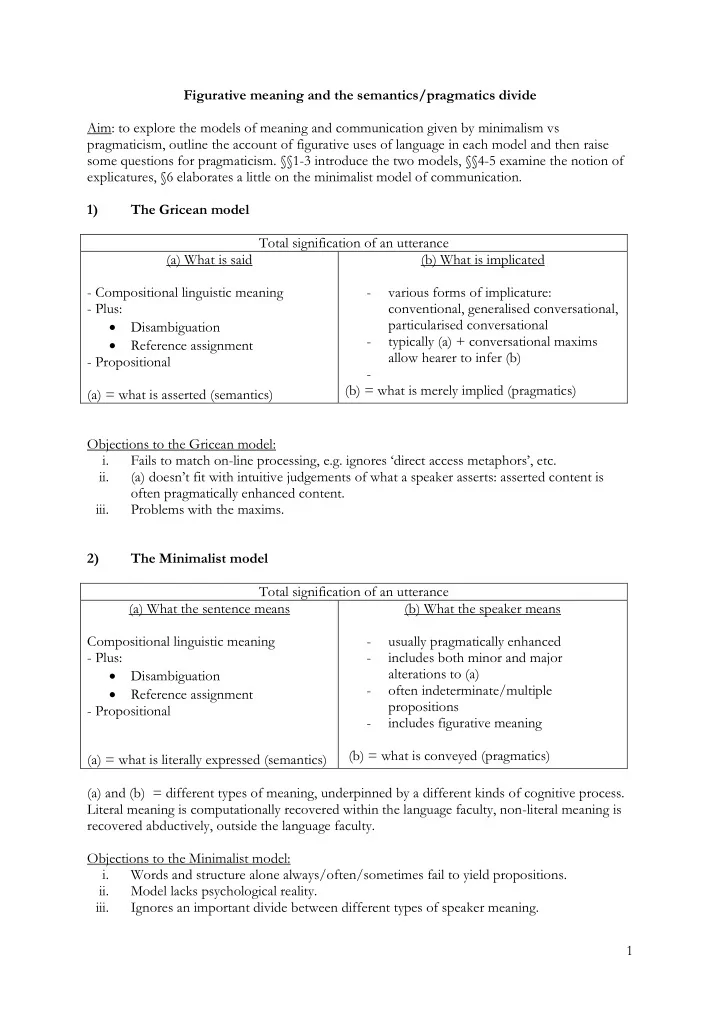
1 Figurative meaning and the semantics/pragmatics divide Aim: to explore the models of meaning and communication given by minimalism vs pragmaticism, outline the account of figurative uses of language in each model and then raise some questions for pragmaticism. §§1-3 introduce the two models, §§4-5 examine the notion of explicatures, §6 elaborates a little on the minimalist model of communication. 1) The Gricean model Total signification of an utterance (a) What is said
- Compositional linguistic meaning
- Plus:
Disambiguation Reference assignment
- Propositional
(a) = what is asserted (semantics) (b) What is implicated
- various forms of implicature:
conventional, generalised conversational, particularised conversational
- typically (a) + conversational maxims
allow hearer to infer (b)
- (b) = what is merely implied (pragmatics)
Objections to the Gricean model: i. Fails to match on-line processing, e.g. ignores ‘direct access metaphors’, etc. ii. (a) doesn’t fit with intuitive judgements of what a speaker asserts: asserted content is
- ften pragmatically enhanced content.
iii. Problems with the maxims. 2) The Minimalist model Total signification of an utterance (a) What the sentence means Compositional linguistic meaning
- Plus:
Disambiguation Reference assignment
- Propositional
(a) = what is literally expressed (semantics) (b) What the speaker means
- usually pragmatically enhanced
- includes both minor and major
alterations to (a)
- ften indeterminate/multiple
propositions
- includes figurative meaning