
SLIDE 1
VI, February 2005
Page 1
Expressed Sequence Tag (EST)
Vassilos Ioannidis - 2005
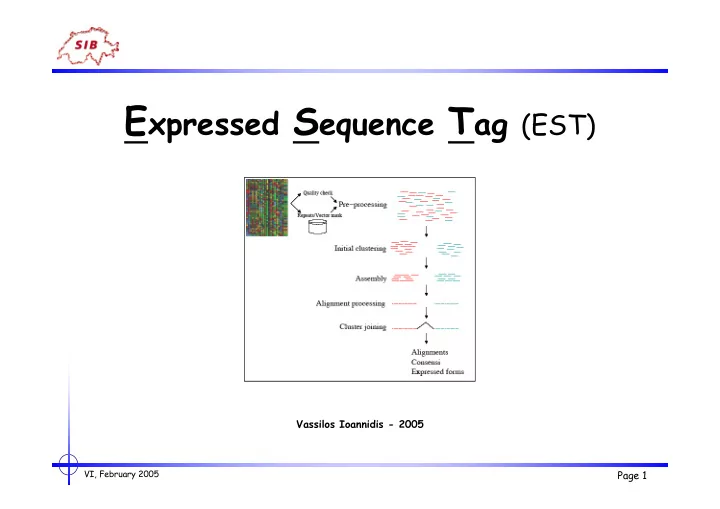
ESTs - outline - Introduction - Improving ESTs - pre-processing - - - PowerPoint PPT Presentation
E xpressed S equence T ag (EST) Vassilos Ioannidis - 2005 VI, February 2005 Page 1 ESTs - outline - Introduction - Improving ESTs - pre-processing - clustering - assembling - Gene indices - The UniGene database - The TIGR database -
VI, February 2005
Page 1
Vassilos Ioannidis - 2005
VI, February 2005
Page 2
VI, February 2005
Page 3
« Traditional » sequencing cDNA clones isolated on the basis of some functional property of interest to a group EST sequencing Large-scale sampling of end sequences of all cDNA clones present in a library « Full-length » sequencing Systematic attempts to obtain high-quality sequences of cDNA clones representing all transcribed genes
VI, February 2005
Page 4
using directional cloning
VI, February 2005
Page 5
mRNA AAAAA mRNA cDNA AAAAA
Synthesis of 1 strand of DNA (Reverse Transcriptase)
cDNA cDNA
RNA degradation Synthesis of 2 strand of DNA (DNA Polymerase) Cloning vector MCS 5’ 3’ 3’ 5’
T3 T7
Cloning & Sequencing
VI, February 2005
Page 6
genome mapping:
VI, February 2005
Page 7
abundance
represented
VI, February 2005
Page 8
VI, February 2005
Page 9
The data sources for clustering can be in-house, proprietary, public database or a hybrid of this (chromatograms and/or sequence files). Each EST must have the following information:
The EST can be stored in FASTA format:
>T27784 EST16067 Human Endothelial cells Homo sapiens cDNA 5' CCCCCGTCTCTTTAAAAATATATATATTTTAAATATACTTAAATATATATTTCTAATATC TTTAAATATATATATATATTTNAAAGACCAATTTATGGGAGANTTGCACACAGATGTGAA ATGAATGTAATCTAATAGANGCCTAATCAGCCCACCATGTTCTCCACTGAAAAATCCTCT TTCTTTGGGGTTTTTCTTTCTTTCTTTTT………
VI, February 2005
Page 10
Public EST databases
criteria (“Phred” score >20%, ie <1% error)
Private EST databases
(producing and selling access to EST data has proven to be a lucrative business…)
patents on promising genes found in its databases
VI, February 2005
Page 11
VI, February 2005
Page 12
Distributors:
Invitrogen (http://clones.invitrogen.com/cloneinfo.php?clone=est)
Notice:
VI, February 2005
Page 13
ID AI242177 standard; RNA; EST; 581 BP. AC AI242177; SV AI242177.1 DT 05-NOV-1998 (Rel. 57, Created) DT 03-MAR-2000 (Rel. 63, Last updated, Version 3) DE qh81g08.x1 Soares_fetal_liver_spleen_1NFLS_S1 Homo sapiens cDNA DE clone IMAGE:1851134 3' similar to gb:M10988 TUMOR NECROSIS FACTOR DE PRECURSOR (HUMAN);, mRNA sequence. RN [1] RP 1-581 RA NCI-CGAP; RT National Cancer Institute, Cancer Genome Anatomy Project (CGAP), Tumor RT Gene Index http://www.ncbi.nlm.nih.gov/ncicgap; RL Unpublished. DR RZPD; IMAGp998P154529; IMAGp998P154529. CC On May 19, 1998 this sequence version replaced gi:2846208. CC Contact: Robert Strausberg, Ph.D. CC Tel: (301) 496-1550 CC Email: Robert_Strausberg@nih.gov CC This clone is available royalty-free through LLNL ; contact the CC IMAGE Consortium (info@image.llnl.gov) for further information. CC Insert Length: 1280 Std Error: 0.00 CC Seq primer: -40UP from Gibco CC High quality sequence stop: 463.
VI, February 2005
Page 14
FH Key Location/Qualifiers FH FT source 1..581 FT /db_xref=taxon:9606 FT /db_xref=ESTLIB:452 FT /db_xref=RZPD:IMAGp998P154529 FT /note=Organ: Liver and Spleen; Vector: pT7T3D (Pharmacia) FT with a modified polylinker; Site_1: Pac I; Site_2: Eco RI; FT This is a subtracted version of the original Soares fetal FT liver spleen 1NFLS library. 1st strand cDNA was primed FT with a Pac I - oligo(dT) primer [5' FT AACTGGAAGAATTAATTAAAGATCTTTTTTTTTTTTTTTTTTT 3'], FT double-stranded cDNA was ligated to Eco RI adaptors FT (Pharmacia), digested with Pac I and cloned into the Pac I FT and Eco RI sites of the modified pT7T3 vector. Library FT went through one round of normalization. Library FT constructed by Bento Soares and M.Fatima Bonaldo. FT /sex=male FT /organism=Homo sapiens FT /clone=IMAGE:1851134 FT /clone_lib=Soares_fetal_liver_spleen_1NFLS_S1 FT /dev_stage=20 week-post conception fetus FT /lab_host=DH10B (ampicillin resistant) SQ Sequence 581 BP; 179 A; 130 C; 135 G; 137 T; 0 other; cttttctaag caaactttat ttctcgccac tgaatagtag ggcgattaca gacacaactc 60 …………
VI, February 2005
Page 15
VI, February 2005
Page 16
The value of ESTs can be greatly enhanced by
(Steps required to “clean” & prepare ESTs sequences)
(minimization of the chance to cluster unrelated sequences)
(derive consensus sequences from overlapping ESTs belonging to the same cluster)
(associate ESTs or ESTs contigs with exons in genomic sequences)
(find and correct coding regions)
in order to :
VI, February 2005
Page 17
EST pre-processing consists in a number of essential steps to minimize the chance to cluster unrelated sequences:
Softwares:
VI, February 2005
Page 18
Vector clipping and contaminations
in each read. Therefore vector sequences must be removed:
lie in the low quality region of the sequence
(http://www.ncbi.nlm.nih.gov/VecScreen/UniVec.html)
Standard pairwise alignment programs are used for the detection of vector sequences and other contaminants (cross-match, BLASTN, FASTA,… )
VI, February 2005
Page 19
Repeats masking
LINEs (long interspersed elements) 6-8 kb 850’000 21% SINEs (short interspersed elements) 100-300 bp 1’500’000 13% _______________________________________________________________ Length Copy number Fraction of the genome LTR (autonomous) 6-11 kb LTR (non-autonomous) 1.5-3 kb 450’000 8% DNA transposons (autonomous) 2-3 kb DNA transposons (non-autonomous) 80-3000 bp 300’000 3% SSRs (simple sequence repeats or micro satellites and mini satellites) 3%
VI, February 2005
Page 20
Repeats masking
(also interesting for evolutionary studies. SSRs important for mapping of diseases)
complexity sequences. It uses the cross-match program for the pairwise alignments (http://www.repeatmasker.org/cgi-bin/WEBRepeatMasker)
BLAST instead of cross-match (http://sapiens.wustl.edu/maskeraid)
from different eukaryotic species (http://www.girinst.org/Repbase_Update.html)
VI, February 2005
Page 21
Low complexity masking
compositions (poly A tracts, AT repeats, etc.)
sensitive to low complexity sequences
they weight sequences in respect to their information content (ex. d2-cluster).
VI, February 2005
Page 22
ATGAATGTAATCTAATAGANGCCTAATCAGCCCACCATGTTCTCCACTGAAAAATCCTCT CCCCCGTCTCTTTAAAAATATATATATTTTAAATATACTTAAATATATATTTCTAATATC TTTAAATATATATATATATTTNAAAGACCAATTTATGGGAGANTTGCACACAGATGTGAA TTCTTTGGGGTTTTTCTTTCTTTCTTTTTTGATTTTGCACTGGACGGTGACGTCAGCCAT GTACAGGATCCACAGGGGTGGTGTCAAATGCTATTGAAATTNTGTTGAATTGTATACTTT TTCACTTTTTGATAATTAACCATGTAAAAAATGAACGCTACTACTATAGTAGAATTGAT
Base calling Select high quality reads
Vector clipping
CCCCCGTCTCTTTAAAAATATATATATTTTAAATATACTTAAATATATATTTCTAATATC TTTAAATATATATATATATTTNAAAGACCAATTTATGGGAGANTTGCACACAGATGTGAA ATGAATGTAATCTAATAGANGCCTAATCAGCCCACCATGTTCTCCACTGAAAAATCCTCT TTCTTTGGGGTTTTTCTTTCTTTCTTTTTTGATTTTGCACTGGACGGTGACGTCAGCCAT GTACAGGATCCACAGGGGTGGTGTCAAATGCTATTGAAATTNTGTTGAATTGTATACTTT TTCACTTTTTGATAATTAACCATGTAAAAAATGXXXXXXXXXXXXXXXXXXXXXXXXXX
Repeat/Low complexity masking
CCCCCGTCTCTTTAAAANNNNNNNNNNNNNNNNNNNNNNNNNNNNNNNNNNNNNNNNNNN NNNNNNNNNNNNNNNNNNNTTNAAAGACCAATTTATGGGAGANTTGCACACAGATGTGAA ATGAATGTAATCTAATAGANGCCTAATCAGCCCACCATGTTCTCCACTGAAAAATCCTCT TTCTTTGGGGTTTTTCTTTCTTTCTTTTTTGATTTTGCACTGGACGGTGACGTCAGCCAT GTACAGGATCCACAGGGGTGGTGTCAAATGCTATTGAAATTNTGTTGAATTGTATACTTT TTCACTTTTTGATAATTAACCATGTAAAAAATGXXXXXXXXXXXXXXXXXXXXXXXXXX
Sequence ready for clustering
CCCCCGTCTCTTTAAAANNNNNNNNNNNNNNNNNNNNNNNNNNNNNNNNNNNNNNNNNNN NNNNNNNNNNNNNNNNNNNTTNAAAGACCAATTTATGGGAGANTTGCACACAGATGTGAA ATGAATGTAATCTAATAGANGCCTAATCAGCCCACCATGTTCTCCACTGAAAAATCCTCT TTCTTTGGGGTTTTTCTTTCTTTCTTTTTTGATTTTGCACTGGACGGTGACGTCAGCCAT GTACAGGATCCACAGGGGTGGTGTCAAATGCTATTGAAATTNTGTTGAATTGTATACTTT TTCACTTTTTGATAATTAACCATGTAAAAAATG
VI, February 2005
Page 23
EST clustering consists in incorporating overlapping ESTs which tag the same Transcript of the same gene in a single cluster For clustering, we measure the similarity (distance) between any 2 sequences. The distance is then reduced to a simple binary value:
Similarity can be measured using different algorithms:
Smith-Waterman is the most sensitive, but time consuming (ex. cross-match); Heuristic algorithms, as BLAST and FASTA, trade some sensitivity for speed.
d2-cluster algorithm: based on word comparison and composition (word identity and multiplicity) (Burke et al., 99). No alignments are performed ) fast.
VI, February 2005
Page 24
Stringent clustering:
Loose clustering:
VI, February 2005
Page 25
Supervised clustering
length mRNAs, exon constructs from genomic sequences, previously assembled EST cluster consensus)
Unsupervised clustering
The two major gene indices use different EST clustering methods:
generates shorter consensus sequences and separates splice variants
stringency is used in UniGene. No consensus sequences are produced
VI, February 2005
Page 26
Assembling, processing and cluster joining
sequences generated (processing)
and singletons.
VI, February 2005
Page 27
Assembly & Processing Joining
Assembling, processing and cluster joining
clusters can be joined
VI, February 2005
Page 28
Assembly & Processing Joining
Assembling, processing and cluster joining
clusters can be joined
VI, February 2005
Page 29
describe the genes they are analyzing
system of nomenclature
corresponding gene
VI, February 2005
Page 30
VI, February 2005
Page 31
VI, February 2005
Page 32
cluster EST sequences with traditional gene sequences
(Represented organisms comprise animals & plants)
cluster identifiers are not stable gene indices !!!
VI, February 2005
Page 33
UniGene procedure: (supervised or unsupervised, multipass)
Screen for contaminants, repeats, and low-complexity regions in GenBank:
are detected using pairwise alignment programs
Clustering procedure:
is discarded (*)
supposed known (*: UniGene rule)
VI, February 2005
Page 34
UniGene procedure:
Ensures that the 5' and 3' ESTs from the same cDNA clone belongs to the same cluster ESTs that have not been clustered, are reprocessed with lower level of stringency ESTs added during this step are called guest members Clusters of size 1 (containing a single sequence) are compared against the rest of the clusters with a lower level of stringency and merged with the cluster containing the most similar sequence For each build of the database, clusters IDs change if clusters are split or merged.
VI, February 2005
Page 35
VI, February 2005
Page 36
TIGR produces Gene Indices for a number of organisms (http://www.tigr.org/tdb/tgi). TIGR Gene Indices are produced using stringent supervised clustering methods Clusters are assembled in consensus sequences, called tentative consensus (TC) sequences, that represent the underlying mRNA transcripts The TIGR Gene Indices building method tightly groups highly related sequences and discard under-represented, divergent, or noisy sequences TIGR Gene Indices characteristics:
TC sequences can be used for genome annotation, genome mapping, and identification of orthologs/paralogs genes
VI, February 2005
Page 37
TIGR procedure: (supervised, stringent)
EST sequences recovered form dbEST (http://www.ncbi.nlm.nih.gov/dbEST); Sequences are trimmed to remove:
– vectors – polyA/T tails – adaptor sequences – bacterial sequences
Get expressed transcripts (ETs) from EGAD (http://www.tigr.org/tdb/egad/egad.shtml)
– EGAD (Expressed Gene Anatomy Database) is based on mRNA and CDS (coding sequences) from GenBank
Get TCs and singletons from previous database build Supervised and strict clustering
– Use ETs, TCs, and CDSs as seed; – Compare cleaned ESTs to the template using FLAST (a rapid pairwise comparison – program). – Sequences are grouped in the same cluster if these conditions are true:
VI, February 2005
Page 38
TIGR procedure:
Each cluster is assembled using CAP3 assembling program to produce tentative consensus (TC) sequences.
– CAP3 can generate multiple consensus sequences for each cluster – CAP3 rejects chimeric, low-quality and non-overlapping sequences – New TCs resulting from the joining or splitting of previous TCs, get a new TC ID
Build TCs are loaded in the TIGR Gene Indices database and annotated using information from GenBank and/or protein homology. Track of the old TC IDs is maintained through a relational database. References:
– Quackenbush et al. (2000) Nucleic Acid Research,28, 141-145. – Quackenbush et al. (2001) Nucleic Acid Research,29, 159-164.
VI, February 2005
Page 39
VI, February 2005
Page 40
trEST
trEST is an attempt to produce contigs from UniGene clusters and to translate them into proteins. This is a two-step process:
Hence, it must be stressed that trEST entries are NOT real protein sequences. They are hypothetical and are known to contain errors. These data are provided because they might help biologists to find which UniGene cluster(s) may be relevant for their work.
VI, February 2005
Page 41
BLAST search against EST databases with a genomic C. Elegans sequence
Introns
VI, February 2005
Page 42
VI, February 2005
Page 43
cDNA
3’
5’
3’
5’
VI, February 2005
Page 44
VI, February 2005
Page 45
BLAST search against EST databases with a C. Elegans sequence
VI, February 2005
Page 46
Same clone Sequenced on the reverse strand
VI, February 2005
Page 47
Contact with the authors
VI, February 2005
Page 48
EST assembly to reconstruct a complete sequence
VI, February 2005
Page 49 EST5'.+ CGANGGCCTATCAACAATGAAAGGTCGAAACCTGCGTTTACTCCGGATACAAGATCCACC EST5'.+ CAGGACACGGNAAAGAGACTTGTCCGTACTGACGGAAAGGTCCAAATCTTCCTCAGTGGA EST5'.+ AAGGCACTCAAGGGAGCCAAGCTTCGCCGTAACCCACGTGACATCAGATGGACTGTCCTC EST5'.+ TACAGAATCAAGAACAAGAAGGGAACCCACGGACAAGAGCAAGTCACCAGAAAGAAGACC EST3'.- AAGAGCAAGTCACCAGAAAGAAGACC EST5'.+ AAGAAGTCCGTCCAGGTTGTTAACCGCGCCGTCGCTGGACTTTCCCTTGATGCTATCCTT EST3'.- AAGAAGTCCGTCCAGGTTGTTAACCGCGCCGTCGCTGGACTTTCCCTTGATGCTATCCTT EST5'.+ GCCAAGAGAAACCAGACCGAAGACTTCCGTCGCCAACAGCGTGAACAAGCCGCTAAGATC EST3'.- GCCAAGAGAAACCAGACCGAAGACTTCCGTCGCCAACAGCGTGAACAAGCCGCTAAGATC EST5'.+ GCCAAGGATGCCAACAA EST3'.- GCCAAGGATGCCAANAAGGCTGTCCGTGCCGCCAAGGCTGCTNCCAACAAGGNAAAGAAG EST3'.- GCCTCTCAGCCAAAGACCCAGCAAAAGACCGCCAAGAATNTNAAGACTGCTGCTCCNCGT EST3'.- GTCGGNGGAAANCGATAAACGTTCTCGGNCCCGTTATTGTAATAAATTTTGTTGACC
EST assembly to reconstruct a complete sequence
VI, February 2005
Page 50
EST assembly to reconstruct a complete sequence
VI, February 2005
Page 51 EST1.+ GTTTAATTACCCAAGTTTGAGATTCGTCAAGCGAGGGCCTATCAACAATGAA-GGTCGAA EST5'.+ CGANGGCCTATCAACAATGAAAGGTCGAA EST1.+ ACCTGCGTTTACTCCGGATACAAGATCCACCCAGGACACGG-AAAGAGACTTGTCCGTAC EST5'.+ ACCTGCGTTTACTCCGGATACAAGATCCACCCAGGACACGGnAAAGAGACTTGTCCGTAC EST1.+ TGACGGAAAGGTCCAAATCTTCCTCAGTGGAAAGGCACTCAAGGGAGCCAAGCTTCGCCG EST5'.+ TGACGGAAAGGTCCAAATCTTCCTCAGTGGAAAGGCACTCAAGGGAGCCAAGCTTCGCCG EST1.+ TAACCCACGTGACATCAGATGGACTGTCCTCTACAGAATCAAGAACAAGAAGGGAACCCA EST5'.+ TAACCCACGTGACATCAGATGGACTGTCCTCTACAGAATCAAGAACAAGAAGGGAACCCA EST1.+ CGGACAAGAGCAAGTCACCAGAAAGAAGACCAAGAAGTCCGTCCAGGTTGTTAACCGCGC EST5'.+ CGGACAAGAGCAAGTCACCAGAAAGAAGACCAAGAAGTCCGTCCAGGTTGTTAACCGCGC EST3'.- AAGAGCAAGTCACCAGAAAGAAGACCAAGAAGTCCGTCCAGGTTGTTAACCGCGC EST1.+ CGTCGCTGGACTTTCCCTTGATGCTATCCTTGCCAAGAGAAACCAGACCGAAGACTTCCG EST5'.+ CGTCGCTGGACTTTCCCTTGATGCTATCCTTGCCAAGAGAAACCAGACCGAAGACTTCCG EST3'.- CGTCGCTGGACTTTCCCTTGATGCTATCCTTGCCAAGAGAAACCAGACCGAAGACTTCCG EST1.+ TCGCCAACAGCGTGAACAAGCCGCTAAGATCGCCAAGGATGCCAACAAGGCTGTCCGTGC EST5'.+ TCGCCAACAGCGTGAACAAGCCGCTAAGATCGCCAAGGATGCCAACAA EST3'.- TCGCCAACAGCGTGAACAAGCCGCTAAGATCGCCAAGGATGCCAAnAAGGCTGTCCGTGC EST1.+ CGCCAAGGCTGCTGCCAACAAGGAAAAGAAGGCCTCTCAGCCAAAGACCCAGCAAAAGAC EST3'.- CGCCAAGGCTGCTNCCAACAAGGNAAAGAAGGCCTCTCAGCCAAAGACCCAGCAAAAGAC EST1.+ CGCCAAGAATGTGAAGACTGCTGCTCCACGTGTCGGAGGAAAGCGATTAAACGTTCTCGG EST3'.- CGCCAAGAATN TNAAGACTGCTGCTCCNCGTGTCGGNGGAAANCGA-TAAACGTTCTCGG
VI, February 2005
Page 52
CONTIG --------------------------------------------------------------------------------------CGANGGCCTATCAACAATGAAAGGTCGAAACCTG Genomic AGCTACAAACAGATCCTTGATAATTGTCGTTGATTTTACTTTATCCTAAATTTATCTCAAAAATGTTGAAATTCAGATTCGTCAAGCGAGGGCCTATCAACAATG-AAGGTCGAAACCTG *** ************ ** * ************** CONTIG CGTTTACTCCGGATACAAGATCCACCCAGGACACGGNAAAGAGACTTGTCCGTACTGACGGAAAG------------------------------------------------------- Genomic CGTTTACTCCGGATACAAGATCCACCCAGGACACGG-AAAGAGACTTGTCCGTACTGACGGAAAGGTGAGTTCAGTTTCTCTTTGAAAGGCGTTAGCATGCTGTTAGAGCTCGTAAGGTA ************************************ **************************** CONTIG ------------------------------------------------------------------------------------------------------------------------ Genomic TATTGTAATTTTACGAGTGTTGAAGTATTGCAAAAGTAAAGCATAATCACCTTATGTATGTGTTGGTGCTATATCTTCTAGTTTTTAGAAGTTATACCATCGTTAAGCATGCCACGTGTT CONTIG ----------------------------------------------GTCCAAATCTTCCTCAGTGGAAAGGCACTCAAGGGAGCCAAGCTTCGCCGTAACCCACGTGACATCAGATGGAC Genomic GAGTGCGACAAACTACCGTTTCATGATTTATTTATTCAAATTTCAGGTCCAAATCTTCCTCAGTGGAAAGGCACTCAAGGGAGCCAAGCTTCGCCGTAACCCACGTGACATCAGATGGAC ************************************************************************** CONTIG TGTCCTCTACAGAATCAAGAACAAGAAG---------------------------------------------GGAACCCACGGACAAGAGCAAGTCACCAGAAAGAAGACCAAGAAGTC Genomic TGTCCTCTACAGAATCAAGAACAAGAAGGTACTTGAGATCCTTAAACGCAGTTGAAAATTGGTAATTTTACAGGGAACCCACGGACAAGAGCAAGTCACCAGAAAGAAGACCAAGAAGTC **************************** *********************************************** CONTIG CGTCCAGGTTGTTAACCGCGCCGTCGCTGGACTTTCCCTTGATGCTATCCTTGCCAAGAGAAACCAGACCGAAGACTTCCGTCGCCAACAGCGTGAACAAGCCGCTAAGATCGCCAAGGA Genomic CGTCCAGGTTGTTAACCGCGCCGTCGCTGGACTTTCCCTTGATGCTATCCTTGCCAAGAGAAACCAGACCGAAGACTTCCGTCGCCAACAGCGTGAACAAGCCGCTAAGATCGCCAAGGA ************************************************************************************************************************ CONTIG TGCCAACAAGGCTGTCCGTGCCGCCAAGGCTGCTNCCAACAAG----------------------------------------------------------------------------- Genomic TGCCAACAAGGCTGTCCGTGCCGCCAAGGCTGCTGCCAACAAGGTAAACTTTCTACAATATTTATTATAAACTTTAGCATGCTGTTAGAGCTTGTAAGGTATATGTGATTTTACGAGTGT ********************************** ******** CONTIG -------------------------------------------------------------------------------------------------------------------GNAAA Genomic GTTATTTGAAGCTGTAATATCAATAAGCATGTCTCGTGTGAAGTCCGACAATTTACCATATGCATGAAATTTAAAAACAAGTTAATTTTGTCAATTCTTTATCATTGGTTTTCAGGAAAA * *** CONTIG GAAGGCCTCTCAGCCAAAGACCCAGCAAAAGACCGCCAAGAATNTNAAGACTGCTGCTCCNCGTGTCGGNGGAAANCGATAAACGTTCTCGGNCCCGTTATTGTAATAAATTTTGTTGAC Genomic GAAGGCCTCTCAGCCAAAGACCCAGCAAAAGACCGCCAAGAATGTGAAGACTGCTGCTCCACGTGTCGGAGGAAAGCGATAAACGTTCTCGGTCCCGTTATTGTAATAAATTTTGTTGAC ******************************************* * ************** ******** ***** **** * *********** *************************** CONTIG C----------------------------------------------------------------------------------------------------------------------- Genomic CGTTAAAGTTTTAATGCAAGACATCCAACAAGAAAAGTATTCTCAAATTATTATTTTAACAGAACTATCCGAATCTGTTCATTTGAGTTTGTTTAGAATGAGGACTCTTCGAATAGCCCA *
exon exon exon exon exon intron intron intron
Alignment of an EST “contig” and a genomic sequence
VI, February 2005
Page 53
ORESTES
represented, often coding, central portions of mRNAs
followed by PCR, producing low complexity libraries
produce novel information
Cons:
Pros:
(large / small scale)
Futur of ESTs:
saturation on selected tissues
exploration of the transcriptomes of various species, especially with large genomes
studies