` Ecosystem State of Condition Historical Altered Novel - - PowerPoint PPT Presentation

ecosystem state of condition
SMART_READER_LITE
LIVE PREVIEW

` Ecosystem State of Condition Historical Altered Novel - - PowerPoint PPT Presentation

July 29, 2014 CEER New Orleans Presented by, Joseph Pfeiffer, PWS ` Ecosystem State of Condition Historical Altered Novel *Seastedt, Hobbs, Suding: 2008 The Good, The Bad and The Ugly. The Good Stable functioning


slide-1
SLIDE 1

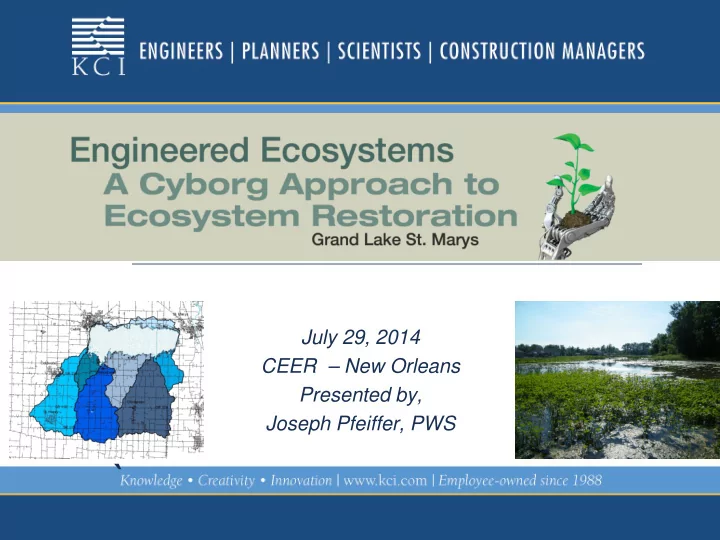
July 29, 2014 CEER – New Orleans Presented by, Joseph Pfeiffer, PWS

`

slide-2
SLIDE 2

Ecosystem State of Condition

  • Historical
  • Altered
  • Novel

*Seastedt, Hobbs, Suding: 2008

slide-3
SLIDE 3

The Good, The Bad and The Ugly….

  • The Good

Stable functioning ecosystems

  • The Bad

Degraded ecosystems

  • The Ugly

An ecosystem in a state that potentially creates direct threats to human health and well being

slide-4
SLIDE 4

Altering the State of Condition Cyborg/Engineered Ecosystem

  • Cyborg System – An integrated man machine system that restores function and/or

enhances the abilities of the augmented entity to function.

  • Ecosystem ICU
  • Going on Life Support
  • Engineered Ecosystem
  • Map ecosystem pathways
  • Identify limiting factors
slide-5
SLIDE 5

Grand Lake St. Marys – Mercer County, OH

  • Grand Lake St. Marys
  • 21 square mile man made lake in

West Ohio

  • 52 square mile watershed
  • 425 million in agricultural production
  • 125 million in tourism
  • Key issues
  • Excessive nutrient loading resulting

in Hypo-trophic condition in lake and watershed

  • Blue Green algal blooms producing

mycrosystin toxins

slide-6
SLIDE 6

Grand Lake St. Marys – Mercer County, OH

  • Impacts
  • Algal blooms shut down all use of the

lake in 2009/10

  • Estimated loss of $77 million to local

economy

  • Loss in housing value of 25 million
  • No Freddie Mac/Fannie Mae funding

for homes in proximity to lake

  • Identified public health threat
slide-7
SLIDE 7

Grand Lake St. Marys Strategic Plan

  • Critical Response Actions
  • Conceptual Ecosystem Revitalization Model
  • Environmental
  • Economic
slide-8
SLIDE 8

Grand Lake St. Marys Littoral Wetland Restoration

  • Critical Element in GLSM System
  • Historically over 2,500 acres
  • Lost due to;
  • Water quality degradation
  • Invasive species (carp)
  • Anthroprogenic activities
  • Restore by;
  • Increase water clarity
  • Reduce nutrient loading
  • Establishing substrate
slide-9
SLIDE 9

Littoral Wetland Restoration Engineered Ecosystem – Treatment Train

Prairie Creek Treatment Train

  • Engineered
  • Mechanical Pumping
  • 1.3 MGD
  • Chemical Dosing
  • Alum
  • Bio-Technical
  • Constructed Wetlands
  • 6 Acres
  • Natural
  • Restored Wetlands
  • 10 acres
slide-10
SLIDE 10

Prairie Creek Treatment Train - PCTT

MAID System

  • Controls pumping into system
  • Doses chemical as required
  • Tracks water quality
  • Ph
  • Turbidity
  • Flow rates
  • Allows remote monitoring and

control

slide-11
SLIDE 11

Prairie Creek Treatment Train - PCTT

Constructed Wetland Cells

  • Five cells, alternating deep and

shallow water

slide-12
SLIDE 12

Prairie Creek Treatment Train - PCTT

slide-13
SLIDE 13

Prairie Creek Treatment Train - PCTT

Results

  • 65% reduction in Total Phos
  • 30% reduction in Total N
  • Trophic shift in embayment
slide-14
SLIDE 14

Prairie Creek Littoral Wetland - PCLW

Basic Design

  • Deep and shallow marsh

system

  • Designed to improve Fish and

Wildlife habitat

  • Will receive flow from PCTT
  • Encapsulation of nutrient laden

sediment

slide-15
SLIDE 15

Littoral Wetland Restoration Engineered Ecosystem – Treatment Train

Cold Water Creek Treatment Train

  • Engineered
  • Mechanical Pumping
  • 6 MGD
  • Bio-Technical
  • Constructed Wetlands
  • 40 acres
  • Flow Diversion
  • Natural
  • Restored Wetlands
  • 250 acres
slide-16
SLIDE 16

Conclusions

Current

  • Engineered Ecosystems on GLSM have shown;
  • Observed and measured improvements in water quality
  • Observed expansion of existing littoral wetland system

On-going

  • Ecosystem response to re-establishment in historic wetland zones

still being monitored Future

  • Two more Treatment Trains in design, four more in planning
slide-17
SLIDE 17

QUESTIONS