SLIDE 1
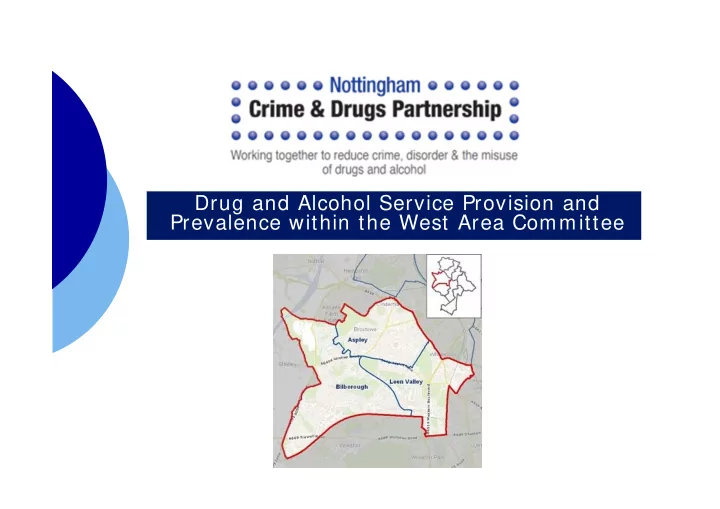
Drug and Alcohol Service Provision and Prevalence within the West Area Committee
SLIDE 2 GPs in the West Area Committee that offer drug and alcohol treatment services:
Service Provision:
Shared Care (14‐15) 47 17 27
SLIDE 3
Pharmacies in the West Area Committee that offer drug and alcohol services:
Service Provision:
SLIDE 4
Prevalence:
Source: Drug Misuse: Findings from the 2014/ 15 Crime Survey for England and Wales
National ecstasy use is the highest since 2008-09. Latest figures show 1.7% of 16-59 years olds used ecstasy in the last year. For the West Area, this equates to approximately 444 citizens.
SLIDE 5
Prevalence:
Source: Drug Misuse: Findings from the 2014/ 15 Crime Survey for England and Wales
National cannabis use is reducing since a peak in 2003. Latest figures show 6.7% of people aged 16-59 years olds used cannabis in the last year. For the West Area, this equates to approximately 1,748 citizens.
SLIDE 6
Prevalence:
Source: Drug Misuse: Findings from the 2013/ 14 Crime Survey for England and Wales
National stimulant use is on a downward trajectory in the long term but has increased slightly since 2012-13. Latest figures show 3.5% of 16-59 years olds used stimulants in the last year. For the West Area, this equates to approximately 913 citizens.
SLIDE 7
New Psychoactive Substances: What we do know
Synthetic cannabinoids present the greatest challenge to the city; its use in all our local prisons is widespread. The closure of the “Wide Mouth Frog” website indicated purchase clusters in the Bestwood, Sherwood, Basford, Berridge and Mapperley areas of the city. The age of first time NPS use ranged from 11 years to 51 years. The Criminal Justice Intervention Team Survey (2013 – 14) indicates that 37% of respondents used NPS
SLIDE 8
The links between use and criminal activity
The long term effects of NPS use on:
Physical and mental health
Criminal records
Finances
The risk that increasing NPS use is having on the heroin market:
It is posited that moves towards NPS use has led to dealers providing stronger heroin to reclaim their clients and ‘grow’ their client base as word spreads about the quality of the heroin. This is based around anecdotal evidence provided by partners regarding some clients moving away from heroin use and on to NPS use.
The average purity for Quarter 1 2015 for heroin is 45.6% and crack cocaine is 30.7%
New Psychoactive Substances: What we don’t know
SLIDE 9
In response to the increase in use of NPS the Crime and Drugs Partnership is facilitating both a NPS working group and a synthetic cannabinoid working group as a sub group
- f the harm reduction meeting, to address this issue and
to develop appropriate interventions and harm reduction advice.
A significant gap exists in the knowledge around the use
- f NPS and criminality; it is recommended that this
information is captured at the point of arrest.
New Psychoactive Substances: What we are doing
SLIDE 10 Nottingham City Drug Informed Offending
((Managed Offenders x 8) + (Bridgit Positive Testers x 10) + VAP+ Robbery+ Burglary)) Population ÷ 1000
SLIDE 11
Successful Completions from Substance Misuse Treatment
SLIDE 12
It is the intention of Nottingham City Council through the Crime and Drugs Partnership (CDP) to re-commission the whole range of substance misuse intervention services (and adjunct services) that serve all those, of all ages, who are affected directly or indirectly by substance misuse.
It is the wish of the CDP to understand the thoughts and aspirations of a wide number of partners; service providers and beneficiaries of current services in the design of a service model(s) that meets the needs of Service beneficiaries; service providers, partners and the local Authority.
Our intentions going forwards