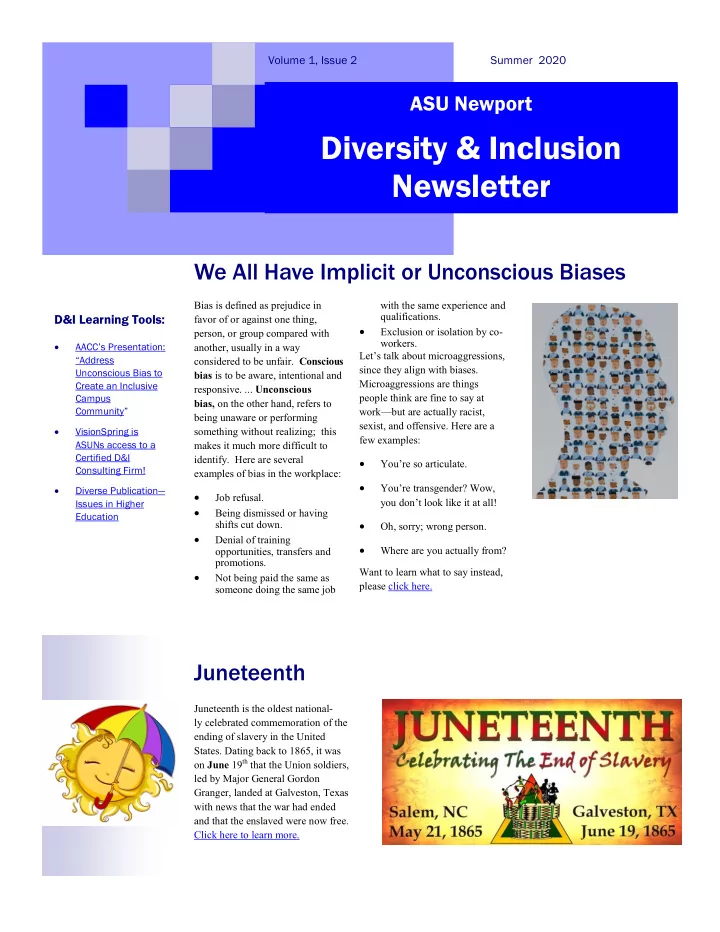

Bias is defined as prejudice in favor of or against one thing, person, or group compared with another, usually in a way considered to be unfair. Conscious bias is to be aware, intentional and
- responsive. ... Unconscious
bias, on the other hand, refers to being unaware or performing something without realizing; this makes it much more difficult to
- identify. Here are several
examples of bias in the workplace:
Job refusal.
Being dismissed or having shifts cut down.
Denial of training
- pportunities, transfers and
promotions.
Not being paid the same as someone doing the same job with the same experience and qualifications.
Exclusion or isolation by co- workers. Let’s talk about microaggressions, since they align with biases. Microaggressions are things people think are fine to say at work—but are actually racist, sexist, and offensive. Here are a few examples:
You’re so articulate.
You’re transgender? Wow, you don’t look like it at all!
Oh, sorry; wrong person.
Where are you actually from? Want to learn what to say instead, please click here.
We All Have Implicit or Unconscious Biases Juneteenth
Juneteenth is the oldest national- ly celebrated commemoration of the ending of slavery in the United
- States. Dating back to 1865, it was
- n June 19th that the Union soldiers,
led by Major General Gordon Granger, landed at Galveston, Texas with news that the war had ended and that the enslaved were now free. Click here to learn more.
ASU Newport
Summer 2020 Volume 1, Issue 2
Diversity & Inclusion Newsletter
D&I Learning Tools:
AACC’s Presentation: “Address Unconscious Bias to Create an Inclusive Campus Community” VisionSpring is ASUNs access to a Certified D&I Consulting Firm! Diverse Publication— Issues in Higher Education