
SLIDE 1
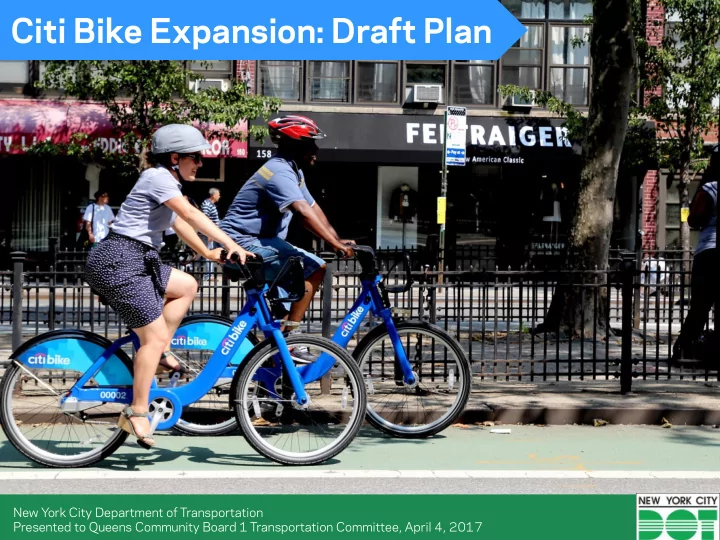
Citi Bike Expansion: Draft Plan
New York City Department of Transportation Presented to Queens Community Board 1 Transportation Committee, April 4, 2017
Citi Bike Expansion: Draft Plan New York City Department of - - PowerPoint PPT Presentation
Citi Bike Expansion: Draft Plan New York City Department of Transportation Presented to Queens Community Board 1 Transportation Committee, April 4, 2017 What is Citi Bike? Citi Bike is New York Citys bike share system A network of
New York City Department of Transportation Presented to Queens Community Board 1 Transportation Committee, April 4, 2017
system
intended for point-to-point transportation
but too short for a taxi or the subway
riding behavior than other cyclists
Share riders have lower rates of crashes than other cyclists
DOT promotes cycling safety with:
Citi Bike/Motivate promotes cycling safety with:
approximately 750 stations by end of 2017
cleaning and maintenance
City system
$14.95/month with annual contract
$5/month with annual contract
Citi Bike system will be:
expansion in any direction
Current Service Area Phase 2 Expansion Phase 2 Expansion
Data: NYCDOT (as of April 2017)
40,000,000 +
Total trips
1,990,000 +
Memberships sold
122,000 +
Active annual members
69,000 +
Trips on busiest days
7.0 +
Trips per bike on busiest days
88% of trips are taken by annual members Average trip duration is under 15 minutes 1 2
select station locations in CB1
included: ‒ More than 18 meetings and events with CB1, elected
and other community
‒ Public community planning workshops in October and November 2016
Map presented at community planning workshops in October and November 2016 685 potential sites shown Participants asked to use red and green stickers and comment forms to indicate opinion on specific sites
Potential sites are shown here by intensity of stakeholder preference Darker shade indicates greater preference Inputs include:
from public web portal
considerations
Where possible, less preferred sites were removed from consideration
Community preference and network considerations were combined to create a draft plan 59 sites needed for CB 1 Draft Plan
11
Stations are typically located in the parking lane of the street, or
enough to allow pedestrian flow STATIONS IN ROADBED
ALONG BUILDING LINE ALONG CURB LINE
STATIONS ON SIDEWALK
ALONG PARK VERGE
Stations are typically located in the parking lane of the street, or
enough to allow pedestrian flow