SLIDE 1
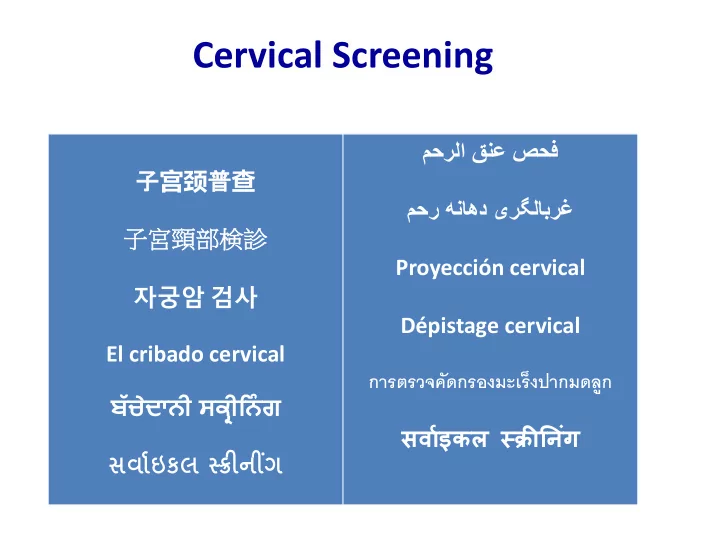
子宫颈普查 子宮頸部検診 자궁암 검사 El cribado cervical ਬ ੱ ਚੇਦਾਨੀ ਸਕਰੀਨਨ ਿੱ ਗ સરવાઇકલ સ્કરીનીઃગ محرلا قنع صحف محر هناهد یرگلابرغ Proyección cervical Dépistage cervical การตรวจคัดกรองมะเร็งปากมดลูก सरॎवाइकल स्कॎरीन िःग
Cervical Screening
SLIDE 2
SLIDE 3
Metro Auckland Cervical Screening Coordination service
Jane Grant Pauline Proud 307 4949 ext 27709
SLIDE 4 Cervical Screening:
improving services for women in Auckland
successes and challenges as services focus
SLIDE 5 Overview
Introduction:
- What is a cervical health check?
- Why are regular cervical health checks
important?
- Who needs them?
- Where do women go for a check?
HPV Vaccine and Testing What’s Working Well?
SLIDE 6 What is a Cervical Health Check?
the womb
check is looking to see if you have changes to your cervix. It is not a test for cancer.
cervix can help to stop cervical cancer.
SLIDE 7
Why are regular cervical health checks important?
They identify early changes to the cells of the cervix before cancer develops. Most often the changes go back to normal. If necessary they can be treated.
Prevention saves lives:
SLIDE 8 Any woman aged 20-69 who has ever been sexually active:
- Even if she has only ever had sex with her husband
- Even if she has not had sex for a long time
- Even if she is past bearing children
- Even if she has had her womb removed she should
check with her doctor Women with disabilities
Who needs regular cervical health checks?
SLIDE 9 Women can:
- have a female doctor or nurse
- talk about having the check and then decide
- take family for support
- stop at any time
SLIDE 10 Where can women go for their cervical health check?
- Family doctors and nurses
- Family Planning Clinics are available across
Auckland:
- Well Women and Family Trust Clinics and
Caravan (www.wons.org.nz ) 846 7886
- You may be eligible for a free check
SLIDE 11 HPV Vaccine and Testing
- Human Papilloma Virus and
cervical cancer
- Getting vaccinated
- Likely changes in the future
SLIDE 12
HPV: the virus the vaccine and cervical health checks
SLIDE 13
SLIDE 17 Key Points:
Human Papilloma Virus (HPV) and cervical cancer
- The virus is passed on by skin to skin contact
- It mostly will clear without any treatment
- When it persists, it may cause cancer (men
and women)
- Vaccination reduces the risk of cervical cancer
by 70%.
- Vaccinated women still need cervical health
checks.
SLIDE 18 HPV Vaccine
- Free for young women aged 12 – 20
- Available in most schools in year 8
- Also available at the family doctor
For young men, and for women over 20, the vaccine can be purchased through the family doctor.
SLIDE 19
What’s Working Well?
SLIDE 20 Improvements:
The goal is 80% women having regular cervical
- checks. Since 2011:
- 6% increase for Maori from 58% to 64%
- 13% increase for Pacific from 62% to 75%
- 8% increase for Asian from 56% to 64%
- European/other women from 82% to 83%
Women who have regular checks reduce their risk of cervical cancer by about 90 percent.
SLIDE 21
SLIDE 22
SLIDE 23 Improvements and Challenges
- Higher rates of immunisation
- 11% more nurse smear takers (59 more in 12
months)
- Involving partners, families and communities to
support women to get regular checks
- Initiatives to make services accessible
- Free smears available 24% priority women
- More translated resources
- Improving invitation and recall systems
- Better information for practices so they can focus on
women most at risk
SLIDE 24 What has contributed to improvement?
Providers have worked hard to find out who has not been able to participate, and to provide information and encouragement Providers have worked to make their services more easily available More free cervical checks are available for Priority
- women. Phone 0800 for information.
“Priority” women include Maori, Pacific and Asian and those who have never had a cervical check, and those who have not had one for a long time.
SLIDE 25 Challenges
- Getting the messages out there
- No universally free smears
- Resources that support understanding
- Busy General Practices
- Social and Financial difficulties experienced by
families – women’s health often not main concern
SLIDE 26 Free cervical checks are available for priority women* Phone 0800 729 729 for information.
* “Priority” women include Maori, Pacific and Asian and those who have never had a cervical check, and those who have not had one for a long time.
SLIDE 27
Involving Family Members:
For many women, the cervical health check is not easy; partners and family can provide valuable support and practical help. “We ask all of you to think about how you could support women in your family to get regular checks.”
SLIDE 28