Boolean indexing: > x >= 30 - - PDF document

boolean indexing x 30
SMART_READER_LITE
LIVE PREVIEW

Boolean indexing: > x >= 30 - - PDF document

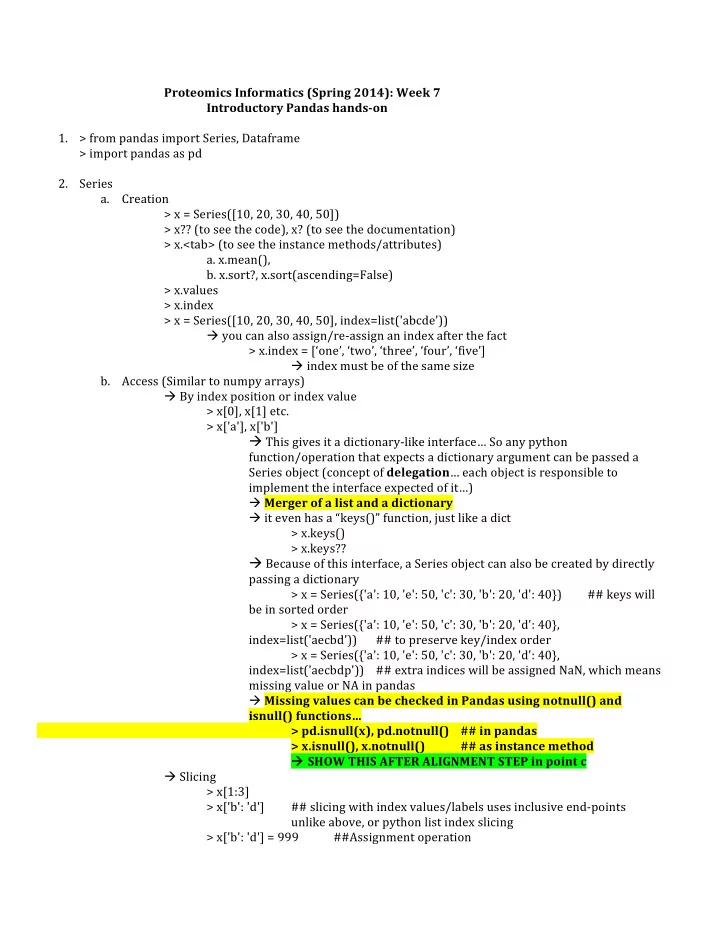
Proteomics Informatics (Spring 2014): Week 7 Introductory Pandas hands-on 1. > from pandas import Series, Dataframe > import pandas as pd 2.


slide-1
SLIDE 1

Proteomics ¡Informatics ¡(Spring ¡2014): ¡Week ¡7 ¡ Introductory ¡Pandas ¡hands-­‑on ¡ ¡

  • 1. > ¡from ¡pandas ¡import ¡Series, ¡Dataframe ¡

> ¡import ¡pandas ¡as ¡pd ¡ ¡

  • 2. Series ¡
  • a. Creation ¡

> ¡x ¡= ¡Series([10, ¡20, ¡30, ¡40, ¡50]) ¡ > ¡x?? ¡(to ¡see ¡the ¡code), ¡x? ¡(to ¡see ¡the ¡documentation) ¡ > ¡x.<tab> ¡(to ¡see ¡the ¡instance ¡methods/attributes) ¡

  • a. ¡x.mean(), ¡ ¡
  • b. ¡x.sort?, ¡x.sort(ascending=False) ¡

> ¡x.values ¡ > ¡x.index ¡ > ¡x ¡= ¡Series([10, ¡20, ¡30, ¡40, ¡50], ¡index=list('abcde')) ¡ ¡ à ¡you ¡can ¡also ¡assign/re-­‑assign ¡an ¡index ¡after ¡the ¡fact ¡ ¡ ¡ > ¡x.index ¡= ¡[‘one’, ¡‘two’, ¡‘three’, ¡‘four’, ¡‘five’] ¡ ¡ ¡ à ¡index ¡must ¡be ¡of ¡the ¡same ¡size ¡

  • b. Access ¡(Similar ¡to ¡numpy ¡arrays) ¡

à ¡By ¡index ¡position ¡or ¡index ¡value ¡ ¡ > ¡x[0], ¡x[1] ¡etc. ¡ ¡ > ¡x['a'], ¡x['b'] ¡

à ¡This ¡gives ¡it ¡a ¡dictionary-­‑like ¡interface… ¡So ¡any ¡python ¡

function/operation ¡that ¡expects ¡a ¡dictionary ¡argument ¡can ¡be ¡passed ¡a ¡ Series ¡object ¡(concept ¡of ¡delegation… ¡each ¡object ¡is ¡responsible ¡to ¡ implement ¡the ¡interface ¡expected ¡of ¡it…) ¡ à ¡Merger ¡of ¡a ¡list ¡and ¡a ¡dictionary ¡ ¡ à ¡it ¡even ¡has ¡a ¡“keys()” ¡function, ¡just ¡like ¡a ¡dict ¡ ¡ ¡ ¡ > ¡x.keys() ¡ ¡ ¡ > ¡x.keys?? ¡

à ¡Because ¡of ¡this ¡interface, ¡a ¡Series ¡object ¡can ¡also ¡be ¡created ¡by ¡directly ¡

passing ¡a ¡dictionary ¡ ¡ > ¡x ¡= ¡Series({'a': ¡10, ¡'e': ¡50, ¡'c': ¡30, ¡'b': ¡20, ¡'d': ¡40}) ¡ ## ¡keys ¡will ¡ be ¡in ¡sorted ¡order ¡ > ¡x ¡= ¡Series({'a': ¡10, ¡'e': ¡50, ¡'c': ¡30, ¡'b': ¡20, ¡'d': ¡40}, ¡ index=list('aecbd')) ¡ ## ¡to ¡preserve ¡key/index ¡order ¡ > ¡x ¡= ¡Series({'a': ¡10, ¡'e': ¡50, ¡'c': ¡30, ¡'b': ¡20, ¡'d': ¡40}, ¡ index=list('aecbdp')) ¡ ## ¡extra ¡indices ¡will ¡be ¡assigned ¡NaN, ¡which ¡means ¡ missing ¡value ¡or ¡NA ¡in ¡pandas ¡ à ¡Missing ¡values ¡can ¡be ¡checked ¡in ¡Pandas ¡using ¡notnull() ¡and ¡ isnull() ¡functions… ¡ ¡ ¡ ¡ ¡ ¡ ¡ ¡ > ¡pd.isnull(x), ¡pd.notnull() ¡ ## ¡in ¡pandas ¡ > ¡x.isnull(), ¡x.notnull() ¡ ## ¡as ¡instance ¡method ¡ à à ¡SHOW ¡THIS ¡AFTER ¡ALIGNMENT ¡STEP ¡in ¡point ¡c ¡ à ¡Slicing ¡ ¡ > ¡x[1:3] ¡ > ¡x['b': ¡'d'] ¡ ## ¡slicing ¡with ¡index ¡values/labels ¡uses ¡inclusive ¡end-­‑points ¡ unlike ¡above, ¡or ¡python ¡list ¡index ¡slicing ¡ > ¡x['b': ¡'d'] ¡= ¡999 ¡ ¡ ##Assignment ¡operation ¡

slide-2
SLIDE 2

¡ ¡ ¡ à ¡Boolean ¡indexing: ¡ ¡ ¡ ¡ ¡ > ¡x ¡>= ¡30 ¡ ¡ ¡ ¡ ¡ > ¡x[x>=30] ¡ ## ¡Note ¡that ¡during ¡all ¡these ¡operations, ¡indices ¡are ¡preserved ¡ ¡

  • c. One ¡major ¡utility ¡of ¡having ¡the ¡index ¡objects ¡is ¡automatic ¡alignment ¡across ¡different ¡Series ¡or ¡

Dataframe ¡objects ¡ > ¡x ¡= ¡Series({'a': ¡10, ¡'b': ¡20, ¡'c': ¡30, ¡'d': ¡40, ¡'e': ¡50}) ¡ > ¡y ¡= ¡Series({'a': ¡10, ¡'b’: ¡100}) ¡ > ¡x+y ¡ ## ¡well ¡defined ¡ ¡ ## ¡More ¡on ¡data ¡alignment ¡later ¡ ¡ ¡ à ¡Index ¡labels ¡can ¡also ¡be ¡used ¡to ¡drop ¡specific ¡entries ¡from ¡the ¡Series ¡object ¡ ¡ ¡ ¡ > ¡x.drop('a') ¡ ## ¡returns ¡a ¡new ¡Series ¡object ¡with ¡dropped ¡entry ¡ ¡

  • 3. Dataframe ¡ ¡
  • a. Creation ¡(numerous ¡ways… ¡Like ¡a ¡list ¡of ¡lists… ¡But ¡not ¡required ¡to ¡discuss… ¡since ¡mostly ¡

we’ll ¡be ¡building ¡these ¡directly ¡from ¡files… ¡for ¡now, ¡go ¡with ¡this ¡view!!): ¡ > ¡data ¡= ¡{'a': ¡range(1,11),'b': ¡range(21,31),'c': ¡range(31,41)} ¡ ## ¡From ¡dict ¡of ¡equal-­‑length ¡ lists ¡ > ¡dataF ¡= ¡DataFrame(data) ¡ ¡ à ¡has ¡both ¡row ¡and ¡column ¡indexes ¡ ¡ à ¡(row)index ¡automatically ¡populated ¡(can ¡be ¡explicitly ¡provided ¡as ¡additional ¡ argument ¡to ¡DataFrame); ¡columns ¡are ¡placed ¡in ¡sorted ¡order ¡(can ¡be ¡altered ¡by ¡explicitly ¡ providing ¡columns ¡as ¡argument) ¡ ¡ ¡ > ¡dataF ¡= ¡DataFrame(data, ¡index=list('pqrstuvwxy'), ¡columns=list('cba')) ¡ ¡ ¡ > ¡dataF.index ¡= ¡list('pqrstuvwxy') ¡ ## ¡providing ¡the ¡index ¡after ¡the ¡fact ¡ ¡ ¡ ¡ > ¡dataF.values ¡(List ¡of ¡lists ¡representation), ¡dataF.columns, ¡dataF.index ¡ ¡

  • b. Access ¡
  • i. Individual ¡columns ¡as ¡Series ¡objects ¡

> ¡dataF['a'] ¡ ## ¡dict-­‑like ¡notation ¡ > ¡dataF.a ¡ ## ¡object ¡attribute ¡dot-­‑notation ¡ à ¡The ¡series ¡will ¡have ¡the ¡same ¡index ¡as ¡the ¡parent ¡dataframe ¡

  • ii. Multiple ¡columns ¡(as ¡a ¡dataframe) ¡

> ¡dataF[['a', ¡'b']] ¡ ## ¡use ¡list ¡of ¡column ¡indices ¡

  • iii. Special ¡cases ¡(Apply ¡a ¡filter ¡on ¡rows ¡and/or ¡values): ¡ ¡

> ¡dataF[:2] ¡ ## ¡Select ¡the ¡first ¡2 ¡rows ¡(slicing) ¡ > ¡dataF[dataF.a ¡> ¡5] ¡ ## ¡Boolean ¡indexing ¡on ¡specific ¡rows ¡ > ¡dataF[dataF ¡> ¡25] ¡ ## ¡Boolean ¡indexing ¡on ¡the ¡whole ¡dataFrame ¡

  • iv. Indexing ¡on ¡the ¡rows: ¡

à ¡<DataFrame>.ix ¡field… ¡For ¡ex. ¡ > ¡dataF.ix[2] ¡or ¡dataF.ix['r'] ¡ à ¡Slicing ¡ ¡ > ¡dataF.ix[2:5] ¡or ¡dataF.ix['r': ¡'t'] ¡ à ¡Selecting ¡rows ¡and ¡columns: ¡ > ¡dataF.ix[['p', ¡'q', ¡'r'], ¡['a', ¡'b']] ¡ > ¡dataF.ix[2:5, ¡['a', ¡'b']] ¡ > ¡dataF.ix[:, ¡['a', ¡'b']] ¡ ## ¡all ¡rows ¡and ¡2 ¡columns ¡ > ¡dataF.ix[dataF.a>5, ¡:2] ¡ ¡

slide-3
SLIDE 3

¡ ¡

  • c. Manipulation ¡
  • i. Each ¡of ¡these ¡methods ¡of ¡access ¡can ¡be ¡used ¡to ¡do ¡bulk-­‑assignment ¡to ¡dataFrame ¡

elements ¡with ¡some ¡specific ¡value ¡ > ¡dataF.ix[dataF.a>5, ¡:2] ¡ ¡= ¡9999 ¡

  • ii. Add ¡and ¡delete ¡columns ¡

> ¡dataF['new'] ¡= ¡range(41,51) ¡ ¡ ¡ ¡ ¡ ¡ ¡ ¡## ¡Add ¡a ¡new ¡column ¡to ¡the ¡data ¡frame ¡ > ¡del ¡dataF['new'] ¡ ¡ ¡ ¡ ¡ ¡ ¡ ¡ ¡## ¡Remove ¡a ¡column ¡from ¡parent ¡dataframe ¡ > ¡dataF.drop(['a', ¡'b'], ¡axis=1) ¡ ¡ ¡ ¡ ¡ ¡ ¡ ¡## ¡Drop ¡and ¡return ¡a ¡new ¡dataframe ¡

  • iii. Dropping ¡rows ¡

> ¡dataF.drop(['p', ¡'q']) ¡ ## ¡drop ¡rows ¡(by ¡default) ¡ > ¡data.drop([1, ¡2]) ¡ ¡

  • d. Sorting/Ranking ¡operations: ¡
  • i. sort ¡lexicographically ¡by ¡row ¡or ¡column ¡index: ¡

> ¡<Series>.sort_index() ¡ > ¡dataF.sort_index() ¡ ## ¡Default ¡is ¡to ¡sort ¡the ¡row ¡index ¡ > ¡dataF.index ¡= ¡list('pqrstuvwxy') ¡ > ¡temp ¡= ¡list('pqrstuvwxy') ¡ > ¡np.random.shuffle(temp) ¡ > ¡dataF_new ¡= ¡dataF.reindex(temp) ¡ ## ¡shuffle ¡the ¡rows ¡ > ¡dataF_new ¡= ¡dataF_new[['c', ¡'a', ¡'b']] ¡## ¡shuffle ¡the ¡columns ¡too ¡ > ¡dataF_new.sort_index() ¡ > ¡dataF_new.sort_index(axis=1, ¡ascending=False) ¡ ## ¡in ¡descending ¡order ¡

  • ii. sort ¡according ¡to ¡values ¡of ¡a ¡column ¡or ¡a ¡set ¡of ¡columns ¡

> ¡dataF_new.sort_index(by='c') ¡ > ¡dataF_new.sort_index(by=['a', ¡'b']) ¡ ¡ à ¡<Series>.order() ¡method ¡

  • iii. Ranking ¡

> ¡age ¡= ¡Series([22, ¡22, ¡16, ¡13, ¡29, ¡16, ¡28, ¡32]) ¡ >age.rank() ¡ ## ¡By ¡default ¡ties ¡are ¡broken ¡by ¡mean ¡rank ¡of ¡the ¡group ¡ > ¡age.rank(method='first ¡') ¡ ## ¡ties ¡broken ¡in ¡order ¡in ¡which ¡they ¡appear ¡ ¡ ¡ ¡ ¡ ¡## ¡Other ¡methods: ¡max, ¡min, ¡first, ¡average ¡ > ¡df ¡= ¡DataFrame([[1,2,3], ¡[4,5,6], ¡[7,8,9],[10,11,12],[ ¡13, ¡14, ¡15]], ¡ columns=list('abc'), ¡index=list('pqrst')) ¡ > ¡dataF.rank(), ¡dataF.rank(axis=1) ¡ ## ¡default ¡axis=0 ¡ ¡

  • e. Vectorized ¡operations ¡(ex. ¡math ¡operations) ¡like ¡in ¡NumPy… ¡everything ¡we ¡studied ¡in ¡numpy ¡

applies ¡here ¡too…: ¡ > ¡x ¡= ¡Series([10, ¡20, ¡30, ¡40, ¡50]) ¡ > ¡x*2, ¡x**2 ¡ > ¡np.sqrt(x) ¡ > ¡df ¡= ¡DataFrame([[1,2,3], ¡[4,5,6], ¡[7,8,9],[10,11,12],[ ¡13, ¡14, ¡15]], ¡columns=list('abc'), ¡ index=list('pqrst')) ¡ > ¡np.sqrt(dataF) ¡ ¡ f. Summary ¡and ¡Descriptive ¡Statistics ¡

  • i. Usage: ¡<Series>.<method> ¡
  • ii. Usage: ¡<DataFrame>.<method> ¡
slide-4
SLIDE 4
  • 1. skipna=True ¡by ¡default ¡
  • 2. In ¡dataframe, ¡you ¡can ¡provide ¡axis ¡and ¡level ¡(for ¡hierarchically ¡indexed ¡

dataframes… ¡> ¡2-­‑D) ¡arguments ¡also ¡

  • 3. method: ¡sum, ¡mean/median, ¡std/var, ¡mad, ¡count, ¡min/max, ¡idxmin/idxmax, ¡

cumsum/cumprod/cummin, ¡describe ¡etc. ¡

  • iii. <Series>.describe(), ¡<DataFrame>.describe() ¡
  • 1. For ¡non-­‑numeric ¡data ¡also ¡
  • iv. Correlation ¡and ¡Covariance ¡

> ¡df2 ¡= ¡DataFrame(np.random.normal(size=12).reshape((3,4)), ¡ columns=list('abcd')) ¡ > ¡df2.corr() ¡ > ¡df2.cov() ¡ > ¡df3 ¡= ¡DataFrame(np.random.normal(size=12).reshape((3,4)), ¡ columns=list('abdq')) ¡ > ¡df2.corrwith(<Series/DataFrame) ¡ ## ¡correlation ¡with ¡another ¡Series ¡or ¡ DataFrame ¡ ¡ ¡ ¡ ## ¡Series: ¡pairwise ¡with ¡every ¡column ¡ ¡ ¡ ¡ ¡ ¡ ## ¡DataFrame: ¡matching ¡column ¡names ¡

  • v. Unique ¡values, ¡Value ¡counts, ¡and ¡Membership ¡(Series’ ¡methods) ¡

> ¡alpha ¡= ¡Series(list('abaabcdbdbdaaabdcd')) ¡ > ¡alpha.unique() ¡ > ¡alpha.value_counts() ¡ > ¡alpha.isin(['a', ¡'y', ¡'z']) ¡ ## ¡Boolean ¡Series ¡object… ¡can ¡be ¡used ¡for ¡filtering ¡ ¡

  • vi. More ¡Generic ¡functions ¡
  • 1. ‘apply’ ¡function ¡(apply ¡a ¡function ¡to ¡whole ¡rows ¡or ¡whole ¡columns) ¡

> ¡f ¡= ¡lambda ¡x: ¡x.max() ¡– ¡x.min() ¡ ## ¡Get ¡more ¡examples ¡of ¡lambda ¡ > ¡dataF.apply(f) ¡ ## ¡By ¡default, ¡f ¡is ¡applied ¡to ¡axis ¡0, ¡i.e., ¡across ¡the ¡ rows ¡ > ¡dataF.apply(f, ¡axis=1) ¡

  • Ex. ¡sum ¡function ¡

¡

  • 2. ‘applymap’ ¡function ¡(to ¡apply ¡a ¡function ¡to ¡each ¡element ¡of ¡the ¡dataframe) ¡

¡ > ¡format ¡= ¡lambda ¡x: ¡'%.2f'%x ¡ > ¡dataF_new ¡= ¡dataF.applymap(format) ¡ > ¡type(dataF.ix[0,0]) ¡ > ¡type(dataF_new.ix[0,0]) ¡ ¡

  • Ex. ¡sqrt ¡function ¡from ¡numpy ¡(vectorized)… ¡will ¡apply ¡here… ¡but ¡not ¡

sqrt ¡function ¡from ¡math ¡library… ¡ ¡

  • ­‑> ¡from ¡numpy ¡import ¡sqrt ¡

¡ ¡ ¡

  • 4. Index ¡objects: ¡
  • a. <Series>.index, ¡<DataFrame>.index ¡
  • b. Array-­‑like ¡object, ¡but ¡also ¡a ¡fixed-­‑size ¡‘set’ ¡
  • i. Can ¡be ¡used ¡to ¡do ¡set ¡operations/logic ¡(like ¡intersection, ¡union, ¡difference ¡etc) ¡
  • Ex. ¡intersection ¡of ¡indices ¡of ¡two ¡
slide-5
SLIDE 5

¡ à ¡Give ¡an ¡Ex. ¡

  • c. Used ¡a ¡lot ¡in ¡complex ¡operations ¡like ¡merging ¡of ¡dataframes… ¡will ¡be ¡discussed ¡later ¡

¡

  • 5. Data ¡import ¡and ¡export ¡from/to ¡text ¡files: ¡
  • a. dataF.to_csv("/Users/hgrover/Desktop/dataF.txt")
  • i. By default, index column is also written
  • ii. dataF.to_csv("/Users/hgrover/Desktop/dataF.txt", index=False)
  • b. If index col is written:
  • i. pd.read_csv("/Users/hgrover/Desktop/dataF.txt", index_col = 0)
  • ii. Otherwise:
  • 1. pd.read_csv("/Users/hgrover/Desktop/dataF.txt")
  • c. Read ¡from ¡a ¡file, ¡URL ¡or ¡file-­‑like ¡object: ¡
  • i. read_csv(): ¡default ¡delimiter ¡is ¡“,” ¡

Create ¡a ¡simple ¡file ¡with ¡data: ¡ ID, ¡C1, ¡C2, ¡C3, ¡C4 ¡ a, ¡1, ¡2, ¡3, ¡4 ¡ b, ¡5, ¡6, ¡7, ¡8 ¡ c, ¡9, ¡10, ¡11, ¡12 ¡ d, ¡13, ¡14, ¡15, ¡16 ¡ e, ¡17, ¡18, ¡19, ¡20 ¡ ¡ > ¡dataF ¡= ¡pd.read_csv(<fileName>) ¡ > ¡dataF ¡= ¡pd.read_table(<fileName>, ¡sep=', ¡') ¡ > ¡dataF ¡= ¡pd.read_csv(<fileName>, ¡header=None) ¡ > ¡dataF ¡= ¡pd.read_csv(<fileName>, ¡header=None, ¡skiprows=1) ¡ ¡

  • r ¡

¡ ¡ ¡ ¡dataF ¡= ¡pd.read_csv(<fileName>, ¡header=None, ¡skiprows=[0,1]) ¡ ¡ à ¡skiprows ¡can ¡be ¡an ¡integer ¡number ¡of ¡rows ¡to ¡be ¡skipped ¡in ¡the ¡beginning, ¡or ¡a ¡ list ¡of ¡row ¡numbers, ¡starting ¡from ¡0 ¡ > ¡dataF ¡= ¡pd.read_csv(<fileName>, ¡header=None, ¡skiprows=1, ¡names=['ID', ¡'C1', ¡'C2', ¡'C3', ¡ 'C4']) ¡ > ¡dataF ¡= ¡pd.read_csv(<fileName>, ¡index_col='ID') ¡ à ¡Writing ¡to ¡a ¡file: ¡ > ¡dataF.to_csv(<fileName>) ¡ > ¡dataF.to_csv(<fileName>, ¡header=False) ¡ > ¡dataF.to_csv(<fileName>, ¡index=False, ¡cols=['ID', ¡'C1', ¡'C2']) ¡ ¡

  • ii. Lots ¡of ¡other ¡options ¡in ¡parser ¡functions: ¡
  • 1. Regular ¡Expression ¡delimiters ¡
  • 2. Skip ¡specific ¡rows ¡
  • 3. Identify ¡and/or ¡fill ¡in ¡missing ¡values ¡(each ¡column ¡can ¡have ¡its ¡own ¡markers ¡for ¡

missing ¡values) ¡

  • 4. Specify ¡marker ¡to ¡split ¡comments ¡(at ¡the ¡end ¡of ¡lines) ¡

> ¡dataF ¡= ¡pd.read_csv(<fileName>, ¡comment='#') ¡

  • 5. nrows: ¡to ¡read ¡nrows ¡from ¡the ¡beginning ¡
  • 6. ¡
  • iii. read_table(): ¡default ¡delimiter ¡is ¡“\t” ¡