Agents and State Spaces CSCI 446: Ar*ficial Intelligence - - PowerPoint PPT Presentation

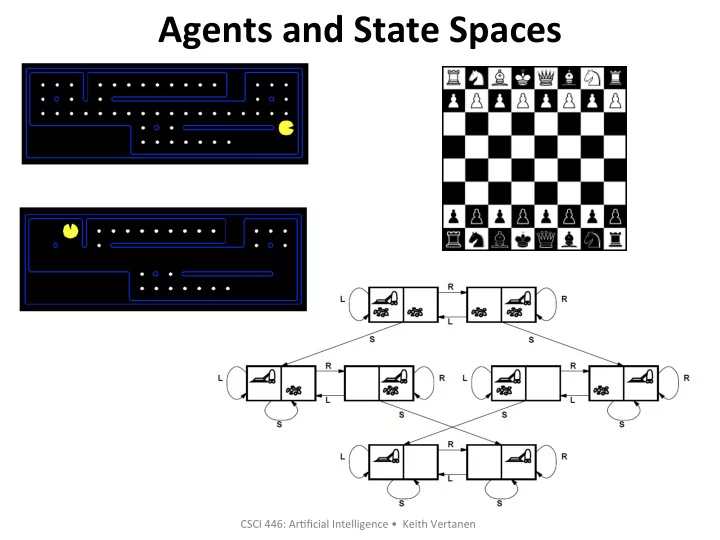
agents and state spaces
SMART_READER_LITE
LIVE PREVIEW

Agents and State Spaces CSCI 446: Ar*ficial Intelligence - - PowerPoint PPT Presentation

Agents and State Spaces CSCI 446: Ar*ficial Intelligence Keith Vertanen Overview Agents and environments Ra*onality Agent types Specifying the


slide-1
SLIDE 1

Agents ¡and ¡State ¡Spaces ¡

CSCI ¡446: ¡Ar*ficial ¡Intelligence ¡• ¡ ¡Keith ¡Vertanen ¡
slide-2
SLIDE 2

Overview ¡

  • Agents ¡and ¡environments ¡
  • Ra*onality ¡
  • Agent ¡types ¡
  • Specifying ¡the ¡task ¡environment ¡

– Performance ¡measure ¡ – Environment ¡ – Actuators ¡ – Sensors ¡

  • Search ¡problems ¡
  • State ¡spaces ¡

2 ¡

slide-3
SLIDE 3

Agents ¡and ¡environment ¡

Agents: ¡human, ¡robots, ¡bots, ¡thermostats, ¡etc. ¡ Agent ¡func*on: ¡maps ¡from ¡percept ¡history ¡to ¡ac*on ¡ Agent ¡program: ¡runs ¡on ¡the ¡physical ¡system ¡

3 ¡

slide-4
SLIDE 4

Vacuum ¡cleaner ¡world ¡

  • Percepts: ¡

– loca*on ¡ – contents ¡ – e.g. ¡[A, ¡Dirty] ¡

  • Ac*ons: ¡

– {Left, ¡Right, ¡Suck, ¡NoOp} ¡

4 ¡

slide-5
SLIDE 5

Pacman’s ¡goal: ¡eat ¡all ¡the ¡dots ¡

5 ¡

  • Percepts: ¡

– loca*on ¡of ¡Pacman ¡ – loca*on ¡of ¡dots ¡ – loca*on ¡of ¡walls ¡

  • Ac*ons: ¡

– {Left, ¡Right, ¡Up, ¡Down} ¡

slide-6
SLIDE 6

Ra*onality ¡

  • We ¡want ¡to ¡design ¡ra#onal ¡agents ¡

– Ra*onal ¡≠ ¡level-­‑headed, ¡prac*cal ¡

  • We ¡use ¡ra*onal ¡in ¡a ¡par*cular ¡way: ¡

– Ra*onal: ¡maximally ¡achieving ¡pre-­‑defined ¡goals ¡ – Ra*onal ¡only ¡concerns ¡what ¡decisions ¡are ¡made ¡

  • Not ¡the ¡thought ¡process ¡behind ¡them ¡

– Goals ¡are ¡expressed ¡in ¡terms ¡of ¡some ¡fixed ¡performance ¡ measure ¡evalua*ng ¡the ¡environment ¡sequence: ¡

  • One ¡point ¡per ¡square ¡cleaned ¡up ¡in ¡*me ¡T? ¡
  • One ¡point ¡per ¡clean ¡square ¡per ¡*me ¡step, ¡minus ¡one ¡per ¡move? ¡
  • Penalize ¡for ¡> ¡k ¡dirty ¡squares ¡

– Being ¡ra*onal ¡means ¡maximizing ¡your ¡expected ¡u*lity ¡

6 ¡

slide-7
SLIDE 7

Agent ¡types: ¡Reflex ¡agents ¡

  • Simple ¡reflex ¡agents: ¡

– Choose ¡ac*on ¡based ¡on ¡current ¡percept ¡ ¡ – Do ¡not ¡consider ¡future ¡consequences ¡of ¡ac*ons ¡ – Consider ¡how ¡the ¡world ¡IS ¡

7 ¡

slide-8
SLIDE 8

Agent ¡types: ¡Reflex ¡agents ¡

  • Model-­‑based ¡reflex ¡agents: ¡

– Choose ¡ac*on ¡based ¡on ¡current ¡and ¡past ¡percepts: ¡ ¡

  • Tracks ¡some ¡sort ¡of ¡internal ¡state ¡

– Do ¡not ¡consider ¡future ¡consequences ¡of ¡ac*ons ¡ – Consider ¡how ¡the ¡world ¡IS ¡or ¡WAS ¡

8 ¡

slide-9
SLIDE 9

Reflex ¡agent ¡example ¡

9 ¡

slide-10
SLIDE 10

Agent ¡types: ¡Goal-­‑based ¡agents ¡

  • Goal-­‑based ¡agents: ¡

– Track ¡current ¡and ¡past ¡percepts ¡(same ¡as ¡model-­‑based ¡reflex ¡agent) ¡ – Goal ¡informa*on ¡describing ¡desirable ¡situa*ons ¡ – Considers ¡the ¡future: ¡ ¡

  • “What ¡will ¡happen ¡if ¡I ¡do ¡such-­‑and-­‑such?” ¡
  • “What ¡will ¡make ¡me ¡happy?” ¡

10 ¡

slide-11
SLIDE 11

Agent ¡types: ¡U*lity-­‑based ¡agents ¡

  • U*lity-­‑based ¡agents: ¡

– Many ¡ac*ons ¡may ¡achieve ¡a ¡goal ¡

  • But ¡some ¡are ¡quicker, ¡safer, ¡more ¡reliable, ¡cheaper, ¡etc. ¡

– Maximize ¡your ¡“happiness” ¡= ¡u#lity ¡ – Requires ¡a ¡u*lity ¡func*on ¡

11 ¡

slide-12
SLIDE 12

Agents ¡that ¡learn ¡

  • Learning ¡agents: ¡

– Cri#c: ¡determines ¡how ¡agent ¡is ¡doing ¡and ¡how ¡to ¡modify ¡ performance ¡element ¡to ¡do ¡bemer ¡ – Learning ¡element: ¡makes ¡improvements ¡ – Performance ¡element: ¡selects ¡external ¡ac*ons ¡ – Problem ¡generator: ¡seeks ¡out ¡informa*ve ¡new ¡ experiences ¡

12 ¡

slide-13
SLIDE 13

The ¡“PEAS” ¡task ¡environment ¡

  • Performance ¡measure ¡

– What ¡we ¡value ¡when ¡solving ¡the ¡problem ¡ – e.g. ¡trip ¡*me, ¡cost, ¡dots ¡eaten, ¡dirt ¡collected ¡

  • Environment ¡

– Dimensions ¡categorizing ¡the ¡environment ¡the ¡agent ¡is ¡

  • pera*ng ¡within ¡
  • Actuators ¡

– e.g. ¡accelerator, ¡steering, ¡brakes, ¡video ¡display, ¡audio ¡ speakers ¡

  • Sensors ¡

– e.g. ¡video ¡cameras, ¡sonar, ¡laser ¡range ¡finders ¡

13 ¡

slide-14
SLIDE 14

7 ¡task ¡environment ¡dimensions ¡

  • Fully ¡observable ¡vs. ¡par*ally ¡observable ¡

– e.g. ¡vacuum ¡senses ¡dirt ¡everywhere ¡= ¡fully ¡observable ¡ – e.g. ¡vacuum ¡senses ¡dirt ¡only ¡at ¡current ¡loca*on ¡= ¡par*ally ¡

  • Single ¡agent ¡vs. ¡mul*agent ¡

– e.g. ¡solving ¡a ¡crossword ¡= ¡single ¡agent ¡ – e.g. ¡playing ¡chess ¡= ¡mul*agent ¡

  • Determinis*c ¡vs. ¡stochas*c ¡

– Is ¡the ¡next ¡state ¡completely ¡determined ¡by ¡current ¡state ¡ and ¡ac*on ¡executed ¡by ¡agent? ¡

  • Episodic ¡vs. ¡sequen*al ¡

– Does ¡the ¡next ¡episode ¡depend ¡on ¡previous ¡ac*ons? ¡ – e.g. ¡spoong ¡defec*ve ¡parts ¡on ¡assembly ¡line ¡= ¡episodic ¡ – e.g. ¡playing ¡chess ¡is ¡sequen*al ¡

14 ¡

slide-15
SLIDE 15

7 ¡task ¡environment ¡dimensions ¡

  • Sta*c ¡vs. ¡dynamic ¡

– Can ¡things ¡change ¡while ¡we’re ¡trying ¡to ¡make ¡a ¡decision? ¡ – e.g. ¡crossword ¡puzzle ¡= ¡sta*c ¡ – e.g. ¡taxi ¡driving ¡= ¡dynamic ¡

  • Discrete ¡vs. ¡con*nuous ¡

– Does ¡the ¡environment ¡state/percepts/ac*ons/*me ¡take ¡

  • n ¡a ¡discrete ¡set ¡of ¡values ¡or ¡do ¡they ¡vary ¡con*nuously? ¡ ¡ ¡

– e.g. ¡chess ¡= ¡discrete ¡ – e.g. ¡taxi ¡driving ¡= ¡con*nuous ¡

  • Known ¡vs. ¡unknown ¡

– Agent’s ¡knowledge ¡about ¡the ¡rules ¡of ¡the ¡environment ¡ – e.g. ¡playing ¡solitaire ¡= ¡known ¡ – e.g. ¡a ¡new ¡video ¡game ¡with ¡lots ¡of ¡bumons ¡= ¡unknown ¡

15 ¡

slide-16
SLIDE 16

Search ¡problems ¡

  • A ¡search ¡problem ¡consists ¡of: ¡

– State ¡space ¡

¡

– Successor ¡func*on ¡ ¡ ¡ ¡ ¡ ¡(with ¡ac*ons, ¡costs) ¡ – Start ¡state ¡ – Goal ¡test ¡(e.g. ¡all ¡dots ¡eaten) ¡ ¡

  • A ¡solu*on ¡is ¡a ¡sequence ¡of ¡ac*ons ¡(a ¡plan) ¡

transforming ¡start ¡state ¡to ¡a ¡state ¡sa*sfying ¡goal ¡test ¡

16 ¡

slide-17
SLIDE 17

Example: ¡Romania ¡

17 ¡

State ¡space: ¡ ¡ Successor ¡func*on: ¡ Start ¡state: ¡ Goal ¡test: ¡ Solu*on? ¡ Ci*es ¡ Adjacent ¡ci*es ¡with ¡cost ¡= ¡distance ¡ Arad ¡ Is ¡state ¡== ¡Bucharest? ¡ Sequence ¡of ¡roads ¡from ¡Arad ¡to ¡Bucharest ¡

slide-18
SLIDE 18

Example: ¡8-­‑puzzle ¡

18 ¡

State ¡space: ¡ ¡ Successor ¡func*on: ¡ Start ¡state: ¡ Goal ¡test: ¡ Solu*on? ¡ Loca*on ¡of ¡each ¡of ¡the ¡eight ¡*les ¡ States ¡resul*ng ¡from ¡any ¡slide, ¡cost ¡= ¡1 ¡ Any ¡state ¡can ¡be ¡start ¡state ¡ Is ¡state ¡== ¡given ¡goal ¡state ¡ Sequence ¡of ¡*le ¡slides ¡to ¡get ¡to ¡goal ¡ Note: ¡op*mal ¡solu*on ¡of ¡n-­‑puzzle ¡is ¡NP-­‑hard ¡

slide-19
SLIDE 19

State ¡space ¡graph ¡

  • State ¡space ¡graph ¡

– A ¡directed ¡graph ¡ ¡ – Nodes ¡= ¡states ¡ – Edges ¡= ¡ac*ons ¡(successor ¡func*on) ¡ – For ¡every ¡search ¡problem, ¡there’s ¡a ¡corresponding ¡state ¡ space ¡graph ¡ – We ¡can ¡rarely ¡build ¡this ¡graph ¡in ¡memory ¡

19 ¡

Search ¡graph ¡for ¡a ¡#ny ¡search ¡problem. ¡

slide-20
SLIDE 20

State ¡space ¡graph: ¡vacuum ¡world ¡

20 ¡

slide-21
SLIDE 21

What’s ¡in ¡a ¡state ¡space? ¡

The ¡world ¡state ¡ specifies ¡every ¡ last ¡detail ¡of ¡the ¡ environment ¡ ¡ ¡

21 ¡

A ¡search ¡state ¡keeps ¡only ¡the ¡details ¡needed ¡(abstrac*on) ¡

  • Problem: ¡Pathing ¡

– States: ¡(x, ¡y) ¡ – Ac*ons: ¡NSEW ¡ – Successor: ¡update ¡ loca*on ¡only ¡ – Goal ¡test: ¡(x,y) ¡= ¡END ¡

  • Problem: ¡Eat ¡all ¡dots ¡

– States: ¡(x, ¡y), ¡dot ¡booleans ¡ – Ac*ons: ¡NSEW ¡ – Successor: ¡update ¡loca*on ¡ and ¡possibly ¡dot ¡boolean ¡ – Goal ¡test: ¡dots ¡all ¡false ¡

slide-22
SLIDE 22

State ¡space ¡sizes? ¡

  • World ¡state: ¡

– Agent ¡posi*ons: ¡ – Food ¡count: ¡ – Ghost ¡posi*ons: ¡ ¡ – Agent ¡facing: ¡

  • How ¡many? ¡

– World ¡states: ¡ – States ¡for ¡pathing: ¡ – States ¡for ¡eat ¡all ¡dots: ¡

22 ¡

120 ¡= ¡10 ¡* ¡12 ¡ 30 ¡= ¡5 ¡* ¡6 ¡ 12 ¡ 4 ¡= ¡NSEW ¡ 120 ¡* ¡230 ¡* ¡122 ¡* ¡4 ¡= ¡big ¡ 120 ¡ 120 ¡* ¡230 ¡= ¡128,849,018,880 ¡

slide-23
SLIDE 23

Summary ¡

  • Agent: ¡Something ¡that ¡perceives ¡and ¡acts ¡in ¡an ¡environment ¡
  • Performance ¡measure: ¡Evaluates ¡the ¡behavior ¡of ¡an ¡agent ¡ ¡
  • Ra*onal ¡agent: ¡Maximize ¡expected ¡value ¡of ¡performance ¡

measure ¡

  • Agent ¡types: ¡

– Simple ¡reflex ¡agents ¡= ¡respond ¡directly ¡to ¡percepts ¡ – Model-­‑based ¡reflex ¡agents ¡= ¡internal ¡state ¡based ¡on ¡current ¡+ ¡past ¡ – Goal-­‑based ¡agents ¡= ¡act ¡to ¡achieve ¡some ¡goal ¡ – U*lity-­‑based ¡agents ¡= ¡maximize ¡expected ¡“happiness” ¡ – All ¡agents ¡can ¡improve ¡performance ¡through ¡learning ¡

  • Search ¡problems: ¡

– Components: ¡state ¡space, ¡successor ¡func*on, ¡start ¡state, ¡goal ¡state ¡ – Find ¡sequence ¡from ¡start ¡to ¡goal ¡through ¡the ¡state ¡space ¡graph ¡

23 ¡