AG AGRICON MUS MUSHROOMS By Jan Conradie How w we e got ot St - - PowerPoint PPT Presentation

ag agricon mus mushrooms
SMART_READER_LITE
LIVE PREVIEW

AG AGRICON MUS MUSHROOMS By Jan Conradie How w we e got ot St - - PowerPoint PPT Presentation

AG AGRICON MUS MUSHROOMS By Jan Conradie How w we e got ot St Started Started doing research in 2008 Graduated from Elsenburg Collage in 2008 with B.C. Agric Worked on a mushroom farm in Wester Cape in January 2010 Purchased


slide-1
SLIDE 1

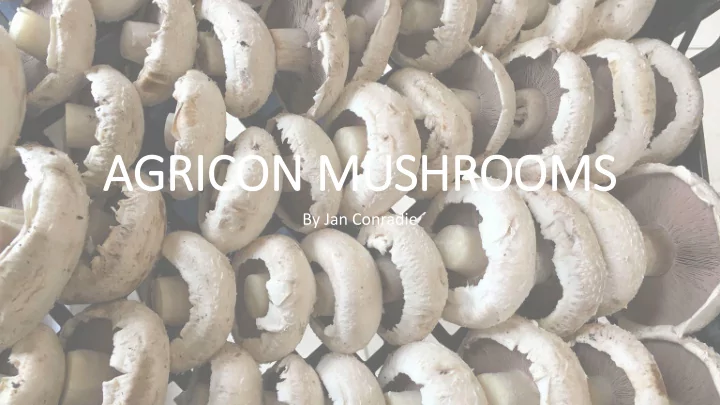
AG AGRICON MUS MUSHROOMS

By Jan Conradie
slide-2
SLIDE 2

How w we e got

  • t St

Started

  • Started doing research in 2008
  • Graduated from Elsenburg Collage in 2008 with B.C. Agric
  • Worked on a mushroom farm in Wester Cape in January 2010
  • Purchased plot in early 2010
  • Construction started June 2010
  • First batch of compost arrived in September 2010
  • Importing compost from a South African mushroom farm
slide-3
SLIDE 3
  • Production facility consist 8 Growing rooms, pack house, fridge,
  • ffice and storage area.
  • Each growing room had 98m²
  • Produced 1,5 ton of fresh mushrooms per week
  • Employed 18 permanent staff
slide-4
SLIDE 4
  • Expanded production area in 2011 to 123m²
  • Expanded again in 2012 to 148 m²
  • Increased our production to 3tons of fresh mushrooms per week
  • Staff increased to 25 permanent employees
  • Started construction of our own composting yard early 2013
slide-5
SLIDE 5
  • In 2012 Also started producing brown mushrooms
  • Increase our product range from 4 items to 7 different types of mushrooms
  • ±8% of production area used for brown
slide-6
SLIDE 6

Compos

  • s Y

Yard

  • Finished in April 2013
  • 3 Bunker system design
  • 30 by 30 meter mixing area
  • 4 batches of compost at one time
  • Water recycling system
  • Recycling equivalent to 250 000 litters of fresh water usage weekly
slide-7
SLIDE 7
slide-8
SLIDE 8

Each h compost b batch:

  • 9 tons of wheat straw
  • 4 tons of local broiler chicken manure
  • 75 % water
  • Each Batch about 25 ton
  • Team increased to 32 permanent employees
slide-9
SLIDE 9
  • 2016 Did a complete rebuild of all

growing room shelves.

  • Increased to 210 m²
  • Used 8,5km steel for new shelves
  • Team increased to 44 permanently

employed personnel

  • Increased growing are allowed for 4 to

4,5 tons production weekly

  • Highest recorded 5,1 tons in July 2017
slide-10
SLIDE 10
  • Larger growing area required more compost
  • Use 12,5 tons of wheat straw every week
  • Total of 650 tons per year
  • 6.25 tons of boiler chicken manure weekly
  • More efficient picking techniques
slide-11
SLIDE 11

Markets

  • Started with 1 wholesaler in 2010
  • As production increased we gained more markets
  • Now supplying:
  • 8 Wholesalers
  • 7 Retailers
  • 9 Restaurants
  • Supplying about 80% of the market requirement
slide-12
SLIDE 12

Di Diversi sifying g

26 tons of spent compost from growing process 2016 started planting other vegetables Produced 8,5tons of blue pumpkin from 700 plants

Supply to Nurseries and gardening services

slide-13
SLIDE 13
slide-14
SLIDE 14

Focus on Red Cabbage in 2017

  • Planting between 800 to 1000 seedlings weekly
  • Using new cultivars
  • Aiming for year round production
slide-15
SLIDE 15

What’s in the f future?

  • Agricon’s Goals:
  • Keep developing and growing the local mushroom market
  • Target import markets
  • Value adding
  • Diversifying further by utilizing our waste products and water
  • Keeping Namibian Dollars in Namibian hands!!!