
SLIDE 1
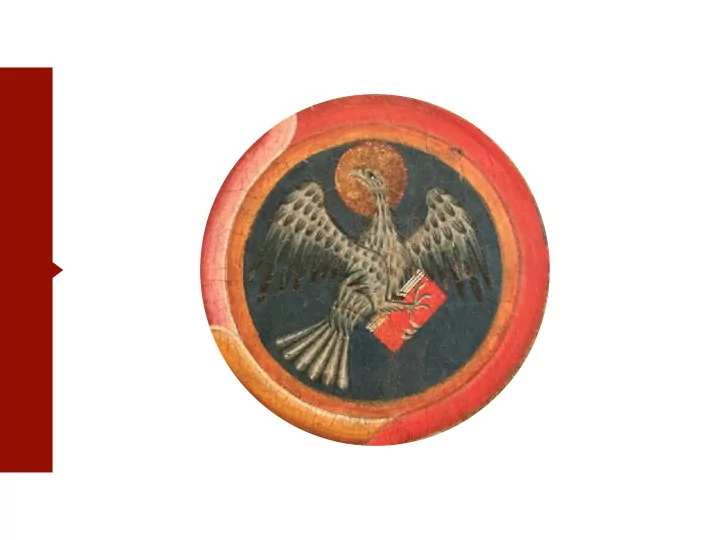
2018 2018 READING JOHN 2018 SEQUENCE Listen to John 1:1-18 / - - PowerPoint PPT Presentation
2018 2018 READING JOHN 2018 SEQUENCE Listen to John 1:1-18 / note reactions and questions Literary genre: prologue Literary structure: concentric Commentary Potential backgrounds Creation story and Moses Wisdom
performances.
framed and pointed and epigrammatic and suitable expressed, must at the same time be appropriate to the case in hand; for the
straight away. (De Oratore 2.315)
Word’s pre-existence. In reality, this is a meta-narrative.
take up elsewhere in the Gospel (e.g. logos, grace, fullness). Some is, of course, such as light, life and darkness.
for example the cross and resurrection are absent.
1 In the beginning was the Word, and the Word was with God, and the Word was God. 2 He was with God in the beginning.
3 Through him all things were made; without him nothing was made that has been
the darkness, and the darkness has not overcome it.
6 There was a man sent from God whose name was John. 7 He came as a witness to testify concerning that light, so that through him all might believe. 8 He himself was not the light; he came only as a witness to the light.
9 The true light that gives light to everyone was coming into the world.
10 He was in the world, and though the world was made through him, the world did not recognise him. 11 He came to that which was his own, but his own did not receive him. 12 Yet to all who did receive him, to those who believed in his name, he gave the right to become children of God— 13 children born not of natural descent, nor of human decision or a husband’s will, but born of God.
Rejection/reception Result: divine filiation 14 The Word became flesh and made his dwelling among us. We have seen his glory, the glory of the one and only Son, who came from the Father, full of grace and truth
15 (John testified concerning him. He cried out, saying, “This is the one I spoke about when I said, ‘He who comes after me has surpassed me because he was before me.’ ”)
16 Out of his fullness we have all received grace in place of grace already given. 17 For the law was given through Moses; grace and truth came through Jesus Christ.
18 No one has ever seen God, but the one and only Son, who is himself God and is in closest relationship with the Father, has made him known.
John 1:1 In the beginning was the Word, and the Word was with God, and the Word was
with God.
later).
wisdom of his own (Sir 39:6).
meanings: chiefly a close a authoritative relationship with God.
20:28).
John 1:3 All things came into being through him, and without him not one thing came into
4 in him was life, and the life was the light of all people. 5 The light shines in the darkness, and the darkness did not overcome it. John 11:25 Jesus said to her, “I am the resurrection and the life.” John 8:12 Again Jesus spoke to them, saying, “I am the light of the
never walk in darkness but will have the light of life.”
Lady Wisdom from the Old Testament (see below).
also the fullness of life (10:10 — x36 in all; NB raising of Lazarus.
illumination almost always. NB healing of the man born blind.
without distinction.
12:35, 46; 20:1.
John 1:6 There was a man sent from God, whose name was John. 7 He came as a witness to testify to the light, so that all might believe through him. 8 He himself was not the light, but he came to testify to the light.
the Baptist in this Gospel), bringing us to a particular historical context. NB No need to identify him — he is known.
thing in a negative way.
John 1:9 The true light, which enlightens everyone, was coming into the world. Isa 49:6 I will give you as a light to the nations, that my salvation may reach to the end of the earth.” John 8:12 Again Jesus spoke to them, saying, “I am the light of the
never walk in darkness but will have the light of life.” John 9:5 As long as I am in the world, I am the light of the world.”
reliable.
as we read in Isaiah 49:6b.
story of the man born blind.
quite traditional language about “the coming one”, i.e. the Messiah.
highly significant in this Gospel.
John 1:10 He was in the world, and the world came into being through him; yet the world did not know him. 11 He came to what was his own, and his own people did not accept him. 12 But to all who received him, who believed in his name, he gave power to become children
blood or of the will of the flesh or
coming of the Word
conflicts of the ministry to evident in John.
meaning Israel, this time.
positive response.
that of all humanity. Cf. Paul and the language of adoption.
John 1:14 And the Word became (egeneto) flesh (sarx) and lived (eskēnōsen) among us, and we have seen his glory (doxa), the glory as of a father’s only son (monogenēs), full (plērēs) of grace (charis) and truth (alētheia). Sir 24:8 “Then the Creator of all things gave me a command, and my Creator chose the place for my tent (skēnē). He said, ‘Make your dwelling (kataskēnōson) in Jacob, and in Israel receive your inheritance.’
fragility, transience, mortality.
the rest of this Gospel.
tent” (skēnē). NB the Feast of Tents (skēnopēgia) in chapters 7-10.
Sir 24:8.
40:3).
John 1:14 And the Word became (egeneto) flesh (sarx) and lived (eskēnōsen) among us, and we have seen his glory (doxa), the glory as of a father’s only son (monogenēs), full (plērēs) of grace (charis) and truth (alētheia). John 14:6 Jesus said to him, “I am the way, and the truth, and the life. No one comes to the Father except through me.
verb to complete, to fill or to fulfil is frequent (John 1:14, 16; 3:29; 7:8; 12:3, 38; 13:18; 15:11, 25; 16:6, 24; 17:12-13; 18:9, 32; 19:24, 36).
the OT (only here in John).
faithfulness in the OT.
4:23-24; 5:33; 8:32, 40, 44-46; 14:6, 17; 15:26; 16:7, 13; 17:17, 19; 18:37-38).
7:28; 8:16; 15:1; 17:3; 19:35.
John 1:15 (John testified to him and cried out, “This was he of whom I said, ‘He who comes after me ranks ahead of me because he was before me.’”) John 8:58 Jesus said to them, “Very truly, I tell you, before Abraham was, I am.” John 1:19 This is the testimony given by John when the Jews sent priests and Levites from Jerusalem to ask him, “Who are you?”
who “comments” on the theology. No parenthesis in ancient Greek.
stronger).
given by John when the Jews sent priests and Levites from Jerusalem to ask him, “Who are you?”
saw the Spirit descending from heaven like a dove, and it remained on him.
Word is affirmed.
John 1:16 From his fullness we have all received, grace upon
given through Moses; grace and truth came through Jesus Christ. Exod 33:13 LXX If then I have found favour (charis) before you, disclose yourself to me. Let me see you recognisably in order that I might find favour (charis) before you and in order that I might know that this nation is your people.”
language goes back to “we” and to thew (later) Christian confession of the benefit of the incarnation.
upon grace (charin anti charitos) could be:
(1) Love (grace) under the New
Covenant in place of love (grace) under the Sinai Covenant, thus replacement;
(2) Grace “on top of” grace, thus
accumulation;
(3) Grace corresponding to grace,
thus correspondence.
John 1:16 From his fullness we have all received, grace upon
given through Moses; grace and truth came through Jesus Christ.
exclusively Pauline in the New Testament.
God’s favour (charis) and his faithfulness (alētheia).
and faithfulness works only in the light of the revelation in Jesus.
Jesus Christ (= the full name which is rare in John).
that they may know you, the only true God, and Jesus Christ whom you have sent.
John 1:18 No one has ever seen
is close to the Father’s heart, who has made him known. (NRSV) John 1:18 No one has ever seen God; the only God, who is at the Father’s side, he has made him
Exod 33:20 But,” he said, “you cannot see my face; for no one shall see me and live.” 1 John 4:12 No one has ever seen God; if we love one another, God lives in us, and his love is perfected in us.
great intimacy with the Father.
probabilities favours only God. GNT5 gives a “B” rating to “only Son”, i.e. “almost certain.”
loved was reclining next to Jesus.
Jesus.”
John 1:18 No one has ever seen
is close to the Father’s heart, who has made him known. (NRSV)
why not keep the imagery? Cf. 13:23.
their members, and my own breasts I prepared for them, that they might drink my holy milk and live by it.
cup, and the Father is he who was milked; and the Holy Spirit is she who milked him; 3 Because his breasts were full, and it was undesirable that his milk should be released without purpose. 4 The Holy Spirit opened her bosom, and mixed the milk of the two breasts of the Father.
Johannine theology
theology and concerns
made.
light, that all might believe through him. 8 He was not the light, but came to bear witness about the light.
coming into the world.
Evangelist’s additions and modifications Christian modifications (Pauline / Gentile?) Jewish Hymn to Wisdom
Law v. grace Antithesis Wisdom = Christ Wisdom = Logos No dualism; Baptist texts Wisdom
PROLOGUE HYMN SOURCE WISDOM PARALLELS 1 In the beginning was Wisdom Prov 8:22-23; Wis 6;22; Sir 24:9 And Wisdom was with God Prov 8:23,30; Wid 9:4, 9 And God (divine) was Wisdom 2 The same (She) was in the begging with God 3a All things through her become (egeneto) Prov 3:19; 8:30; Wis 7:21-27; 8:1; 9:12; 1QS X. 11 4 What became in her was life Prov 3:18; 8:35 And the life was the light of men Wis 7:26; Prov 6:23; Test Levi 14:4; (Sir 17:11) 5 And the light in the darkness shines And the darkness did not extinguish it (ou katelaben) Wish 7:29-30
PROLOGUE HYMN SOURCE WISDOM PARALLELS 10 In the world she was Wis 8:1; Sir 24:6 And the world through her become (egeneto) And the world did not know her Prov 1:29; Bar 3:23, 28, 31 11 Unto her own (eis ta idia) she came And her own (hoi idioi) did not receive (ou parelabon) her Sir 24:8-12; 1 Enoch 42:1-2 12a But as many as received (elabon) her, 12b She gave them authority children of God (tekna theou) to become (genesthai) Wis 7:14, 27; Sir 6:20-22; 15:7 14ab And Wisdom tabernacled among us (eskēnōsen) Sir 24:8,10 (skēne); Wis 9:10; Bar 3:37 (cf. Prov 8:31) 14c And we beheld her glory (Cf. Sir 24:23); Br 4:1
1 In the beginning was Wisdom and Wisdom was with God and God (divine) was Wisdom 2 The same (She) was in the beginning with God 3a All things through her became 4 What became in her was life And the life was the light of men 5 And the light in the darkness shines And the darkness did not extinguish it 10 In the world she was and the world through her became And the world did not know her. 11 Unto her own she came, And her own did not receive her 12a But as many as received her, 12b She gave them authority children of God to become 14a/b And Wisdom tabernacled among us 14c And we beheld her glory
HELLENISTIC CHRISTIAN MODIFICATIONS
vocabulary in 14e, 16-18.
where the “we” confession is continued, indicating that the evangelist was editing a pre-existing ext.
Pauline, indicating that this editorial material was added in a Hellenistic community where the Pauline antithesis was known and affirmed.
hymn added 14e, 16-17, and thus identified Christ with Wisdom. The text would then further read: 14e full of grace and truth. 16 From her fullness we have all received, grace upon grace. 17 The law indeed was given through Moses; grace and truth came through Jesus Christ.
1 In the beginning was the Word, and the Word was with God, and the Word was God. 2 He was in the beginning with God. 3 All things came into being through him, and without him not one thing came into being. What has come into being 4 in him was life, and the life was the light of all people. 5 The light shines in the darkness, and the darkness did not overcome it. 6 There was a man sent from God, whose name was John. 7 He came as a witness to testify to the light, so that all might believe through him. 8 He himself was not the light, but he came to testify to the light. 9 The true light, which enlightens everyone, was coming into the world. 10 He was in the world, and the world came into being through him; yet the world did not know him. 11 He came to what was his own, and his own people did not accept him. 12 But to all who received him, who believed in his name, he gave power to become children of God, 13 who were born, not of blood or of the will of the flesh or of the will of man, but of God. 14 And the Word became flesh and lived among us, and we have seen his glory, the glory as of a father’s only son, full of grace and truth. 15 (John testified to him and cried out, “This was he of whom I said, ‘He who comes after me ranks ahead of me because he was before me.’”) 16 From his fullness we have all received, grace upon grace. 17 The law indeed was given through Moses; grace and truth came through Jesus
Father’s heart, who has made him known.
EVANGELIST’S ADDITIONS / MODIFICATIONS
Negatively:
Positively:
completed.
figure of Moses. Partially in fulfilment of; partially in contrast with.
Proverbs 1, 8, 9; Baruch 3:9–4:4; Sirach 24; Wis 7:7–9:18.
Alexandria.
pantheism.
history.
traditions.
to read the Gospel.
identity of Jesus.
today as well.
us through Christ.
We praise you, gracious God, for the glad tidings
became flesh and we have seen his glory. Let the radiance of that glory enlighten the lives of those who celebrate his birth. Reveal to all the world the light no darkness can extinguish, our Lord Jesus Christ, who lives and reigns with you in the unity of the Holy Spirit, in the splendour of eternal light, God for ever and