
SLIDE 1
17/12/15 1
Terrie Baverstock Mark Kempster
The need to address problems associated with drug
use is not a new phenomenon.
Through the 1980’s there was a notable increase in the
use of recreational drugs, not only cannabis but also the new ‘dance drugs’ such as ecstasy.
The 1980’s also brought new pressures on the
treatment system and Britain’s drug control policy, with a new epidemic of heroin use.
Increasing public and political concern about the link
between drug use and crime.
The crime reduction dividend was the rationale behind
the Government’s hugely increased investment in treatment.
Up from £50m to £600m a year. Public Health England estimated that providing ready
access to treatment for around 200,000 individuals – more than twice as many as in 2001 – prevents 4.9m crimes per year.
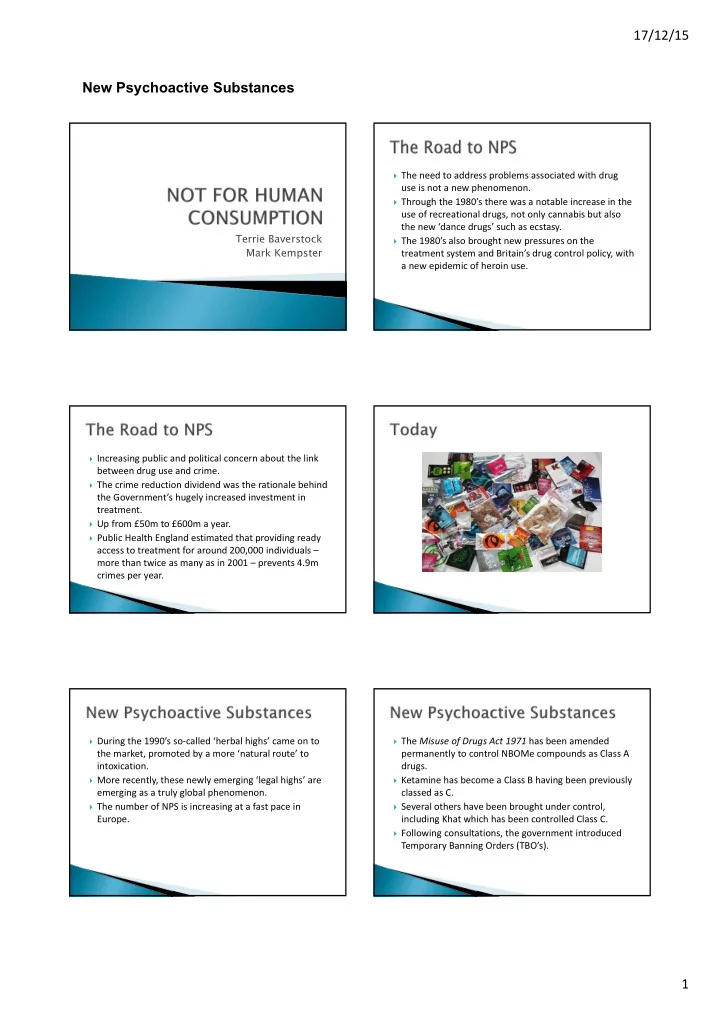
During the 1990’s so‐called ‘herbal highs’ came on to
the market, promoted by a more ‘natural route’ to intoxication.
More recently, these newly emerging ‘legal highs’ are
emerging as a truly global phenomenon.
The number of NPS is increasing at a fast pace in
Europe.
The Misuse of Drugs Act 1971 has been amended
permanently to control NBOMe compounds as Class A drugs.
Ketamine has become a Class B having been previously
classed as C.
Several others have been brought under control,
including Khat which has been controlled Class C.
Following consultations, the government introduced