Whiskey is for drinking and water is for fighting over. ~Mark Twain - - PowerPoint PPT Presentation

whiskey is for drinking and water is for fighting over
SMART_READER_LITE
LIVE PREVIEW

Whiskey is for drinking and water is for fighting over. ~Mark Twain - - PowerPoint PPT Presentation

Whiskey is for drinking and water is for fighting over. ~Mark Twain Preparing a Drought Management Management Plan Steps in Preparing your Management Plan Steps in Preparing your Management Plan Obtain public input and involvement 1. Define


slide-1
SLIDE 1

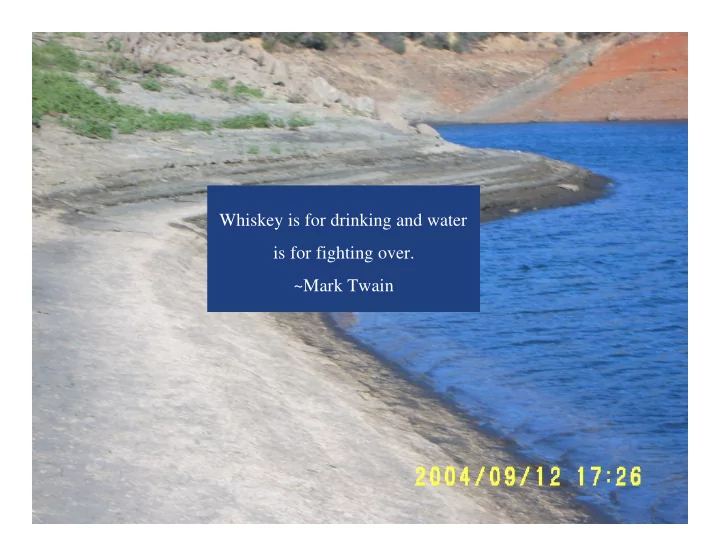
Whiskey is for drinking and water is for fighting over. ~Mark Twain
slide-2
SLIDE 2
slide-3
SLIDE 3

Preparing a Drought Management Management Plan

slide-4
SLIDE 4

Steps in Preparing your Management Plan Steps in Preparing your Management Plan

1.

Obtain public input and involvement

2.

Define goals and objectives

3.

Assess water supply and demand conditions

4.

Define drought indicators

5.

Identify drought mitigation measures

6.

Assess mitigation measures

7.

Develop a drought index and management strategy

slide-5
SLIDE 5
  • 1. Public Input and Involvement

Need public “buy-in” for plan to be successful Create a Task Force or Committee

  • Citizens
  • Major Water Users
  • Other Water Agencies
  • Businesses
  • Civic Groups

Include Public Agencies

  • Law Enforcement, Fire Dept., Parks Dept.
slide-6
SLIDE 6
  • 2. Define Mitigation Goals and Objectives

Water-Use Priorities

  • Which water-users can and should be restricted
  • Across-the-board or targeted restrictions
  • What legal requirements need to be met

Minimum Flow Requirements Reservoir Conservation Requirements

  • Do some water-users take priority over others

Fire Departments Hospitals

slide-7
SLIDE 7
  • 3. Assess Supply and Demand

Identify Water

Supply Sources

  • Who ultimately

controls the sources

  • Treatment

infrastructure

Determine the

Maximum Yield of Current Sources

  • Determine Community

Water Demand

  • Average and peak

demand

  • Historic demand trends
  • Use by customer sector
  • Interior vs. Exterior use
  • Projected future demand
  • Environmental demands
slide-8
SLIDE 8

Assess Supply and Demand (cont’d)

Identify Local

Conditions

  • State Water Law
  • Current

Conservation Efforts

  • Third-party effects
  • f your groundwater

Compare water

demand with supply yield

Forecast potential

deficits

slide-9
SLIDE 9
  • 4. Define Drought Indicators

Palmer Index

  • Based on soil moisture supply and demand
  • Long Term

Reservoir Storage

  • Reflects precipitation, surface runoff, and

groundwater

Groundwater Levels

  • See “Introduction to Well Drawdown” on resource

CD for information on gauging your groundwater levels

slide-10
SLIDE 10
  • 5. Identify Mitigation Measures
  • Public Information and

Education

  • Bill Stuffers/Fliers
  • Advertisements
  • Press Conferences
  • Restrictions/Bans on

Nonessential Use

  • Ornamental Use

(fountains, ponds)

  • Pavement/Street/Car

Washing

  • Pricing
  • Excessive-use surcharges
  • Drought surcharges
  • Rationing (limit available

supply)

  • Local

Regulations/Ordinances

  • Excess-use penalties
  • Criminal Penalties for

Noncompliance (fines)

  • Interagency cooperation
slide-11
SLIDE 11
  • 6. Assess Mitigation Measures

Anticipated water-use reduction Consumer acceptance Equity Cost Sustainability Legal / Contractual Issues History Ease of Implementation

slide-12
SLIDE 12
  • 7. Develop your Plan

Adapt Drought Index and Management Strategy

Template to suit your needs

Template samples based on California long-term

drought commencing in 1986

slide-13
SLIDE 13

Implementing a Drought Management Plan Implementing a Drought Management Plan

slide-14
SLIDE 14

Steps in Implementing the Management Plan Steps in Implementing the Management Plan

1.

Formally adopt the Plan

2.

Public Information and Education

3.

Enforcing Drought Restrictions

slide-15
SLIDE 15
  • 1. Formally Adopt the Plan

Approval of Citizen / Community Task Force Approval of Local Officials Approval of your Board of Directors

slide-16
SLIDE 16
  • 2. Public Information and Education

Pick ONE person to deal with the Media

  • KEEP THE MEDIA INFORMED

Let water-users know where to ask questions Staff Booths at Local Events

  • Take advantage of large group gatherings

Bill Stuffers and Fliers Drought Fact-Sheet Demonstrate conservation equipment Provide Updates

slide-17
SLIDE 17
  • 3. Enforcing Drought Restrictions

City / County / State Ordinances

  • Ask for local conservation ordinances to be instated

Incentive Programs

  • Supply retrofit devices

Conservation kits

  • Provide rebates for water-saving appliances

Disincentive Programs

  • Excess-use charges
slide-18
SLIDE 18

Enforcing Drought Restrictions (cont’d)

Monitoring

  • Reactive

Respond to complaints made by other consumers Least costly

  • Proactive

Actively patrol and issue warnings/conservation kits Expensive Possible “bad-cop” image

slide-19
SLIDE 19

Enforcing Drought Restrictions (cont’d)

Noncompliance Penalties

  • First Offense

Issue a Warning Supply with educational and retrofit materials

  • Second Offense

Minimal fine imposed on user’s bill

  • Third Offense

Steeper fine imposed on user’s bill Consider cutting user’s water or installing a meter at their

location