WHAT IS ANAPHYLAXIS? ( PRONOUNCED ANA-FILL-AXIS) Anaphylaxis, also - - PowerPoint PPT Presentation

what is anaphylaxis
SMART_READER_LITE
LIVE PREVIEW

WHAT IS ANAPHYLAXIS? ( PRONOUNCED ANA-FILL-AXIS) Anaphylaxis, also - - PowerPoint PPT Presentation

WHAT IS ANAPHYLAXIS? ( PRONOUNCED ANA-FILL-AXIS) Anaphylaxis, also known as anaphylactic shock, is a severe and potentially fatal allergic reaction. It affects the whole body Anaphylaxis requires immediate medical treatment Although


slide-1
SLIDE 1
slide-2
SLIDE 2

WHAT IS ANAPHYLAXIS?

(PRONOUNCED ANA-FILL-AXIS)

  • Anaphylaxis, also known as anaphylactic shock, is a severe and

potentially fatal allergic reaction.

  • It affects the whole body
  • Anaphylaxis requires immediate medical treatment
  • Although there are many causes for this type of severe allergic reaction,

the most common cause is eating a food to which the person is allergic to.

  • An anaphylactic reaction can occur suddenly, within seconds, or

even take up to an hour to develop.

  • People can also have serious allergic reactions through
  • skin contact (i.e. latex),
  • Medications (including over the counter pain killers),
  • stings (i.e. bees & wasps)
  • Or by touching the mouth with contaminated hands, utensils or toys.
  • Even eating a tiny amount of a particular food can cause

anaphylactic shock.

slide-3
SLIDE 3

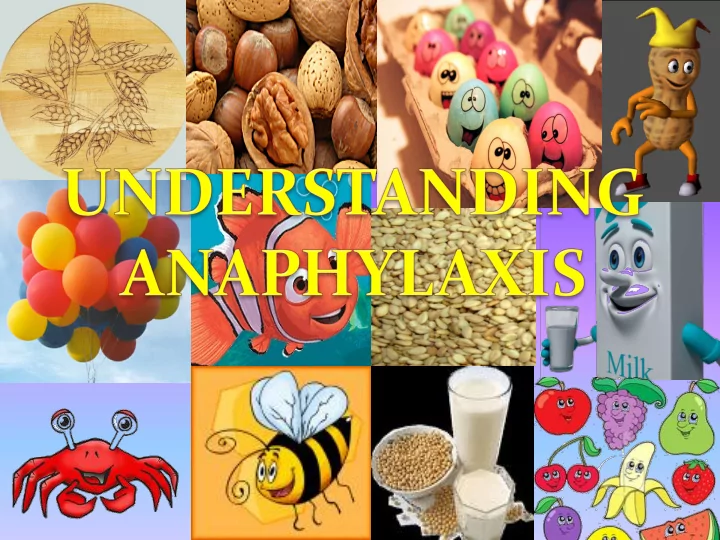
COMMON CAUSES OF ANAPHYLAXIS

  • Allergies can be caused by lots of different things
  • These are known as allergens
  • The following are a list of common allergens
  • Peanuts
  • Fish
  • Eggs
  • Bee stings
  • Tree nuts
  • Shellfish
  • Soya
  • Fruit
  • Sesame
  • Dairy Products
  • Latex
  • Penicillin & other

drugs

slide-4
SLIDE 4

SYMPTOMS

  • Although there is a wide range of symptoms that occur with

anaphylaxis, not all of them will be experienced on each occasion.

  • The symptoms can vary in severity and speed with which they

happen even in the same person.

  • Symptoms include:
  • Rash / hives anywhere on the body
  • Swelling of lips, mouth, face and throat
  • Difficulty breathing, swallowing or speaking
  • Abdominal cramps, nausea, vomiting or diarrhoea
  • Sudden feeling of weakness (drop in blood pressure)
  • Collapse and unconsciousness
  • Alteration in heart rate
slide-5
SLIDE 5

WHAT HAPPENS DURING ANAPHYLACTIC SHOCK?

  • When a person comes into contact with their allergen.
  • It can cause a number of different chemicals to be

released in their body which can have an effect on their

  • rgans.
  • During anaphylactic shock the blood vessels leak,

bronchial tissues swell and blood pressure drops.

  • This can cause a person to choke and collapse
slide-6
SLIDE 6

TREATMENT

  • Anaphylaxis requires emergency treatment
  • An adrenaline injection (Anapen / Epipen) prescribed by a doctor

should be used promptly, as directed, at the first sign of swelling in the mouth or throat, breathlessness or weakness. This should relieve breathing problems, raise blood pressure and reduce swelling.

  • An ambulance must be called immediately.
  • If there is no improvement or symptoms get worse a second

adrenaline injection can be given after 5 – 10 minutes.

  • Less serious reactions (such as a rash) can be

treated with antihistamine.

  • Lie the person flat and elevate the feet, unless this

makes breathlessness worse.

slide-7
SLIDE 7

YOU CAN HELP ANAPHYLAXIS SUFFERERS BY -

  • Taking allergies seriously.
  • Reducing the risk of anaphylaxis by washing your hands after eating.
  • Ensuring work-surfaces and utensils are cleaned with soapy water after use.
  • Removing the food the person is allergic to in order to avoid accidental exposure and

reaction

  • Avoiding cross-contaminating food ( i.e. using the same knife for the butter after

using it in the peanut butter. This would contaminate the butter and would be unsafe for a person with a nut allergy to use.)

  • Taking the time to familiarise yourself with the persons allergies, medication and

emergency plan.

  • Do not stigmatise or exclude a person because of their allergies.
  • If an allergic person you know shows signs of a serious allergic reaction, act immediately.

Get them medical assistance without delay – you could save their life!

  • Anaphylaxis is a condition that can be managed with understanding and

co-operation Show You Care Be Allergy Aware

slide-8
SLIDE 8

Unconscious (appears asleep), difficulty breathing, or previous severe reaction. Give child’s own inhaler if available Send someone to call 999 Give Adrenaline Check airway, breathing and circulation Give oxygen if available Give 2nd dose of Epinephrine if no better in 5 – 10 mins Start mouth to mouth breathing and chest compression if necessary Continue until help arrives or the child recovers

slide-9
SLIDE 9

THE ANAPEN

  • Below are the instructions on how to administer the Anapen (adrenaline injection) in

an emergency situation.

  • A person who has been prescribed an Anapen should carry it with them at all times.
  • It is advisable to seek correct training in the use of the Anapen.
  • 1. Remove the

black needle cap.

  • 2. Remove the

black safety cap from the red firing button.

  • 3. Hold

Anapen against the outer thigh and press the red firing button.

  • 4. Hold Anapen in

position for 10 seconds, then remove the Anapen gently massage the injected site.

slide-10
SLIDE 10

USEFUL WEBSITE ADRESSES www.irishanaphylaxis.org www.allergyni.co.uk www.anaphylaxis.org.uk

slide-11
SLIDE 11

The information contained in this power point presentation is not medical advice. Any questions you may have regarding allergies and anaphylaxis please consult a medical professional. This presentation is presented to you by Louise Connolly to help raise awareness of anaphylaxis .