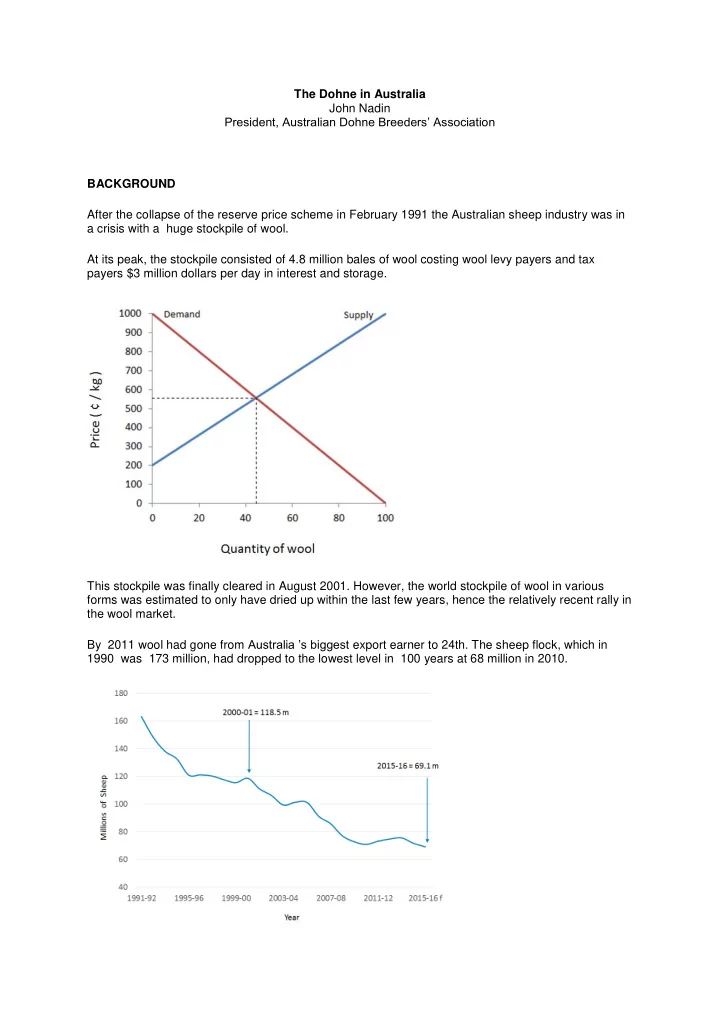
SLIDE 1
CHANGES IN FARM LAND USE Australian sheep farmers found themselves in an unprofitable situation. This led to two scenarios;
- 1. A move out of sheep and into cereal cropping and cattle
- 2. The move away from wool production into fat lamb production
- 3. Introduction of non-wool producing sheep breeds such as the Dorper and Damara
THE DOHNE PROVIDED Later in the decade, new breeds were on the agenda as import regulations freed up the movement of sheep genetics from some countries. The opening up of access to the South African sheep genetics gave Australian sheep farmers an alternative that they needed to make their operations profitable. The majority of these sheep were non-wool producers. Many sheep breeds came to Australia from South Africa providing Australian farmers with a smorgasbord of choice. For those farmers still believing that wool was a valuable commodity in their enterprise, their choice was limited to the SAMM (South African Mutton Merino) and the Dohne. The Dohne ’s development in South Africa had been well defined, with the breeding objective to improve meat, wool, and reproductive traits. The Dohne presented a very different alternative for Australian sheep producers. With an emphasis
- n both meat and wool traits, it presented the opportunity to have a true dual purpose sheep. This