Space for Food Growing Brighton Planning Context Brighton and Hove - - PowerPoint PPT Presentation

space for food growing brighton planning context
SMART_READER_LITE
LIVE PREVIEW

Space for Food Growing Brighton Planning Context Brighton and Hove - - PowerPoint PPT Presentation

Case Studies of New Development Space for Food Growing Brighton Planning Context Brighton and Hove Planning Advice Note 06, Food Growing and Development, 2011: Recognise, safeguard, and encourage the role of allotments & garden plots


slide-1
SLIDE 1

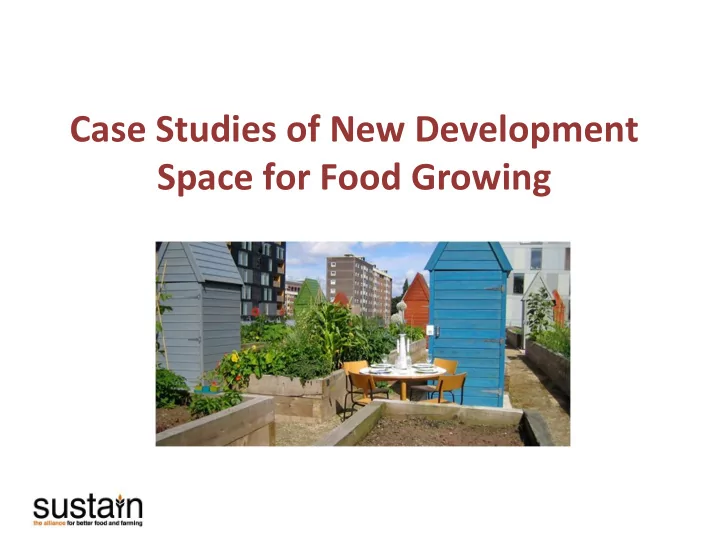
Case Studies of New Development Space for Food Growing

slide-2
SLIDE 2

Brighton Planning Context

Brighton and Hove Planning Advice Note 06, Food Growing and Development, 2011:

  • “Recognise, safeguard, and encourage the role of

allotments & garden plots within developments”

  • Goal: allotment provision of at least 0.23 ha per

1000 residents, maximum 15 minutes walk

  • Benefits: “improving the physical and mental

health of residents, increasing bio-diversity in cities, reducing carbon emissions associated with long distance food distribution, and greening the urban landscape”

slide-3
SLIDE 3

One Brighton

  • 172 apartment mixed-use

development Completed 2010

  • set out to be one of the

greenest and most sustainable urban communities in Europe

  • Rooftop mini-allotments &

balconies with integrated planters suitable for growing food , ‘edible landscaping’

slide-4
SLIDE 4

Leeds Sustainable Food City

slide-5
SLIDE 5

Leeds Planning Context

  • Core Strategy 2014
  • Aire Valley Area Action

Plan 2016/7

  • make it easier for people to

lead healthy lifestyles, with better access to fresh food shopping, the ability to grow their own food locally, and participate in recreational activities.

slide-6
SLIDE 6

Saxton Gardens

Before After

slide-7
SLIDE 7

Site Plan

slide-8
SLIDE 8

Grow Your Own

slide-9
SLIDE 9

Newham Planning Context

Newham Local Plan – Detailed Sites and Policies Development Plan Document 2016

  • Policy SC5 – Maximising Sustainable Design
  • 3. Development should take advantage of

linked opportunities in sustainable design and minimise conflict between different strands, notably through:

  • d. the opportunity to integrate food growing,

including consideration as a temporary use.

slide-10
SLIDE 10

Rathbone Market Canning Town

  • Area formerly 1960s

residential blocks, shops & a failing street market

  • Development of

contemporary apartments now boasts communal gardens and allotments.

  • Mixed-use

development on 5.5 acres with 652 new homes.

slide-11
SLIDE 11

Waltham Forest Planning Context

Waltham Forest Local Plan - Core Strategy, 2012

  • Policy CS5 – Enhancing Green Infrastructure and Biodiversity

E “ensuring the adequate provision and efficient use of allotments and other spaces on which to grow food and plants”

  • 8.20 – “Allotments, community gardens, and urban farms are a

useful resource for delivering a range of benefits including providing a healthy and sustainable food resource and fostering

  • pportunities for gentle exercise.”

Development Management Policies , 2013

  • Policy DM12 “The Council will expect development proposals to

contribute to the supply, quality and accessibility of private and communal spaces on which to grow food and flowers”

slide-12
SLIDE 12

Walthamstow Stadium

  • East London, borough of

Waltham Forest

  • Demolition of greyhound

racing track besides historic sign

  • 294 new homes of mixed

form and tenure

  • Community facilities

including nursery, café, sports centre, and new pocket allotments

slide-13
SLIDE 13

Lessons Learned

  • Planning policy is a statement of council priorities to guide new

development; don’t assume individual policies will be applied in all

  • cases. They are not regulatory mechanisms to be “implemented”.

– To create new food growing spaces, use planning policies to show support for your work, combining with other strategies

  • Not all food growing spaces need planning permission
  • Some planners, instead of recommending food growing space in

new developments, recommend flexible green space that can become allotments, play area, outdoor seating etc, according to residents’ wishes

  • Developers are trending towards “place making” and “community

infrastructure” in new developments – food growing space can help them meet that goal

  • Policy is the start of the journey, engagement, facilitation and
  • ngoing management are key.
slide-14
SLIDE 14

Webinar Key Messages

  • Sustainable Food Cities

Think: what do you want your place to look like?

  • Developers

Improve social & environmental attractiveness

  • f development
  • Councils

Planning for a sustainable food system meets many strategic

  • bjectives
slide-15
SLIDE 15

Time for Questions & Discussions

Post your questions in the chat box Do you have any good examples of new developments to share? What does a sustainable food city will look like? For help with local plan making see our planning pages at https://www.sustainweb.org/planning/ Sign up for our newsletter Email gillian@sustainweb.org