SLIDE 1
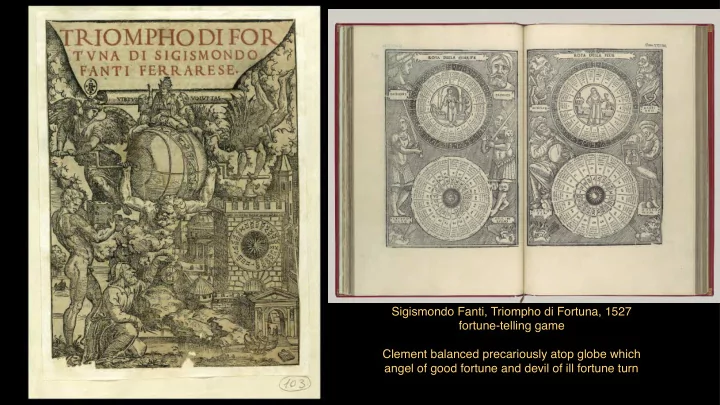
Sigismondo Fanti, Triompho di Fortuna, 1527 fortune-telling game Clement balanced precariously atop globe which angel of good fortune and devil of ill fortune turn
SLIDE 2
The Clementine Style > more an aspiration than a reality
SLIDE 3
Parmigianino, Vision of St Jerome, 1526, NGA commissioned by Maria Bufalini, wife of Antonio Caccialupi for family chapel in San Salvatore in Lauro (burned down in 1591) intended to be part of a triptych sides representing: Conception of Virgin and Meeting of Joachim and Anna P’s uncle stored the panel with friars of SM della Pace theme of chapel = genealogy of the Virgin contract: Virgin and Child with Sts John the B and Jerome Antonio’s father’s name = Giovanni Battista half moon > immaculate conception > original commission 16th century opened with atmosphere of apocalyptic fear and millennial hope
SLIDE 4 beauty = sign of spiritual beauty plenitude of grace Luke 1:28 1520-30’s: debate shifting from internal Catholic
- ver immaculate conception
to larger stage (Erasmus 1519 translation changed gratia plena to gratiosa pleasing to God) Virgin and Woman of the Apocalypse = CHURCH new ideal of feminine beauty > grace + ornament signified ecclesiastical reform ideal of many models Zeuxis as told in Cicero’s De inventione Lucian, Eikones: painter must imitate the best parts of sculpture 16th century opened with atmosphere of apocalyptic fear and millennial hope
SLIDE 5
Raphael, Madonna of Foligno, 1511 high altar of the Aracoeli Virgin as Apocalyptic Woman foundational myth of the Church vision shown Augustus by Tiburtine Sibyl clothed in the sun rainbow > God’s promise to humankind Genesis 9:11-17 flood would never recur sheep grazing > Virgil’s 4th Eclogue Virgin’s beauty > immaculacy Franciscan Church = bride of Christ golden age of church under Julius II
SLIDE 6
image of reformed Virgin-Church message of ecclesiastical reform elongation grace mimesis from nature + art Zeuxis, from Cicero’s De inventione Woman of the Apocalypse 12 battles the dragon comes forth like the dawn fair was the moon bright as the sun terrible as an army militant Immaculata
SLIDE 7
birth motif Christ child is older, more seductive Church = bride of Christ full narrative widely spread legs Michelangelo’s Bruges Madonna, 1501-04
SLIDE 8
emphasis on John the Baptist unusual urgency > gesture towards Christ despite muscles > feminine qualities why is Jerome asleep? Leonardo, John the Baptist, androgynous soul regenerated through grace in baptism a new creature - neither male or female, Jew or Greek blurs physical boundary urgency
SLIDE 9 etymology of Jerome > vision of beauty dreaming of the grace of the Immaculata, or beauty of the Virgin-Church
assertion of weakness of will and futility of good works in Letter to Eustochium, Jerome described a dream in which angels scolded him for devoting too much time to Cicero, instead of modeling himself on Christ
SLIDE 10
SLIDE 11
hovering left foot
SLIDE 12
SLIDE 13 Rosso Fiorentino, Moses Defending the Daughters
SLIDE 14 Rosso Fiorentino, Moses Defending the Daughters
Michelangelo, Brazen Serpent, Sistine Chapel, c. 1512
SLIDE 15
http://www.aparences.net/art-et-mecenat/rome-mecenat-et-pouvoir-papal/clement-vii-medicis/
SLIDE 16