
SLIDE 1
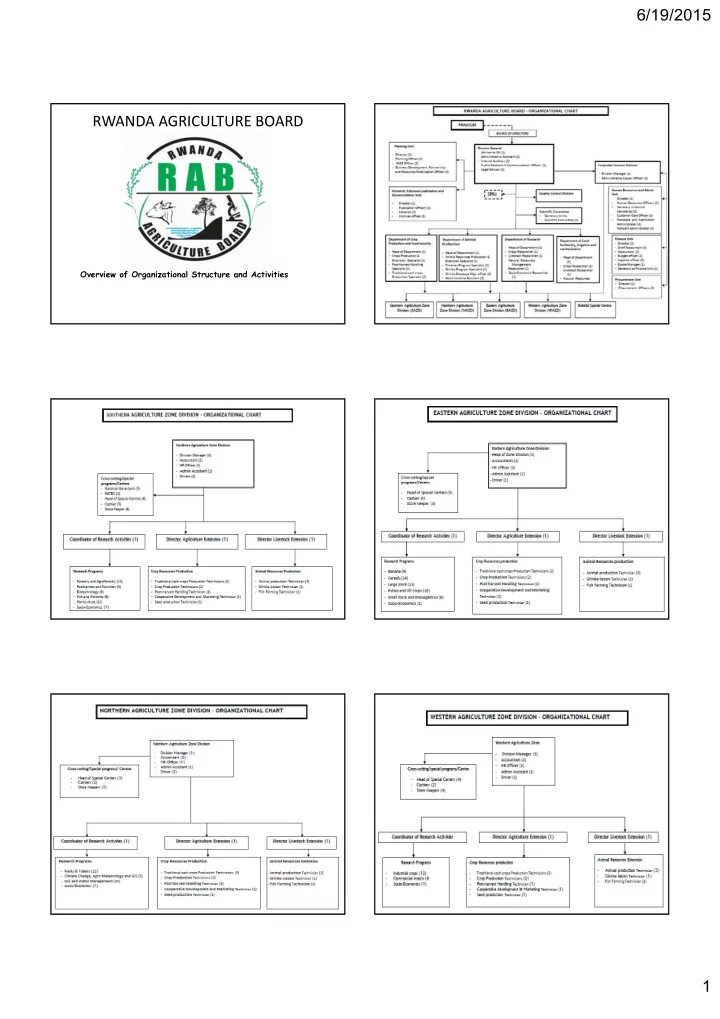
6/19/2015 1 RWANDA AGRICULTURE BOARD
Overview of Organizational Structure and Activities
RWANDA AGRICULTURE BOARD Overview of Organizational Structure and - - PDF document
6/19/2015 RWANDA AGRICULTURE BOARD Overview of Organizational Structure and Activities 1 6/19/2015 Research priorities for RAB Southern Agriculture Zone Division Crop production and protection Development of high yielding and resistant
Overview of Organizational Structure and Activities
Crop production and protection ‐Development of high yielding and resistant crop varieties ‐Diseases and pests identification/diagnostics and management ‐Tissue culture protocol development for staple food crops, horticulture, coffee and tpriority rees Animal resources for enhanced food security ‐ Animal genetic improvement (crossing, artificial insemination & embryo transfer), ‐ animal nutrition and animal health Conservation and protection of Germplasm ‐ Ex‐situ conservation ‐ Gene Bank for plant and animal genetic resources
‐ Soil fertility management and soil conservation ‐Water resources management and irrigation ‐Forestry and agro‐forestry systems ‐ Agro‐meteorology and climate change adaptation Integration of Research and Extension for development (technology transfer)
CBSD root symptoms
Bacterial blight trapping nursery Screening for resistance to Bacterial Blight of rice
RESEARCH ON SILKWORM SELECTION & BREEDING AND HYBRID EGGS PRODUCTION
characterization and maintenance
National Genetic Resource of silkworm continued done adaptability selection 48 genetic different of silkworm breeds.
and breeding for disease resistant and adaptability of genetic modification line for deducing new highly productive local silkworm breeds.
disease control and certification
silkworm eggs is on‐going.
J200; K; Angel; Deamond) found to be resistant to bacterial and virus diseases and have high cocoon yield (35‐42 kg/box).
production Pure Parents (P3, P1), hybrid (F1) silkworm eggs and production of highly heterocyst hybrid (F1), free ‐ diseases silkworm eggs was developed.