RRAT Aims and Objectives The overall aim is to support the systems - - PowerPoint PPT Presentation

rrat aims and objectives
SMART_READER_LITE
LIVE PREVIEW

RRAT Aims and Objectives The overall aim is to support the systems - - PowerPoint PPT Presentation

RRAT Aims and Objectives The overall aim is to support the systems resilience for winter pressures. Specifically to: Reduce the numbers of avoidable admissions or readmissions from Care Homes Reduce the numbers of ambulance


slide-1
SLIDE 1

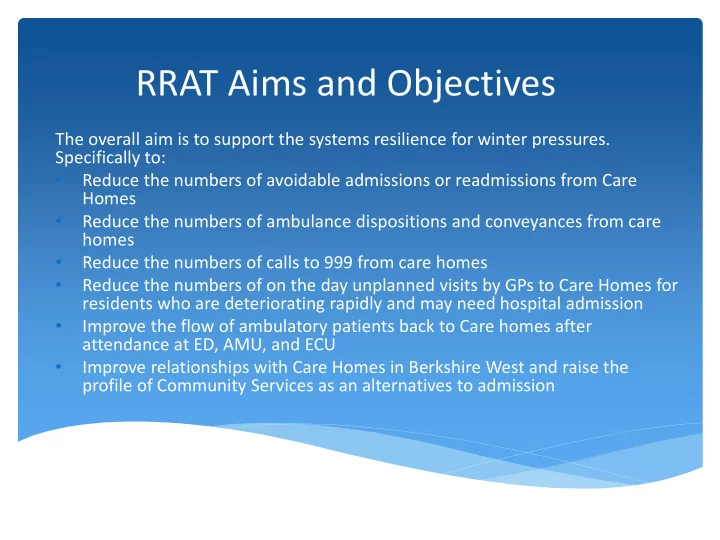
The overall aim is to support the systems resilience for winter pressures. Specifically to:

  • Reduce the numbers of avoidable admissions or readmissions from Care

Homes

  • Reduce the numbers of ambulance dispositions and conveyances from care

homes

  • Reduce the numbers of calls to 999 from care homes
  • Reduce the numbers of on the day unplanned visits by GPs to Care Homes for

residents who are deteriorating rapidly and may need hospital admission

  • Improve the flow of ambulatory patients back to Care homes after

attendance at ED, AMU, and ECU

  • Improve relationships with Care Homes in Berkshire West and raise the

profile of Community Services as an alternatives to admission

RRAT Aims and Objectives

slide-2
SLIDE 2

Call to GP within 24 hours of patient

DC summary to GP

acceptance on service within 24 hours of DC

Care Home identified that resident is at risk of a crisis and needs urgent support Resident from care home presents at A&E/AMU and is identified as suitable for enhanced rapid response Referral to the pathway made by calling The Health Hub on 0300 365 1234 and Hub contacts appropriate locality team. Nurse arrives at care home within 2 hours of patients return from A&E/AMU Nurse arrives at care home within 2 hours of call to Health Hub to assess resident in care home Patient is suitable for intervention in care home and intervention started Patient requires acute setting intervention and is referred to acute hospital If medical review required call made to community geriatrician

  • r Westcall

OOH Nurse assesses patient and produces intervention plan for patient Patient transferred to Acute Hospital Daily nurse review and

  • n-going care

pathway developed Patient discharged by Day 5,

  • nce crisis is

resolved +/- referral to

  • nward

services if required

Rapid Response and Treatment Pathway

Patient does not require RRAT intervention and discharged Referral to specialist community services where needed

Regular virtual MDTs to discuss patients on service

Nurse triages referral, contacts care home and accepts referral Nurse triages referral, contacts care home and rejects referral Patient does not require RRAT intervention and discharged

slide-3
SLIDE 3

If a resident is experiencing a new episode or sudden worsening of the following:

  • Suspected acute infections e.g. Cellulitis, Pyelonephritis/UTI, Pneumonia/influenza
  • Chronic Obstructive Pulmonary Disease
  • Dehydration and gastroenteritis
  • Acute Pain with identified cause
  • Acute exacerbation of inflammatory disease
  • Dehydration (if clinically appropriate)
  • Delirium which is mild, of known cause and manageable in the home environment.
  • Falls

This list is not all encompassing and if unsure please still call the Hub

Diagnostic Types Treated