Route 28 Scenic Byway Project Central Catskills Collaborative - - PowerPoint PPT Presentation
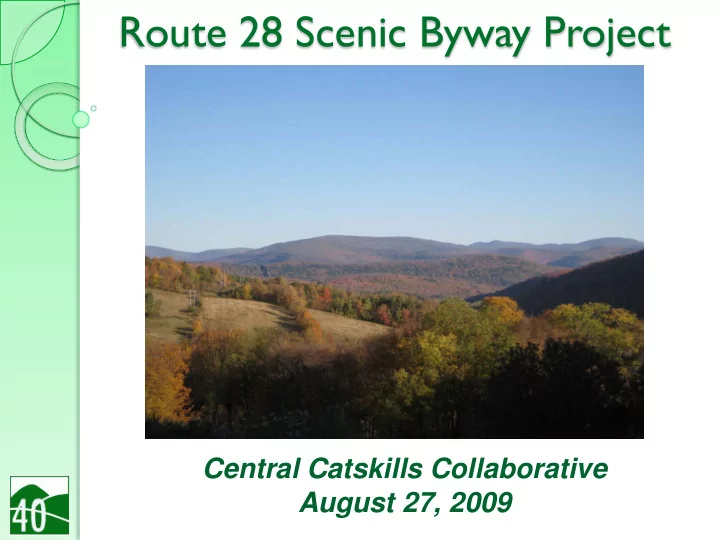
Route 28 Scenic Byway Project Central Catskills Collaborative August 27, 2009 What is a Scenic Byway? A road corridor of regionally outstanding scenic, natural, recreational, cultural, historical, or archaeological significance A scenic byway
What is a Scenic Byway?
A road corridor of regionally outstanding scenic, natural, recreational, cultural, historical, or archaeological significance A tool for intermunicipal cooperation – builds regional community A locally driven nomination process to obtain designation by New York State A scenic byway corridor is managed to protect this outstanding character and to encourage economic development through tourism and recreation
“A scenic byway is a "win-win" arrangement for the travelers that use it and the communities that adjoin it. Travelers are treated to an uncommonly exiting, educational or entertaining trek. Communities profit by an organized management plan that protects and enhances the byway corridor while encouraging increased tourism. A scenic byway might offer magnificent views or fascinating historical sites or amazing wildlife. It might offer access to an exhilarating array of outdoor activities or reveal captivating cultures, spellbinding art or spectacular structures... whether a scenic byway offers one or many of these things, it always offers a great experience.” – NYS Scenic Byways
What is a Scenic Byway?
Proposed Route
Dedicated Federal Fund Sources SAFETEA-LU – Scenic Byways Funds – Transportation Enhancements Funds Federal Scenic Byways Funds
- Safety Improvements
- Byway Facilities
- Access to Recreation
- Resource Protection
- Interpretive Information
- Marketing
Access to DOT and Priority Consideration Access to Additional Funding Programs
Benefits of Designation
National Scenic Byways Program Awards New York State 2006 19 Projects $1,179,416
The Nomination Process
– Consensus among all communities – Vision & Goal Statement – Public involvement and information plan – Maps – Resource Inventory – Identify and define the Corridor – Tell the Story- theme Development – Corridor Management Plan
Local Byway Committee
An organization with goals, a work plan, and dedicated resources - the advocate
“The submission process is flexible and there are innumerable paths that can be followed during the nomination”
Byway Themes
Cultural Recreational Scenic Historical Natural
“The theme should be supported by multiple
- ccurrences of the corridor’s scenic, natural,
recreational, cultural or historical (including archaeological) resources that are of regional significance”
Project Timeline
Preliminary Vision and Goals Statement Community Asset Mapping and Data Collection Resource Inventory and Community Meetings Development of CMP “Plans” Final Draft CMP Presentation to NYS Scenic Byways Advisory Board
September 2009 November 2009 July 2010 November 2010 February 2011 April 2011 Draft Narrative Assemble Plan
Goals statement identifies 3-5 goals that will implement the Corridor Management Plan. Goals may focus on:
- Promotion
- Revitalizing the Corridor
Economy
- Conserving Resources
- Community Pride – local
awareness
View of the Byway in the Future
Contents of a CMP
- Executive Summary
- Introduction
- Vision and Goals Statement
- Maps
- Context and Assessment
- f Intrinsic Qualities
- Public Participation
- Stewardship
- Tourism Development
- Marketing and Promotion
- Resources Interpretation
- Financial Resources
- Support and Implementation
- Transportation Safety
- Recommendations, Strategies, and Objectives
- Supporting Resolutions
- Bibliography and References
- Resource List (e.g. funding, public agencies,
individuals, organizations)
- Appendix – Matrix/ Inventory of Intrinsic Qualities
- Appendix – Route Signage Inventory
Scenic, Natural, Recreational…
Cultural and Historical
www.fabulousfurnitureon28.com Robert Selkowitz www.artfolks.com
Resource Interpretation
- Visitor Centers
- Interpretive markers
- Interpretive brochure
distribution points
- Info Kiosks
www.catskillinterpretivecenter.org www.waterdiscoverycenter.org (Courtesy Catskill Mountain Railroad)
Traffic Safety
What are the roles of the communities?
Be active, build awareness and support Host public meetings to present your intrinsic qualities Provide comprehensive plans, land use regulations, and other documents that express the resources of the town and the wishes of the community, e.g. historical surveys Contribute resources or time, e.g. photographs, graphic design, publicity, narrative development
Partners
Volunteers The Central Catskills Collaborative
Towns of Hurley, Olive, Shandaken, Middletown, Andes; Villages of Fleischmanns and Margaretville
The Catskill Center Collaborative Advisory Members NYS DEC Educational Institutions Others The Nature Conservancy The Public NYS DOT (Advisory Role) NYS Hudson River Valley Greenway
Integration of Existing Plans
Corridor Studies/ Plans Tourism Studies Stream Management Plans Comprehensive Plans Rail Corridor Feasibility Study Catskill Park Highway Guidelines Other Corridor Management Plans
Project Library and Work Space at the Catskill Center
Education Partners
- Regional Planning Studio
- Esopus-Delaware
Corridor Revitalization
- Student Capstone Project
- Scenic Byway Resource
Manual
- GIS Options
- Route 28 Case Study
SUNY ESF SUNY Albany
“Imagine that the entire Catskill Region is a community, with Route 28 its “Main Street”. … the message that needs to be more clear is that it is possible to promote community identity along with regional identity to benefit ALL communities.” – Catskill Access Study, 1991.
Peter Manning Regional Planner (845) 586-2611 pmanning@catskillcenter.org www.catskillcenter.org
Project Support
Catskill Center - Memberships and Donations The Rivendell Foundation NYS Council on the Arts Catskill Watershed Corporation - LTAP Award
Next Meeting Sept. 24 – Craft Preliminary Vision and Goals Statement