
SLIDE 1
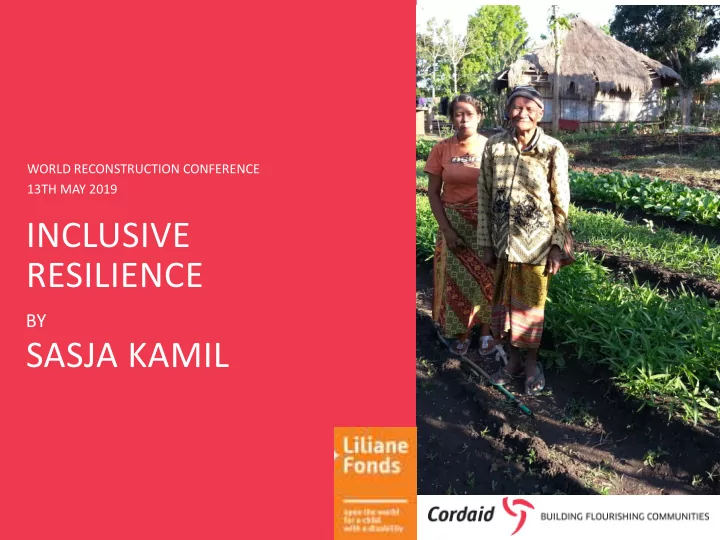
INCLUSIVE RESILIENCE
BY
SASJA KAMIL
WORLD RECONSTRUCTION CONFERENCE 13TH MAY 2019
RESILIENCE BY SASJA KAMIL My background and inclusion Learn from - - PowerPoint PPT Presentation
WORLD RECONSTRUCTION CONFERENCE 13TH MAY 2019 INCLUSIVE RESILIENCE BY SASJA KAMIL My background and inclusion Learn from Topics Practice: Nepal, Bangladesh, other Lessons and Recommendations My background Resilience and inclusion
BY
WORLD RECONSTRUCTION CONFERENCE 13TH MAY 2019
Resilience and inclusion
People living in hazard prone areas (flood/drought/ landslide/earth quake..)
People with disabilities Older people Youth Women
materials on inclusive early warning
committees: Promote + train PWD
shelters
resilient livelihood/ diversification
Twin track approach + cooperate – Organisations for Marginalized groups:
Inclusive DRM, specialized – Government/ Development/ relief
inclusion
numbers, where, disability, needs
centres
Study inclusion in PFR 2019 8 countries Visions on vulnerable - marginalized 2 have clear attention for inclusion 2 have some attention 4 have insufficient attention
including young and
community DRR mapping and plans: climate proof livelihood
baskets from pandan grass
Loans associations
as coastal protection
Inclusion in all steps
Management cycle
Disability organisations: Working on disaster risk is not a choice, it is our responsibility But how to? Others Inclusion of all marginalized groups needs specific attention! But how to?
Gorkha: only for PWD Rasuwa: PWD + others Bangladesh: PWD
Rasuwa: Inclusion in horticulture training in reconstruction phase
Inclusion is part of DRR analysis Inclusion in policies
and planning
evacuation plans and accessible shelters
accessible
climate/hazard proof livelihood interventions
assistance
WORK TOGETHER, WITH ALL STAKEHOLDERS NEED FOR COMMITTED STAFF WHO KNOW HOW TO WORK WITH MARGINALIZED GROUPS
involve marginalized groups!
marginalized groups
Deaf Blind Mobility problem Mentally retarded
DRM
USE THIS
For example: – Early warning signs accessible for all? – Are DRR plans inclusive? – Evacuation sites accessible and within reach? – Accessibility of services for PWD/ elderly/ women – Availability of provisions and devices needed by PWD/ elderly/ children – Are houses/ health centres/ schools built back better and accessible after a disaster?