Opioid Addiction Treatment ECHO Patient Case Presentation *Please do - - PDF document

opioid addiction treatment echo patient case presentation
SMART_READER_LITE
LIVE PREVIEW

Opioid Addiction Treatment ECHO Patient Case Presentation *Please do - - PDF document

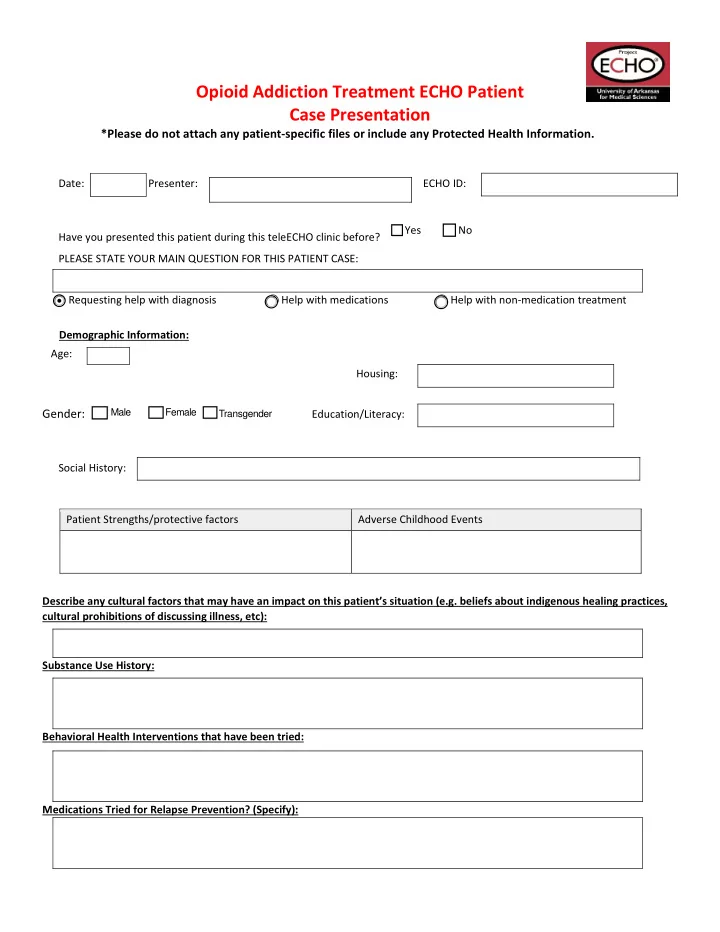
Opioid Addiction Treatment ECHO Patient Case Presentation *Please do not attach any patient specific files or include any Protected Health Information. Date: Presenter: ECHO ID: Yes No Have you presented this patient during this teleECHO


slide-1
SLIDE 1

Opioid Addiction Treatment ECHO Patient Case Presentation

*Please do not attach any patient‐specific files or include any Protected Health Information.

Date: Presenter: ECHO ID: Have you presented this patient during this teleECHO clinic before? Yes No PLEASE STATE YOUR MAIN QUESTION FOR THIS PATIENT CASE:

⃝ Requesting help with diagnosis ⃝ Help with medications ⃝ Help with non‐medication treatment

Demographic Information:

Age:

Housing:

Gender:

Education/Literacy: Social History: Patient Strengths/protective factors Adverse Childhood Events Describe any cultural factors that may have an impact on this patient’s situation (e.g. beliefs about indigenous healing practices, cultural prohibitions of discussing illness, etc): Substance Use History: Behavioral Health Interventions that have been tried: Medications Tried for Relapse Prevention? (Specify):

Male Female Transgender

slide-2
SLIDE 2

Labs (as indicated): Include last urine drug screen result DSM‐5 Criteria Substance use Disorder Diagnostic Criteria (Must meet at least 2 criteria be met within a 12‐month period) Opioids (specific substances) Meets criteria for SUD? List other: (specific substance) Meets criteria for SUD? List other: (specific substance) Meets criteria for SUD?

  • 1. Substances often taken in larger

amounts/over longer period of time than intended.

Yes Yes Yes

  • 2. Persistent desire or unsuccessful efforts to

cut down or control substance use.

Yes Yes Yes

  • 3. A great deal of time spent in obtaining

substance, using substance, or recovering from its effects.

Yes Yes Yes

  • 6. Continued substance use despite

persistent/recurrent social or interpersonal problems caused/exacerbated by the effects

  • f substances.

Yes Yes Yes

  • 7. Important social, occupational or

recreational activities given up/reduced because of substance use.

Yes Yes Yes

  • 8. Recurrent substance use in situations in

which it is physically hazardous

Yes Yes Yes

  • 9. Continued use despite knowledge of

persistent or recurrent physical or psychological problem that is likely to have been caused or exacerbated by substances.

Yes Yes Yes

  • 10. *Tolerance, as defined by either:

A) need for increased amounts of substances to achieve desired effect. b)diminished effect with continued use of same amount of an substance

Yes Yes Yes

  • 11. *Withdrawal, as manifested by:

(a)characteristic substance withdrawal syndrome (b) the same (or a closely related) substance are taken to relieve/avoid withdrawal symptoms

Yes Yes Yes

American Psychiatric Association: Diagnostic and Statistical Manual of Mental Disorders, Fifth Edition. Arlington, VA, American Psychiatric Association,2013.

Current Medications: Medical/Behavioral Health Diagnosis:

slide-3
SLIDE 3

Prescription Monitoring Program Pertinent Findings: Proposed Diagnoses: Patient Goals for Treatment: Proposed Treatment Plan:

By initialing here _______ you have acknowledged that Project ECHO case consultations do not create or otherwise establish a provider‐patient relationship between any ECHO clinician and any patient whose case is being presented in a teleECHO clinic.