on Clinical Trials www.mpatraoneves.pt www.mpatraoneves.pt - - PowerPoint PPT Presentation

on clinical trials
SMART_READER_LITE
LIVE PREVIEW

on Clinical Trials www.mpatraoneves.pt www.mpatraoneves.pt - - PowerPoint PPT Presentation

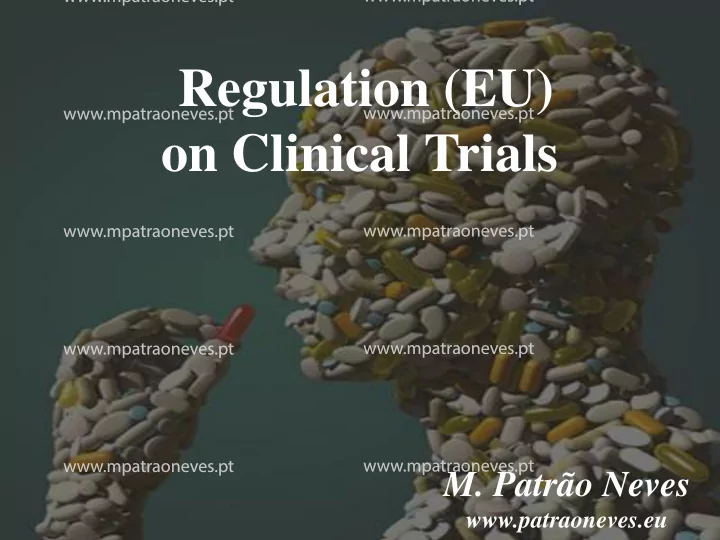
www.mpatraoneves.pt www.mpatraoneves.pt www.mpatraoneves.pt www.mpatraoneves.pt Regulation (EU) www.mpatraoneves.pt www.mpatraoneves.pt www.mpatraoneves.pt www.mpatraoneves.pt on Clinical Trials www.mpatraoneves.pt www.mpatraoneves.pt


slide-1
SLIDE 1
  • M. Patrão Neves

www.patraoneves.eu

Regulation (EU)

  • n Clinical Trials

www.mpatraoneves.pt www.mpatraoneves.pt www.mpatraoneves.pt www.mpatraoneves.pt www.mpatraoneves.pt www.mpatraoneves.pt www.mpatraoneves.pt www.mpatraoneves.pt www.mpatraoneves.pt www.mpatraoneves.pt www.mpatraoneves.pt www.mpatraoneves.pt www.mpatraoneves.pt www.mpatraoneves.pt www.mpatraoneves.pt www.mpatraoneves.pt www.mpatraoneves.pt www.mpatraoneves.pt www.mpatraoneves.pt www.mpatraoneves.pt
slide-2
SLIDE 2

Clinical Trials Regulation: Trilogue Agreement

  • 1. The European Commission first initiatives
  • Drawing a path
  • Steps forward from an ethical perspective
  • 2. The European Commission proposal of a Regulation
  • Pursuing the path
  • Ethical controversies
  • 3. The Clinical Trials Regulation: an ethical perspective
  • Ethics Committees
  • Informed Consent

www.mpatraoneves.pt www.mpatraoneves.pt www.mpatraoneves.pt www.mpatraoneves.pt www.mpatraoneves.pt www.mpatraoneves.pt www.mpatraoneves.pt www.mpatraoneves.pt www.mpatraoneves.pt www.mpatraoneves.pt www.mpatraoneves.pt www.mpatraoneves.pt www.mpatraoneves.pt www.mpatraoneves.pt www.mpatraoneves.pt www.mpatraoneves.pt www.mpatraoneves.pt www.mpatraoneves.pt www.mpatraoneves.pt www.mpatraoneves.pt

slide-3
SLIDE 3
  • 1. The European Commission first initiatives
  • 1965, Council Directive 65/65/EEC of 26 January 1965 on the

approximation of provisions laid down by Law, Regulation or Administrative Action relating to proprietary medicinal products (triggered by the Thalidomide tragedy in the early 1960s).

  • 1975, Council Directive 75/318/EEC of 20 May 1975 on the

approximation of the laws of Member States relating to analytical, pharmaco-toxicological and clinical standards and protocols in respect of the testing of proprietary medicinal products.

  • 2001, Directive 2001/20/CE of the European Parliament and of the

Council of 4 April on the on the approximation of the laws, regulations and administrative provisions of the Member States relating to the implementation of good clinical practice in the conduct of clinical trials on medicinal products for human use.

www.mpatraoneves.pt www.mpatraoneves.pt www.mpatraoneves.pt www.mpatraoneves.pt www.mpatraoneves.pt www.mpatraoneves.pt www.mpatraoneves.pt www.mpatraoneves.pt www.mpatraoneves.pt www.mpatraoneves.pt www.mpatraoneves.pt www.mpatraoneves.pt www.mpatraoneves.pt www.mpatraoneves.pt www.mpatraoneves.pt www.mpatraoneves.pt www.mpatraoneves.pt www.mpatraoneves.pt www.mpatraoneves.pt www.mpatraoneves.pt

slide-4
SLIDE 4
  • 1. The European Commission first initiatives

The three European Directives draw a path that became clearer each step of the way (and in Directive 2001/20/CE):

  • harmonization (R1, approximation of the laws of Member

States relating to analytical, pharmaco-toxicological and clinical standards and protocols in respect of the testing of medicinal products; uniform rules on the compilation of dossiers including their presentation);

  • centralization (R8, a single opinion for each Member State

concerned reduces delay in the commencement of a trial without jeopardising the well-being of the people participating in the trial or excluding the possibility of rejecting it in specific sites).

www.mpatraoneves.pt www.mpatraoneves.pt www.mpatraoneves.pt www.mpatraoneves.pt www.mpatraoneves.pt www.mpatraoneves.pt www.mpatraoneves.pt www.mpatraoneves.pt www.mpatraoneves.pt www.mpatraoneves.pt www.mpatraoneves.pt www.mpatraoneves.pt www.mpatraoneves.pt www.mpatraoneves.pt www.mpatraoneves.pt www.mpatraoneves.pt www.mpatraoneves.pt www.mpatraoneves.pt www.mpatraoneves.pt www.mpatraoneves.pt

slide-5
SLIDE 5
  • 1. The European Commission first initiatives

The three European Directives deepen the ethical concerns (and in Directive 2001/20/CE):

  • reinforce quality, safety and surveillance at the scientific

level, in order to guarantee that the results of the clinical trials are credible;

  • strengthen the protection of rights, safety and well-being of

trial subjects (persons who are incapable of giving legal consent to clinical trials receive special protection);

  • establish ethics committees that, notwithstanding their

number, will produce a single opinion for Member States (in order to achieve an uniform position and increase the speed

  • f the process);
  • introduce the obligation of insurance or indemnity to cover

the liability of the investigator and sponsor.

www.mpatraoneves.pt www.mpatraoneves.pt www.mpatraoneves.pt www.mpatraoneves.pt www.mpatraoneves.pt www.mpatraoneves.pt www.mpatraoneves.pt www.mpatraoneves.pt www.mpatraoneves.pt www.mpatraoneves.pt www.mpatraoneves.pt www.mpatraoneves.pt www.mpatraoneves.pt www.mpatraoneves.pt www.mpatraoneves.pt www.mpatraoneves.pt www.mpatraoneves.pt www.mpatraoneves.pt www.mpatraoneves.pt www.mpatraoneves.pt

slide-6
SLIDE 6
  • 2. The European Commission proposal of a

Regulation The European Regulation proposal pursues the path drawn before, through:

  • harmonization of the legislation in all Member States;
  • simplification of the legal arrangements applicable to

clinical trials;

  • facilitation of procedures so that the Union becomes

more attractive to clinical trials;

  • centralization of procedures and decentralization of

competences.

www.mpatraoneves.pt www.mpatraoneves.pt www.mpatraoneves.pt www.mpatraoneves.pt www.mpatraoneves.pt www.mpatraoneves.pt www.mpatraoneves.pt www.mpatraoneves.pt www.mpatraoneves.pt www.mpatraoneves.pt www.mpatraoneves.pt www.mpatraoneves.pt www.mpatraoneves.pt www.mpatraoneves.pt www.mpatraoneves.pt www.mpatraoneves.pt www.mpatraoneves.pt www.mpatraoneves.pt www.mpatraoneves.pt www.mpatraoneves.pt

slide-7
SLIDE 7
  • 2. The European Commission proposal of a

Regulation The European Regulation proposal raises serious ethical concerns:

  • Ethics Committees which are no longer considered

compulsory neither their advice needed prior to authorization (ethical aspects relate, in particular, to the need to obtain informed consent from the subject or the legal representative);

  • Informed consent, especially the brand new possibility
  • f skipping informed consent in emergency situations.

www.mpatraoneves.pt www.mpatraoneves.pt www.mpatraoneves.pt www.mpatraoneves.pt www.mpatraoneves.pt www.mpatraoneves.pt www.mpatraoneves.pt www.mpatraoneves.pt www.mpatraoneves.pt www.mpatraoneves.pt www.mpatraoneves.pt www.mpatraoneves.pt www.mpatraoneves.pt www.mpatraoneves.pt www.mpatraoneves.pt www.mpatraoneves.pt www.mpatraoneves.pt www.mpatraoneves.pt www.mpatraoneves.pt www.mpatraoneves.pt

slide-8
SLIDE 8
  • 3. The Clinical Trials Regulation: an ethical

perspective The European Commission’s proposal neglected a significant part of the most relevant bioethical reflection of the last past years. On the other hand, the Trilogue Agreement succeeded to introduce the right measures that follow from the wide ethical consensus on the present issue, namely in what concerns:

  • the need for Ethics Committees;
  • and strong requirements for Informed Consent.

www.mpatraoneves.pt www.mpatraoneves.pt www.mpatraoneves.pt www.mpatraoneves.pt www.mpatraoneves.pt www.mpatraoneves.pt www.mpatraoneves.pt www.mpatraoneves.pt www.mpatraoneves.pt www.mpatraoneves.pt www.mpatraoneves.pt www.mpatraoneves.pt www.mpatraoneves.pt www.mpatraoneves.pt www.mpatraoneves.pt www.mpatraoneves.pt www.mpatraoneves.pt www.mpatraoneves.pt www.mpatraoneves.pt www.mpatraoneves.pt

slide-9
SLIDE 9
  • 3. The Clinical Trials Regulation: an ethical

perspective

In what concerns Ethics Committees

  • definition of an ethics committee (A2, 10a);
  • Member States are the only responsible to organise the

involvement of the ethics committees (R14);

  • research projects should be reviewed from the ethical point of

view before being conducted (R25aa);

  • ethical review, from ethics committees, becomes a prior

requirement for a clinical trial authorization (A4);

  • the ethics committee advice is binding (A8, 3a; A14, 9a; A20,

6a; A23, 6a);

  • there are ethical and scientific quality requirements for good

clinical practice (A2, 26).

www.mpatraoneves.pt www.mpatraoneves.pt www.mpatraoneves.pt www.mpatraoneves.pt www.mpatraoneves.pt www.mpatraoneves.pt www.mpatraoneves.pt www.mpatraoneves.pt www.mpatraoneves.pt www.mpatraoneves.pt www.mpatraoneves.pt www.mpatraoneves.pt www.mpatraoneves.pt www.mpatraoneves.pt www.mpatraoneves.pt www.mpatraoneves.pt www.mpatraoneves.pt www.mpatraoneves.pt www.mpatraoneves.pt www.mpatraoneves.pt

slide-10
SLIDE 10
  • 3. The Clinical Trials Regulation: an ethical

perspective

In what concerns Informed Consent

  • Prior to informed consent: information in a prior interview in

a clear language, opportunity to ask questions, and time to consider the decision taken (R24);

  • consideration of specific situations that might affect a free

decision making (R24a);

  • additional requirements in case of minors and incapacitated

subjects, an authorisation or agreement from their legally designated representative to include them in the trial (A2, 19);

  • minimal burden (A28ea);
  • no undue influence including that of a financial nature

(A28ed);

www.mpatraoneves.pt www.mpatraoneves.pt www.mpatraoneves.pt www.mpatraoneves.pt www.mpatraoneves.pt www.mpatraoneves.pt www.mpatraoneves.pt www.mpatraoneves.pt www.mpatraoneves.pt www.mpatraoneves.pt www.mpatraoneves.pt www.mpatraoneves.pt www.mpatraoneves.pt www.mpatraoneves.pt www.mpatraoneves.pt www.mpatraoneves.pt www.mpatraoneves.pt www.mpatraoneves.pt www.mpatraoneves.pt www.mpatraoneves.pt

slide-11
SLIDE 11
  • 3. The Clinical Trials Regulation: an ethical

perspective

In what concerns Informed Consent

  • special attention paid to the information needs of individual

subjects and specific patient populations, as well as to the methods used to give the information (A28, 2b);

  • confirmation that the information was understood (A28, 2c);
  • detailed specification of the duly information (A29,2);
  • involvement of a minor capable of assenting (A29,3b);
  • CT on incapacitated subjects and on minors the direct benefit
  • utweighing the risks and burdens (A30,1h(i); A31,1h);
  • enlargement
  • f

the vulnerable populations explicitly considered, such as pregnant and breastfeeding women (A31a) and others (A31b);

  • additional safeguards to CT in emergency situations (A32).

www.mpatraoneves.pt www.mpatraoneves.pt www.mpatraoneves.pt www.mpatraoneves.pt www.mpatraoneves.pt www.mpatraoneves.pt www.mpatraoneves.pt www.mpatraoneves.pt www.mpatraoneves.pt www.mpatraoneves.pt www.mpatraoneves.pt www.mpatraoneves.pt www.mpatraoneves.pt www.mpatraoneves.pt www.mpatraoneves.pt www.mpatraoneves.pt www.mpatraoneves.pt www.mpatraoneves.pt www.mpatraoneves.pt www.mpatraoneves.pt

slide-12
SLIDE 12

Thanks

www.mpatraoneves.pt www.mpatraoneves.pt www.mpatraoneves.pt www.mpatraoneves.pt www.mpatraoneves.pt www.mpatraoneves.pt www.mpatraoneves.pt www.mpatraoneves.pt www.mpatraoneves.pt www.mpatraoneves.pt www.mpatraoneves.pt www.mpatraoneves.pt www.mpatraoneves.pt www.mpatraoneves.pt www.mpatraoneves.pt www.mpatraoneves.pt www.mpatraoneves.pt www.mpatraoneves.pt www.mpatraoneves.pt www.mpatraoneves.pt