Normal neonatal kitten ___________________________________ - - PDF document

normal neonatal kitten
SMART_READER_LITE
LIVE PREVIEW

Normal neonatal kitten ___________________________________ - - PDF document

Critical Care of the Neonatal Kitten March 13, 2014 ___________________________________ ___________________________________


slide-1
SLIDE 1

Critical Care of the Neonatal Kitten March 13, 2014

Caring for the Neonatal Kitten

Elizabeth Thomovsky, DVM, MS, DACVECC

Purdue University College of Veterinary Medicine March 13, 2014

___________________________________ ___________________________________ ___________________________________ ___________________________________ ___________________________________ ___________________________________ ___________________________________ ___________________________________ ___________________________________

Objectives

  • Brief review of the “normal” neonatal kitten
  • Brief review of common disease in neonates
  • Care for the sick neonate

– Thermoregulation – Fluid support/catheterization – Medication administration – Feeding – Blood transfusion

  • Serial monitoring

___________________________________ ___________________________________ ___________________________________ ___________________________________ ___________________________________ ___________________________________ ___________________________________ ___________________________________ ___________________________________

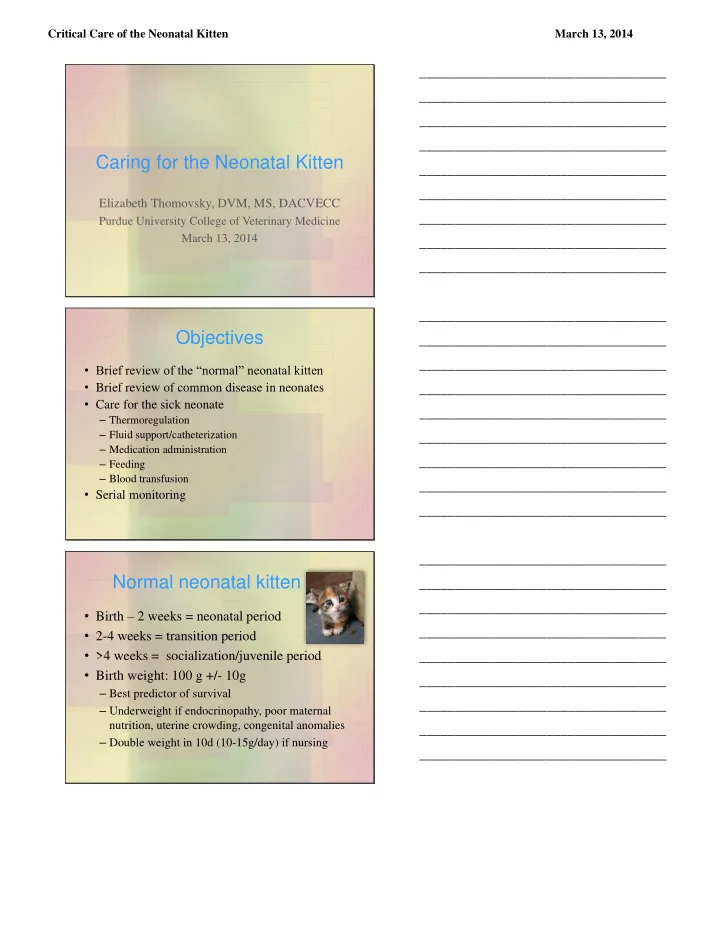
Normal neonatal kitten

  • Birth – 2 weeks = neonatal period
  • 2-4 weeks = transition period
  • >4 weeks = socialization/juvenile period
  • Birth weight: 100 g +/- 10g

– Best predictor of survival – Underweight if endocrinopathy, poor maternal nutrition, uterine crowding, congenital anomalies – Double weight in 10d (10-15g/day) if nursing

___________________________________ ___________________________________ ___________________________________ ___________________________________ ___________________________________ ___________________________________ ___________________________________ ___________________________________ ___________________________________

slide-2
SLIDE 2

Critical Care of the Neonatal Kitten March 13, 2014

___________________________________ ___________________________________ ___________________________________ ___________________________________ ___________________________________ ___________________________________ ___________________________________ ___________________________________ ___________________________________

Normal neonate - thermoregulation

96-98°F week 1 99°F week 2 100.5°F week 3+

  • Unable to shiver
  • Impaired peripheral vasoconstriction
  • Large body surface non-cornified skin
  • Lack insulating fat
  • Maintain 12°F greater than environment

___________________________________ ___________________________________ ___________________________________ ___________________________________ ___________________________________ ___________________________________ ___________________________________ ___________________________________ ___________________________________

Normal neonate - fluid balance

  • 75% water with large body surface area non-

cornified skin

  • Nephrogenesis first 3 weeks life

– Unable to concentrate urine – Highly susceptible to dehydration – Water turnover 2-3x of an adult – High normal BUN × 7d – spG 1.006-1.017 – Mild glucosuria/proteinuria × 6 weeks

To the bathroom again!

___________________________________ ___________________________________ ___________________________________ ___________________________________ ___________________________________ ___________________________________ ___________________________________ ___________________________________ ___________________________________

slide-3
SLIDE 3

Critical Care of the Neonatal Kitten March 13, 2014

Normal neonate - development

  • Decreased cytochrome P450 enzymes (liver) first 4

weeks

– Abnormal bile acids – ALP elevation – Normal ALT

  • GI tract sterile at birth

– Colonized by bacterium from mother (E. coli, Proteus, Enterococcus, Lactobacillus, Clostridium, Bacterioides) – Stool yellowish-tan, soft

  • Maternal immunity from colostrum within first 24

hours

___________________________________ ___________________________________ ___________________________________ ___________________________________ ___________________________________ ___________________________________ ___________________________________ ___________________________________ ___________________________________

Normal neonate - vitals

  • Umbilicus fallen off by 3d post-birth
  • RR= 30 by 3 hrs post-birth
  • Mucous membranes

– Dark pink/red for one week – Later pale pink (along with extremities)

  • Heart rate/cardiac output/central venous pressure

higher than adults

– HR>250 bpm until at least 4 weeks age (No PNS tone) – No sinus arrhythmias – Heart murmurs innocent until 12 weeks age

  • Blood pressure/stroke volume lower than adults

___________________________________ ___________________________________ ___________________________________ ___________________________________ ___________________________________ ___________________________________ ___________________________________ ___________________________________ ___________________________________

Normal neonate - diagnostics

  • Blood sampling

– Jugular venipuncture (hemolysis) – No alcohol (cooling) – 100 gm kitten blood volume= 6mL! – Hematoma formation

  • Significant loss blood
  • Obstruction airway

– Less than 10% blood volume/24 hrs

  • 68-75ml/kg= blood volume

www.floppycat.com

___________________________________ ___________________________________ ___________________________________ ___________________________________ ___________________________________ ___________________________________ ___________________________________ ___________________________________ ___________________________________

slide-4
SLIDE 4

Critical Care of the Neonatal Kitten March 13, 2014

Normal neonate - diagnostics

  • CBC

– High red cell mass (MCV) and PCV (42%) at birth – PCV decrease to 24% by 8 wks (dilution by increased ECF)

  • Serum chemistry

– BUN high × 7d  then normal – Creatinine lower than adults – ALP elevated, ALT normal range – Phosphorus elevated – Normal electrolytes

  • Urinalysis

– Low spG × 3 weeks – Proteinuria × 6 weeks – Glucosuria × 6 weeks

___________________________________ ___________________________________ ___________________________________ ___________________________________ ___________________________________ ___________________________________ ___________________________________ ___________________________________ ___________________________________

Normal neonate - diagnostics

  • Radiographs hard to interpret

– Size patient – Lack abdominal fat – Poor mineralization bones – Reduce KVP by 50% and detailed film/screens

  • ECG

– Lead II diagnose arrhythmias

___________________________________ ___________________________________ ___________________________________ ___________________________________ ___________________________________ ___________________________________ ___________________________________ ___________________________________ ___________________________________

Common illness of neonatal kitten

  • Parasitism

– Fecal-oral parasites (environment) – Transplacental transmission – Cause

  • Dehydration
  • Anemia
  • Diarrhea
  • Impaction
  • Neurologic disease (aberrant migration)

www.vcahospitals.com

___________________________________ ___________________________________ ___________________________________ ___________________________________ ___________________________________ ___________________________________ ___________________________________ ___________________________________ ___________________________________

slide-5
SLIDE 5

Critical Care of the Neonatal Kitten March 13, 2014

Common illness

  • Septicemia

– Bacteria enter from GI tract, respiratory tract, urinary tract, skin, umbilical cord – Predisposed by:

  • Inadequate colostrum
  • Hypothermia
  • Hypoglycemia
  • Poor nutrition
  • Viral infection
  • Endoparasitism
  • Mastitis/metritus in dam

www.tabbysplace.org

___________________________________ ___________________________________ ___________________________________ ___________________________________ ___________________________________ ___________________________________ ___________________________________ ___________________________________ ___________________________________

Common illness

  • Clinical signs septicemia

– Prolonged crying – Restlessness – Weakness – Cyanosis or mucous membrane hyperemia – Discoloration/sloughing extremities

www.pet-informed-veterinary-advice-online.com

___________________________________ ___________________________________ ___________________________________ ___________________________________ ___________________________________ ___________________________________ ___________________________________ ___________________________________ ___________________________________

Common illness

  • Fading kitten syndrome

– Fail to gain weight, weak, die – No apparent reason – Look for underlying infection, congenital abnormalities, etc.

___________________________________ ___________________________________ ___________________________________ ___________________________________ ___________________________________ ___________________________________ ___________________________________ ___________________________________ ___________________________________

slide-6
SLIDE 6

Critical Care of the Neonatal Kitten March 13, 2014

Common illness

  • Neonatal isoerythrolysis

– Type B dam with type A tomcat

  • Type A or AB kittens at risk (maternal anti-A antibodies)

– Hemolysis from maternal antibodies – Anemia, icterus, nephropathy (secondary to pigmenturia), DIC – First signs hours to days after initial nursing

www.dr-addie.com

___________________________________ ___________________________________ ___________________________________ ___________________________________ ___________________________________ ___________________________________ ___________________________________ ___________________________________ ___________________________________

Common illness

  • Hypoglycemia

– Inadequate nursing – Infrequent feeding

  • Hypothermia

– Lack of fat and thermoregulation – Temperature <93°F likely to die

  • Dehydration

– Diarrhea – Anorexia – Inadequate food intake

http://cat-chitchat.pictures-of-cats.org

___________________________________ ___________________________________ ___________________________________ ___________________________________ ___________________________________ ___________________________________ ___________________________________ ___________________________________ ___________________________________

Treatments for the neonate

  • 1. Thermoregulation
  • 2. Fluid support
  • 3. Glucose supplementation
  • 4. Antibiotics
  • 5. Feeding
  • 6. Blood products

___________________________________ ___________________________________ ___________________________________ ___________________________________ ___________________________________ ___________________________________ ___________________________________ ___________________________________ ___________________________________

slide-7
SLIDE 7

Critical Care of the Neonatal Kitten March 13, 2014

Thermoregulation

  • Hypothermia can be deadly

– Below 94° F: weak suckling, hypomotile intestines, tachycardia – Below 85° F: GI stasis, chance bacterial translocation, decrease in heart rate, hypoglycemia – Below 70° F: motionless and appears dead, bradycardic, no pulse

___________________________________ ___________________________________ ___________________________________ ___________________________________ ___________________________________ ___________________________________ ___________________________________ ___________________________________ ___________________________________

Thermoregulation

  • Rewarm slowly

– Over 1-4 hrs (to 98-99°F) – Too quickly  increase metabolism and oxygen demand  excess water loss  hypovolemia and shock

  • Increase body temperature

– Heating blankets, hot water bottles, etc

  • Allow for neonate to move away from heat
  • Rotate every 10-20 minutes

– Increase room temperature/remove drafts – Warmed fluids (95-98°F) IV or IO

___________________________________ ___________________________________ ___________________________________ ___________________________________ ___________________________________ ___________________________________ ___________________________________ ___________________________________ ___________________________________

Fluid support - crystalloids

Isotonic crystalloids (plasmalyte, LRS, or 0.9% saline)

  • Give for resuscitation OR for dehydration
  • Hypotension/hypovolemia

– Bolus in 10 mL/kg aliquots  reassess after each bolus – Fluids warmed prior to administration – Up to a total of 60ml/kg (1 blood volume)

___________________________________ ___________________________________ ___________________________________ ___________________________________ ___________________________________ ___________________________________ ___________________________________ ___________________________________ ___________________________________

slide-8
SLIDE 8

Critical Care of the Neonatal Kitten March 13, 2014

Fluid support - crystalloids

  • If dehydrated, replace dehydration AND

provide for daily maintenance fluid

– Dehydration

  • Estimate percent dehydration × body weight (kg) =

deficit (L)

– Maintenance fluids

  • 70(wt in kg)0.75 + 20ml/kg/day = daily fluid requirement
  • Estimate 60-100mL/lb/day

___________________________________ ___________________________________ ___________________________________ ___________________________________ ___________________________________ ___________________________________ ___________________________________ ___________________________________ ___________________________________

Isotonic crystalloids

75% Fluid after 20-30 minutes

IV ISF

___________________________________ ___________________________________ ___________________________________ ___________________________________ ___________________________________ ___________________________________ ___________________________________ ___________________________________ ___________________________________

Fluid support crystalloids

Example calculation 100g kitten 7% dehydrated: 100g= 0.1kg (1kg= 1000g)

Dehydration: 0.07 × (0.1) = 0.007 L = 7 mL Maintenance:

70(0.1)0.75 = 70 × (0.18) = 12.4 mL/day 20 ml/kg/day = 20(0.1)= 2 ml/day

14.4 ml/day or 0.6ml/hr

___________________________________ ___________________________________ ___________________________________ ___________________________________ ___________________________________ ___________________________________ ___________________________________ ___________________________________ ___________________________________

slide-9
SLIDE 9

Critical Care of the Neonatal Kitten March 13, 2014

Fluid support - colloids

  • No data for neonates (or cats in general)
  • Used for hypovolemia or hypotension

– Non-responsive to crystalloids – “hold” fluid in the vascular space

  • Hetastarch

– 20 ml/kg/day – Bolus 5 ml/kg at a time  up to total 20ml/kg

  • VetStarch

– 20 ml/kg/day – Labeled for small animals (no data for kittens)

___________________________________ ___________________________________ ___________________________________ ___________________________________ ___________________________________ ___________________________________ ___________________________________ ___________________________________ ___________________________________

Colloids

IV ISF

Na Colloid Fluid STAYS

___________________________________ ___________________________________ ___________________________________ ___________________________________ ___________________________________ ___________________________________ ___________________________________ ___________________________________ ___________________________________

Fluid support - routes

  • Oral (less critical)

– NOT if hypothermic – Must tube to give oral fluids

  • Subcutaneous fluids (less critical)

– Warmed fluids – 1ml/30g

  • IV

– Place any size catheter (24g or smaller) – Any vein is adequate – Difficult in tiny animals – Don’t forget about using regular catheters as a jugular catheter!!!

www.beverlyoaksvet.com www.marsitavet.com

___________________________________ ___________________________________ ___________________________________ ___________________________________ ___________________________________ ___________________________________ ___________________________________ ___________________________________ ___________________________________

slide-10
SLIDE 10

Critical Care of the Neonatal Kitten March 13, 2014

www.vetnext.com

www.virtuavet.files.wordpress.com

___________________________________ ___________________________________ ___________________________________ ___________________________________ ___________________________________ ___________________________________ ___________________________________ ___________________________________ ___________________________________

Fluid support - routes

  • Intraosseous catheter

http://www.tc.umn.edu Ramblingsfromacrazycatlady.blog

___________________________________ ___________________________________ ___________________________________ ___________________________________ ___________________________________ ___________________________________ ___________________________________ ___________________________________ ___________________________________

Advantages of IO catheter

  • Can place in ANY sized kitten
  • Use hypodermic needles (22 or 25 ga.)
  • Administer

– Fluids – Blood products – Dextrose (diluted to at least 12.5%) – Antibiotics

___________________________________ ___________________________________ ___________________________________ ___________________________________ ___________________________________ ___________________________________ ___________________________________ ___________________________________ ___________________________________

slide-11
SLIDE 11

Critical Care of the Neonatal Kitten March 13, 2014

Dextrose administration

  • Give PO, IV or IO (not SQ!!)
  • Orally

– Via syringe – Via feeding tube – 0.25-0.5mL/100g of 5-10% solution dextrose

  • IV or IO

– Dilute to 12.5% solution (1:4 solution of 50% dextrose) – 0.1-0.2 ml/100g of 12.5% solution

___________________________________ ___________________________________ ___________________________________ ___________________________________ ___________________________________ ___________________________________ ___________________________________ ___________________________________ ___________________________________

Antibiotics

  • Often for upper respiratory disease, neonatal

septicemia

  • Not for diarrhea (disrupt flora  worse diarrhea)
  • Prefer parenteral administration if possible
  • Penicillins, cephalosporins
  • Avoid:

– Aminoglycosides -- renal damage and ototoxicity – Tetracyclines – enamel hypoplasia – Chloramphenicol – bone marrow suppression – Fluoroquinolones -- damage to growing cartilage (moreso pregnant dams)

___________________________________ ___________________________________ ___________________________________ ___________________________________ ___________________________________ ___________________________________ ___________________________________ ___________________________________ ___________________________________

Antibiotics

  • Dosing:

– Use 30-50% of adult dosage

  • Increased absorption (low serum albumin)
  • Altered drug re-distribution (water, fat percentages)

– Few to no drugs evaluated for neonates – Limited to liquid formulations

www.safefetus.com www.ppcdrugs.com

___________________________________ ___________________________________ ___________________________________ ___________________________________ ___________________________________ ___________________________________ ___________________________________ ___________________________________ ___________________________________

slide-12
SLIDE 12

Critical Care of the Neonatal Kitten March 13, 2014

Feeding

  • Oral only if normothermic, suckling

– Bottle feeding with commercial milk replacer – Use at manufacturer’s suggested proportions

www.raising-happy-kittens.com

http://www.maddiesfund.org/Maddies_Institute/ Videos/Orphaned_Kitten_Care_How_to.html

___________________________________ ___________________________________ ___________________________________ ___________________________________ ___________________________________ ___________________________________ ___________________________________ ___________________________________ ___________________________________

Feeding

  • Tube feeding

– Risk of over-feeding – Oro-gastric – Nasogastric

___________________________________ ___________________________________ ___________________________________ ___________________________________ ___________________________________ ___________________________________ ___________________________________ ___________________________________ ___________________________________

Orogastric tube

  • 5 Fr red rubber tube
  • Measure from rostral aspect mouth to last rib
  • Flex head forward and advance tube along roof of

mouth

– Small amount water to test tube placement – Often meow while feeding – No coughing while feeding

  • Kink tube when remove (aspiration)
  • Stomach capacity 4-5mL/100g

Lowchensaustralia.com

___________________________________ ___________________________________ ___________________________________ ___________________________________ ___________________________________ ___________________________________ ___________________________________ ___________________________________ ___________________________________

slide-13
SLIDE 13

Critical Care of the Neonatal Kitten March 13, 2014

Little 2012

___________________________________ ___________________________________ ___________________________________ ___________________________________ ___________________________________ ___________________________________ ___________________________________ ___________________________________ ___________________________________

Nasogastric tube

  • More permanent feeding tube
  • Continuous feeding
  • No risk aspiration
  • 3.5 Fr red rubber tube must fit into kitten’s

nose ___________________________________ ___________________________________ ___________________________________ ___________________________________ ___________________________________ ___________________________________ ___________________________________ ___________________________________ ___________________________________

Nasogastric tube

  • Placement

– Measure tip of nose to last rib – mark tube – Lidocaine into nostril – Feed tube through nostril to mark on tube

  • Initially tip nose downward
  • Raise head once tube into oropharynx

– Suture into place

  • Radiograph to test placement

___________________________________ ___________________________________ ___________________________________ ___________________________________ ___________________________________ ___________________________________ ___________________________________ ___________________________________ ___________________________________

slide-14
SLIDE 14

Critical Care of the Neonatal Kitten March 13, 2014

How much to feed?

  • Caloric requirements vary

– 1-3 days old: 15 kcal ME/100 g body weight at 1–3 days old – > 6d age: 20–25 kcal ME/100 g body weight

  • Water 13–22 ml/100 g wt per day
  • In general feed

– 10-15% of body weight as milk replacer day 0-7 – 20-25% of body weight as milk replacer day 7-28 – Less volume/day

  • Monitor body weight
  • Gain 10-15 g/day

– Divide into feedings every 2-4 hours or feed continuously through NG tube – Stomach 4-5ml/100g capacity

___________________________________ ___________________________________ ___________________________________ ___________________________________ ___________________________________ ___________________________________ ___________________________________ ___________________________________ ___________________________________

Anemia

  • Neonatal isoerythrolysis

– Remove kitten from dam ASAP (<24 hrs) – Watch for developing anemia

  • Parasitism (hookworms, fleas, etc)
  • Blood transfusion

– Weakness, tachycardia, PCV<15% – (Desired PCV- current PCV) Donor PCV × 100 × Wt (kg)

www.drawception.com

___________________________________ ___________________________________ ___________________________________ ___________________________________ ___________________________________ ___________________________________ ___________________________________ ___________________________________ ___________________________________

Anemia

  • Blood type kitten if >3d old (3 drops blood)
  • Neonatal isoerythrolysis

– First 3d life: use blood from dam – After 3d: use kitten type blood

  • Give transfusion over 1-4 hours

– Monitor kitten for transfusion reaction – Give IV, IO

___________________________________ ___________________________________ ___________________________________ ___________________________________ ___________________________________ ___________________________________ ___________________________________ ___________________________________ ___________________________________

slide-15
SLIDE 15

Critical Care of the Neonatal Kitten March 13, 2014

Failure passive transfer

  • Should receive colostrum within 18 hrs birth
  • Problem in orphaned kittens
  • Kittens at risk for infection until >4 wks old

www.cattipper.com

___________________________________ ___________________________________ ___________________________________ ___________________________________ ___________________________________ ___________________________________ ___________________________________ ___________________________________ ___________________________________

Failure passive transfer

  • Give serum SQ from adult with compatible blood type

– 15 mL/100g weight serum – Give SQ – Divide total into three injections (q 8 hrs)

http://212.227.241.121/imupro- international/media/ENG_090511/03_Blood.jpg

___________________________________ ___________________________________ ___________________________________ ___________________________________ ___________________________________ ___________________________________ ___________________________________ ___________________________________ ___________________________________

Monitoring

  • PCV can be positively affected by treatments

(deworming, transfusion)

– Recheck PCV 2-4 hours after transfusion – No more often than q24 hrs

  • Dehydration

– Physical exam limited useful-ness – SpG <1.017

___________________________________ ___________________________________ ___________________________________ ___________________________________ ___________________________________ ___________________________________ ___________________________________ ___________________________________ ___________________________________

slide-16
SLIDE 16

Critical Care of the Neonatal Kitten March 13, 2014

Monitoring

  • Serial body weights critical!

– Measure every 12 hours – 10-15g/day expected weight gain

  • Stool color/consistency

– Normal= pasty yellow/tan – Overfeeding= green/yellow/watery – White stools= liver disease, enzyme deficiency – Bloody stool= coccidia, sepsis

  • Exhibit normal behavior

Yourownvets.com

___________________________________ ___________________________________ ___________________________________ ___________________________________ ___________________________________ ___________________________________ ___________________________________ ___________________________________ ___________________________________ ___________________________________ ___________________________________ ___________________________________ ___________________________________ ___________________________________ ___________________________________ ___________________________________ ___________________________________ ___________________________________

For Animal Care Staff and Volunteers: After viewing the presentation, take the quiz and receive a Certificate of Attendance! Click Here Continue your education with our Caring for Orphaned Kittens Learning Track. We've got videos, webcasts and more for your team to dig into, along with quizzes to make sure the information sticks. We'll even award a Maddie's Institute Certificate of Attendance upon completion of a quiz! Click Here