
SLIDE 1
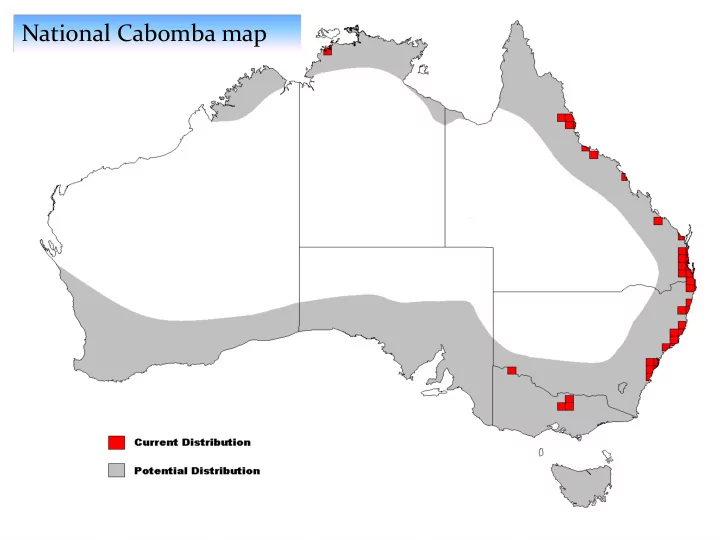
National Cabomba map
National Cabomba map Draw down in Miriam vale... Mildura Victoria- - - PowerPoint PPT Presentation
National Cabomba map Draw down in Miriam vale... Mildura Victoria- Cabomba Mildura during drawdown-6 x months after re-filling still no cabomba Lake Benalla - Victoria Lake Benalla pre drawdown After draw down Earth works to minimize
National Cabomba map
Draw down in Miriam vale...
Mildura Victoria- Cabomba
Mildura during drawdown-6 x months after re-filling still no cabomba
Lake Benalla - Victoria
Lake Benalla pre drawdown
After draw down
Earth works to minimize ‘puddles’
Lake Benalla, benthic blanket during draw down
Lake Benalla after re-filling...
DPI Vic photos
11
Questions What is the regeneration potential of
Does this vary with exposure status and weed
12
13
14
15
16
17
Results
50 100 150 200 250 300
ED ESWF ESWM
crowns sprouted stems sprouted
ED Exposed dry ESWF Exposed saturated weed free ESWM Exposed saturated Weed mound
18
After 70 days of exposure:
19
Conclusion
Lower light due to the high water and turbidity.
Less carbohydrate reserves at the end of the 2010 drawdown because of the recovery required after the 2009 drawdown.
Dislodgement of damaged cabomba
Deposition of sediment on top of the cabomba
1.
Winter drawdown works for control, under certain circumstances:
a.
Repeated drawdowns
b.
Poor growth conditions after refilling
c.
Likely to hold for herbicide application too
2.
Active monitoring program (abundance and viability), allows us to plan next steps (adaptive management)
1.
Change from control / protection of downstream to eradication
2.
Understand recolonisation
3.
Develop site specific control programs