
SLIDE 1
My project pitch:
By Sophie W
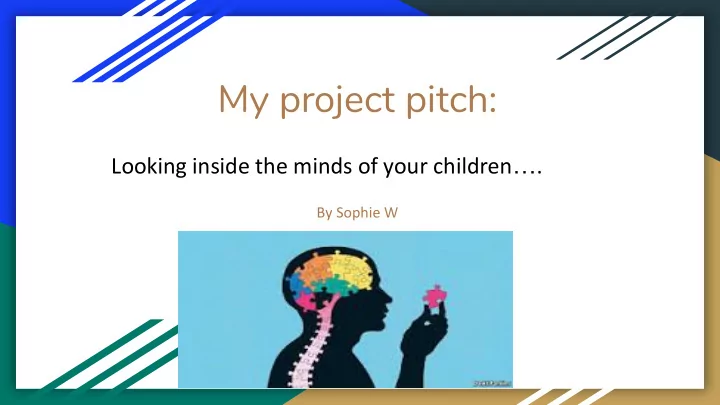
My project pitch: Looking inside the minds of your children . By - - PowerPoint PPT Presentation
My project pitch: Looking inside the minds of your children . By Sophie W Elevator speech: For my capstone project for the humanities class, I wanted to introduce a subject that was not necessarily something people think of everyday, but is
By Sophie W
For my capstone project for the humanities class, I wanted to introduce a subject that was not necessarily something people think of everyday, but is much needed in society today, especially in schools and other areas of work that include teaching. I want to introduce more options and mechanisms of coping with learning disorders such as ADHD, Depression, ADD, etc. other than prescription drugs to deal with their struggles. It would overall increase their mental health, reduce the risk of life threatening or dangerous behaviour, and be a better way to bond with your child. For my final plan of action I want to be able to put ads and posters out to be able to connect with local therapists privately without any charge for people that need it.
and extracurricular activities?
ADHD or depression or any other mental health issues?
need stimulants?
Many children and young adults are diagnosed at an early age with ADHD, ADD, and depression.
Over the past 40 years there has been a steady increase in prescriptions for stimulant medication.
In modern times , now that we have methods of therapy and directions to the source of a child's behaviour , medication may not be needed at all.
When should people start asking questions if they’re worried about their child's behaviour? What’s a normal child behaviour and how do we define it?
Think if medication is the best first thing to
therapy done. What are some bad signs to look for if your child has started to take stimulants and other medications. Stimulant medications are not the only source
behaviour and work habits.
experiences as well with medication and how it affects them now.
propose the question in public places to educate people by telling them
drugs.
The gravity of children's health, education, and safety is one of the most important things adults, parents, and teachers should worry about in most
prescription drugs used for children with ADHD, ADD, depression, and many other
doctors relations with them and schools. My goal is to let parents and adults know that medication is not always the best choice for your children because of their long term
behave and it doesn’t put children in a healthy state of mind.
into account for.
psychological way and
disorders because they know more about to help those kind of students reach the best
people are over diagnosed with these disorders in the U.S., i’m planning on talking with Dr. Sabbagh a past local pediatrician and some local therapists to ask about there experiences in their findings of their work with people that have, or don’t have these disorders.
experiences as well with medication and how it affects them now.