
SLIDE 1
Multi-Threaded Servers
December 6, 2007
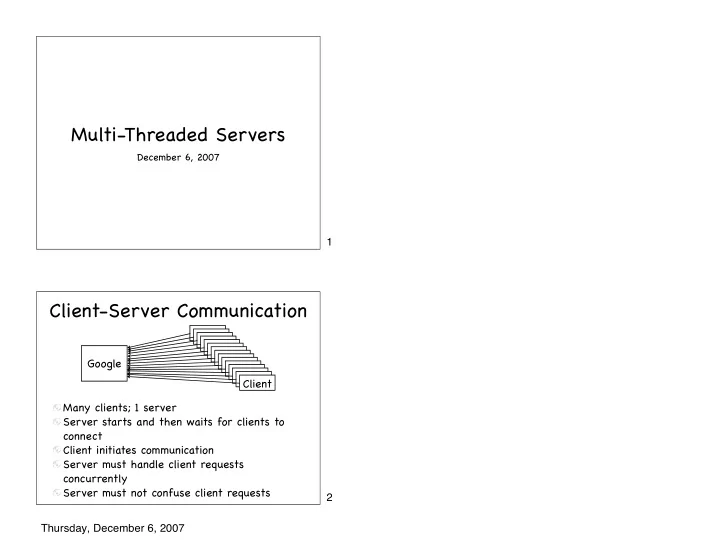
Multi-Threaded Servers December 6, 2007 1 Client-Server - - PowerPoint PPT Presentation
Multi-Threaded Servers December 6, 2007 1 Client-Server Communication Client Client Client Client Client Client Client Client Client Google Client Client Client Client Client Client Many clients; 1 server Server starts and then
December 6, 2007
2.Listen on a port by constructing a “server socket” ServerSocket ss = new ServerSocket (port) 3.Wait for a client to connect Socket s = ss.accept(); 4.Read from the socket to get the client’ s request 5.Write to the socket to respond
computer and port Socket s = new Socket (“www.google.com”, 80); 2.Write the request to the socket 3.Read the response
A socket has an input stream (to read from) and an
InputStream inStream = socket.getInputStream(); To get a more convenient and more efficient way to read regular text: BufferedReader reader = new BufferedReader( new InputStreamReader(inStream)); To read a line of text: String line = reader.readLine();
Get the output stream (of the same socket) OutputStream outStream = socket.getOutputStream(); To get a more convenient and more efficient way to write regular text: PrintStream writer = new PrintStream(outStream); To write a line of text: writer.println(line);
Start a new thread to handle each request that comes in
while (true) { Socket s = ss.accept(); Worker ws = new Worker(root, workerNumber); ws.setSocket(s); (new Thread(ws, "worker " + workerNumber)).start(); workerNumber++; }
public void run() { System.out.println("Starting worker " + id); try { handleClient(); } catch (IOException e) { e.printStackTrace(); } System.out.println("Done worker " + id);
/ Release the socket s = null; }
Apache a popular, open source Web server handles HTTP requests Responds directly to normal file/directory requests Tomcat Interfaces between Apache and servlets Manages a pool of threads that servlets run in Java Servlet Java program accessible via the Web Runs on the server
Better response to requests: No need to create Worker object If keep Worker thread running, no need to start and stop threads Too many worker threads can rapidly degrade performance due to thrashing