Ministry for the Environment report (2016): adaptive management in - - PowerPoint PPT Presentation

ministry for the environment report 2016 adaptive
SMART_READER_LITE
LIVE PREVIEW

Ministry for the Environment report (2016): adaptive management in - - PowerPoint PPT Presentation

Ministry for the Environment report (2016): adaptive management in relation to seabed mining: it is clear that adaptive management cannot compensate for a lack of baseline environmental data or inadequate modelling. In the words of the King


slide-1
SLIDE 1
slide-2
SLIDE 2

Ministry for the Environment report (2016): adaptive management in relation to seabed mining: ‘it is clear that adaptive management cannot compensate for a lack of baseline environmental data or inadequate modelling. In the words of the King Salmon Board of Inquiry, some information gaps cannot “be simply filled by invoking adaptive management”.’

slide-3
SLIDE 3
  • Have TTRL used the best available information?
  • Is the baseline data adequate for designing a fit-for-

purpose adaptive management plan?

  • Will the adaptive management and monitoring proposed

adequately protect the environment?

  • Primary productivity
  • Reefs
  • Marine mammals
  • Sea birds

Questions

slide-4
SLIDE 4

Primary Production

  • Large reduction in light: 10-40% over 704 km2 mining @ Site A
  • Only provided averages of PP over Sediment Model Domain
  • No modelling to assess PP downstream of mined area
  • No measurements of primary productivity i.e. growth or

photosynthetic rate at all

  • Monitor biomass using chlorophyll a: Photoadaptation?
  • Not adequate to assess

knock-on effects within foodweb

  • Raises serious concerns

about impacts within the wider ecosystem

slide-5
SLIDE 5

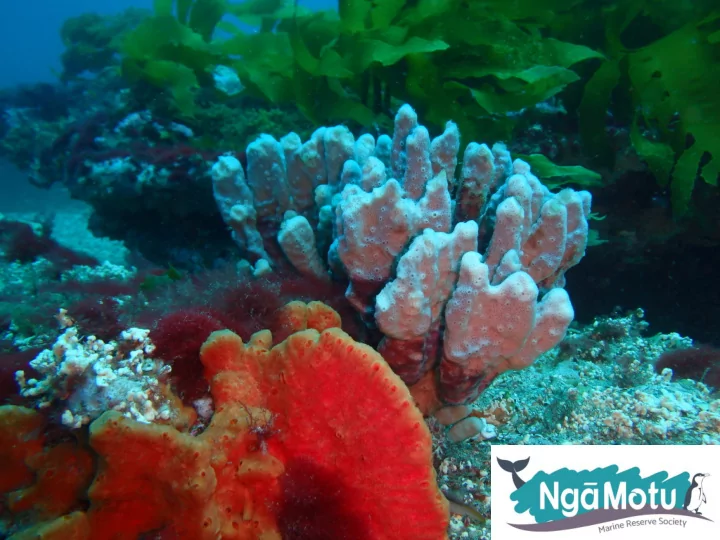
Reefs

  • Limited benthic sampling within the area of the plume
  • Large sections within area of plume: not been surveyed
slide-6
SLIDE 6

Reefs – multibeam surveys

slide-7
SLIDE 7

Reefs

slide-8
SLIDE 8

Reefs

  • DOC GIS package indicates many reefs within influence of

plume:

slide-9
SLIDE 9

Reefs

  • South Taranaki Underwater Club, Karen Pratt & local fishermen

have reported many reefs within influence of plume

  • High biodiversity values: CoastBlitz Patea (on NatureWatch NZ)
slide-10
SLIDE 10

Reefs

  • Project Reef (South Taranaki Underwater Club )
slide-11
SLIDE 11

Reefs

  • Project Reef (South Taranaki Underwater Club )
slide-12
SLIDE 12

Reefs

  • Project Reef (South Taranaki Underwater Club )
slide-13
SLIDE 13

Reefs

  • Project Reef (South Taranaki Underwater Club )
slide-14
SLIDE 14

Reefs

  • The Crack (South Taranaki Underwater Club )
slide-15
SLIDE 15

Reefs

  • Inadequate baseline information on rocky reefs in application
  • Large areas of plume not yet surveyed e.g. Graham Bank
  • Missed the Crack (4 nautical mile long, close to mining area)
  • Adequate baseline data is required at the application stage for

designing a fit-for-purpose adaptive management plan

slide-16
SLIDE 16

Marine Mammals

  • Multiple witnesses demonstrate: TTRL not used best available

info in application e.g. Torres, Slooten, val Helden

  • Orca data in TTRL application inadequate: 6 sightings 25 years
  • Project Hotspot: 84 orca sightings 1 year, 29 different days
slide-17
SLIDE 17

Marine Mammals

  • TTRL Habitat Model: Taranaki poor

to moderate habitat for orca

  • Project Hotspot sightings and
  • bservations: Taranaki good

habitat for orca

  • Often observed actively feeding on

rays (50% of sightings ‘feeding’)

slide-18
SLIDE 18

Urenui Beach feeding on rays 30 Oct 2016

slide-19
SLIDE 19

Marine Mammals

  • Inadequate baseline information on marine mammals in

application

  • Adequate baseline data is required at the application stage

for designing a fit-for-purpose adaptive management plan

slide-20
SLIDE 20

Seabirds

  • TTRL not used best available info in application (see NMMRS

submission & Cockrem evidence)

  • TTRL used eBird: No sightings of little blue penguins in Taranaki
  • Compare with NatureWatch NZ: 236 Taranaki little blue

penguin sightings

slide-21
SLIDE 21
  • Evidence: Waters off South Taranaki are important feeding

ground for little blue penguins:

  • Observations from fishermen
  • Tracking penguins from Motuara Island, Marlborough

Sounds (Poupart et al., accepted by NZ J. Ecology)

slide-22
SLIDE 22
  • GPS trackers
  • Motuara Island
  • Spring 2015
  • Incubating eggs
  • 11 of 14 penguins

tracked: swam to South Taranaki

  • Must be a reason

for this

Poupart T, Waugh S, Bost C, Bost C-A, Dennis T, Lane R, Rodgers K, Sugishita J, Taylor GA, Wilson J, Zhang J, Arnould JPY. Variability in the foraging range of Eudyptula minor across breeding sites in central New Zealand. New Zealand Journal of Zoology

slide-23
SLIDE 23

Seabirds

  • Two genotypes of little blue penguins (see submission)
  • Only handful of large populations (>200) of NZ genotype
  • Sediment plume: increased water turbidity and disruption to

food web: affect penguin foraging efficiency

  • Sand mining: put further stress on struggling penguin colony at

Motuara Island, low breeding success

  • Potential impacts at taxon level
slide-24
SLIDE 24

Seabirds

  • Inadequate baseline information on seabirds in application
  • Available data indicates: shelf waters of South Taranaki

important feeding ground for ‘at risk’ little blue penguin

  • Potential for impacts at the taxon level (NZ genotype)
  • New Zealand Coastal Policy Statement: avoid adverse effects
  • Decision Making Committee must favour caution and

environmental protection and decline this application

slide-25
SLIDE 25
  • Have TTRL used the best available information? NO
  • Is the baseline data adequate for designing a fit for

purpose adaptive management plan? NO

  • Will the adaptive management and monitoring proposed

adequately protect? NO

Questions

slide-26
SLIDE 26

“It is not clear how long-term ecological impacts from the mining will be separated and identified from natural variability in order to trigger a management response prior to tipping points being reached and unacceptable impacts occurring”

NMMRS Submission

slide-27
SLIDE 27
  • Can TTRL correctly interpret the data and respond in
  • rder to prevent long-term unacceptable impact from
  • ccurring?

Additional question

slide-28
SLIDE 28

“I have seen areas completely covered by more than 1 m of sand and then within a year of the sand retreating, the reef was healthy again with high species diversity and high abundances

  • f both intertidal seaweeds and animals. I took a photograph of

a section of reef at the end of Greenwood Road, Taranaki which is a control site for the TRC in September 2003 and when I returned to the reef in January 2014 the sand had receded and the marine life was recovering which was supported by the monitoring results. Ongoing ecological monitoring by the TRC also concurs with this observation of sand inundation and recession along the Taranaki intertidal coastline.”

Govier Evidence (para 182)

slide-29
SLIDE 29

https://www.trc.govt.nz/assets/Documents/Environment/Monitoring- SOE/Coast/RockyShore2008-2015.pdf

TRC Rocky Shore Report

slide-30
SLIDE 30
  • Trend analysis shows a significant decrease in diversity at

Greenwood Rd Reef over 21 years, p20

  • The sand adjusted trend indicates that this decrease in diversity

was related to an increase in sand accumulation

TRC Rocky Shore Report

slide-31
SLIDE 31

TRC Rocky Shore Report

  • TRC report concludes:
  • Greenwood Rd is prone to periodic sand inundation
  • Trend analysis indicates that there has been a significant

decrease in species richness and diversity at this site which appears to have been caused by an increased sand supply from the mountain, combined with oceanographic conditions that shift this sand onshore

  • In his evidence, Govier fails to recognise that ongoing periodic

sand inundation has resulted in a significant long-term decrease in species diversity at Greenwood Rd Reef

  • This example relates to naturally occurring events inshore
  • Is the TTRL monitoring plan and adaptive management sufficient

to avoid similar misinterpretation re the offshore reefs?

slide-32
SLIDE 32
  • Have TTRL used the best available information? NO
  • Is the baseline data adequate for designing a fit for

purpose adaptive management plan? NO

  • Will the adaptive management and monitoring proposed

adequately protect? NO

  • Can TTRL correctly interpret the data and respond in
  • rder to prevent long-term unacceptable impact from
  • ccurring? Concern

Questions

slide-33
SLIDE 33
  • Adaptive management will not adequately

protect given the inadequate baseline data

  • Tipping points may be reached before a

management response is triggered

  • The application is not in line with the

Information Principles of the EEZ Act and policies of the New Zealand Coastal Policy Statement

  • The Decision Making Committee must

favour caution and environmental protection and DECLINE this application

Conclusion

slide-34
SLIDE 34

Ngā mihi